Eric William Carroll
Eric William Carroll treats photography as a material experiment rooted in daily surroundings. Midwestern upbringing shapes his resourceful approach, while a floodplain greenway in Asheville, North Carolina, serves as both studio and subject.
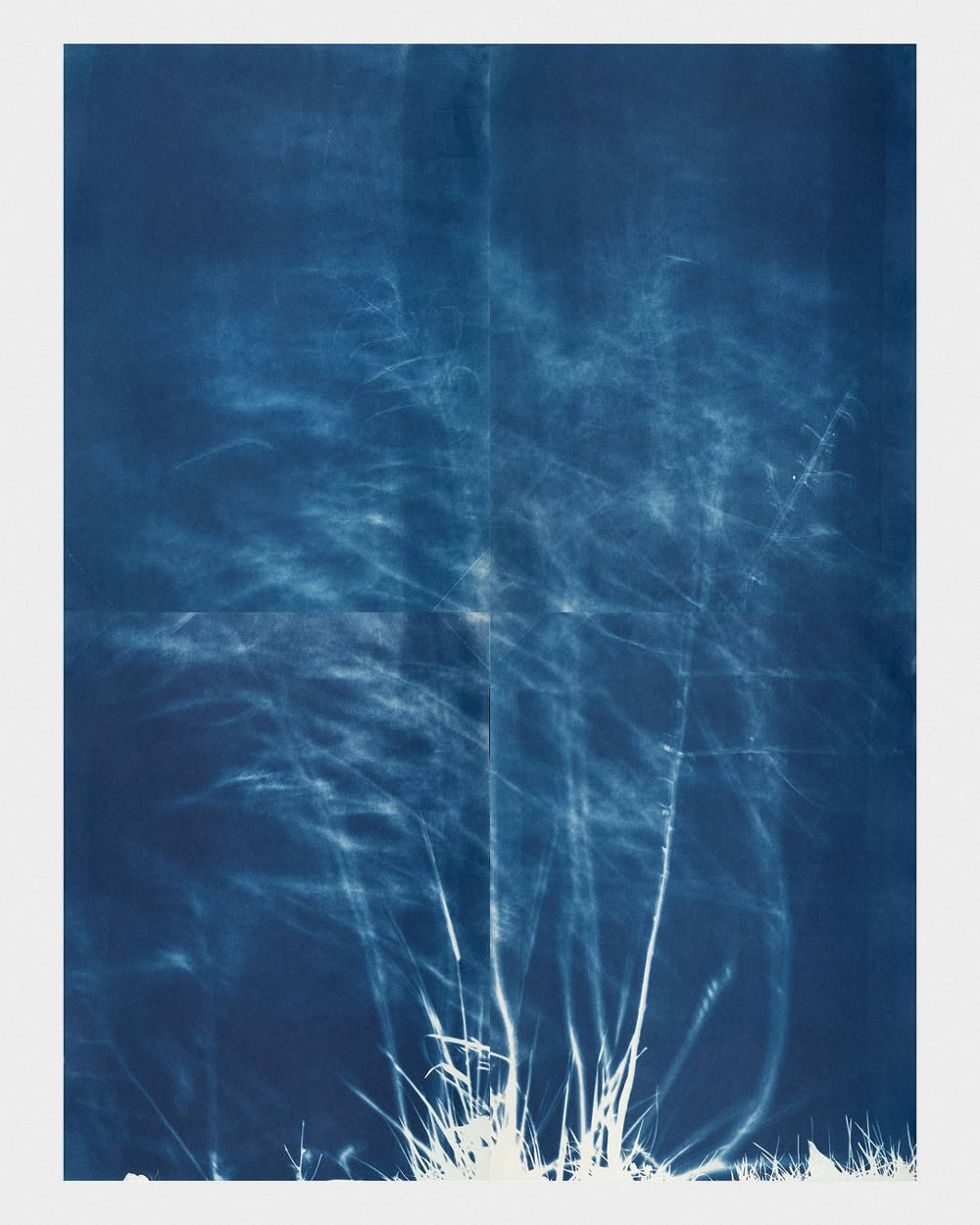
He prefers sheets of light-sensitive paper to cameras. He uses plant photograms to explore the ideas of climate anxiety and to track how floods reshape a neighbourhood ecosystem.
College days supply the first laboratory detour. While working at a one-hour photo store, Carroll found every photograph of a sunset and made an extra copy for himself. He pursued the question: a photograph of a sunset that could rival a sunset itself. With that thought, he bleached each duplicate until dyes hovered at the edge of disappearance, underscoring the chemical fragility of nostalgia.
Archive research follows the same logic; at the Pisgah Astronomical Research Institute, he photographs peeling emulsions on early glass plates. Standard Stars grew from several years inside the Astronomical Photographic Data Archive at PARI, a former NASA base in Pisgah National Forest. Eric William Carroll focused on plates damaged by time, human error, or both. He selected twelve — with broken glass and peeling emulsion — for a set of photogravures. Repairs intersect with stars and galaxies, and the once-orderly catalog slides toward quiet disorder.
Work in Field Recordings stays direct. After Tropical Depression Fred flooded Asheville in 2021, Eric William Carroll gathered uprooted stems. He pressed the plants onto billboard-scale cyanotype sheets. In turn, sunlight burned their shapes for thirty minutes, then he rinsed the paper in creek water. Each season he repeats the ritual and hangs the deep-blue panels in modular grids. They serve as barometers of change and private journals. Season by season, the series expands, folding botanical traces and low-tech chemistry into a living record where patient observation becomes shared evidence.