Joshua Ellingson
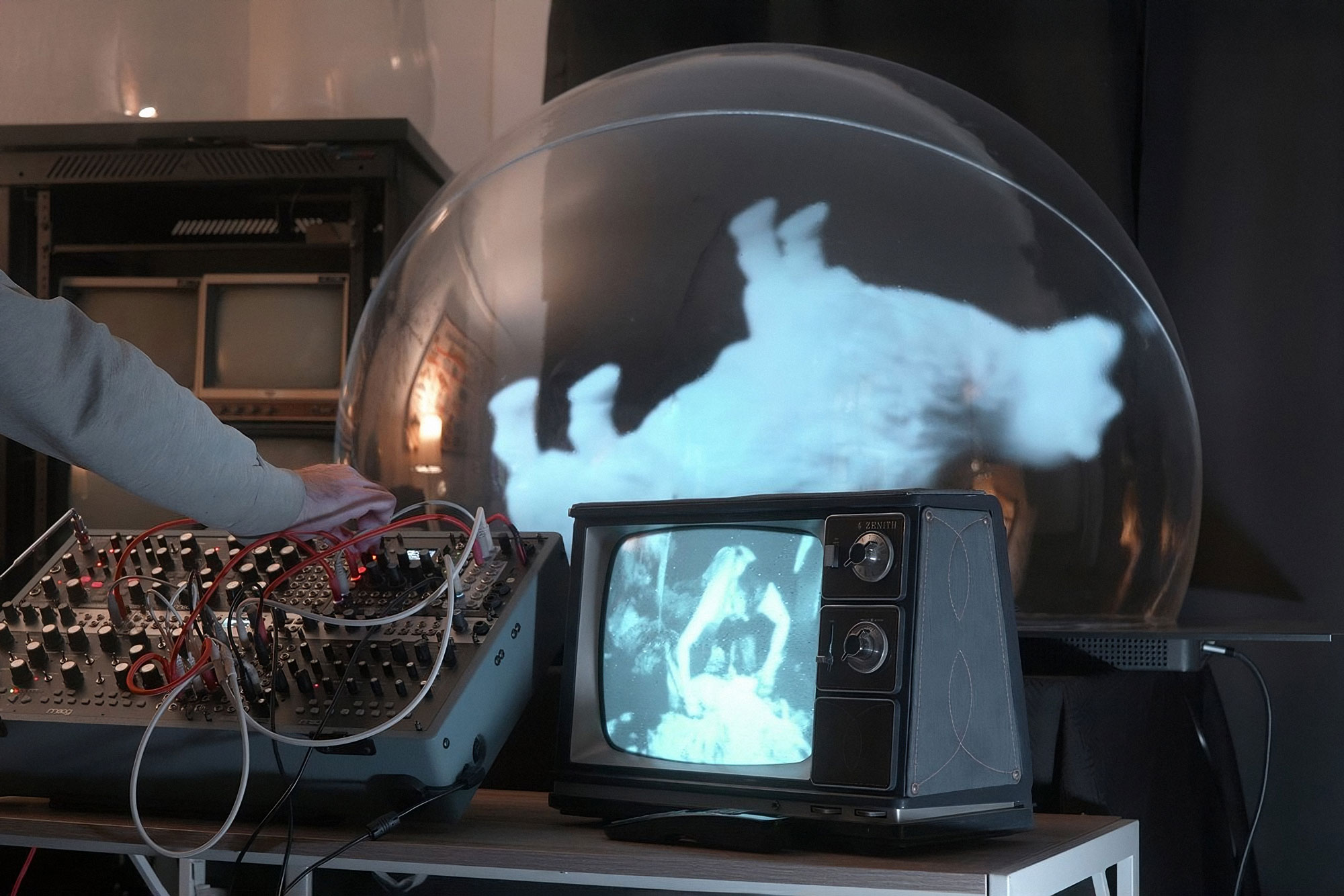
Joshua Ellingson lifts weathered CRT screens (the glass picture tube inside older TVs and oscilloscopes) with the care one reserves for living creatures.
A working CRT emits a thin, high-frequency howl and a low transformer buzz — persisting with presence. Like a jar filled with crickets at night, it produces a layered, trembly but steady chorus.
Laser diodes — pinpoint lights threaded through televisions — link to thrift-store synthesizers that translate hand motion into shifting tones; visuals bloom on denim-clad Zenith 'Sidekick' TVs from the 1970s. He bolts every piece into one sculpture — his 'kinetic totem.' Infrared sensors watch the space; when a hand rises, patterns ripple across the tube, and a bass note lands, like circles spreading over water after rain.
From his San Francisco base, the studio still echoes Flint, Michigan. Childhood flea-market radios, tasseled taxidermy owls, and endless do-it-yourself afternoons taught Joshua Ellingson that every object holds spare voltage, so each rescued screen dodges landfill fate. Code guides the flicker with surgeon precision while nostalgia steadies the rhythm, letting romance and mathematics share one wave line. His aim is simple: reveal the pulse still beating inside factory cast-offs, letting technology and nature breathe in the same room. The glow isn’t mere memory — it’s a new home for light.
Pepper’s Ghost reflections float above the rigs, shifting mid-air without revealing their source. A single synthesizer lays the low note, quick samples scatter texture, and a pair of theremin antennas bends color like a brushstroke in air. Sequencers circle, LFOs sweep, and public-domain footage from the Prelinger Archives — old how-to films, forgotten mascots, swimmers laughing beside motel pools — glides across the glass right on the downbeat. Every restored CRT becomes a small dawn, tomorrow blazing across yesterday’s glass.