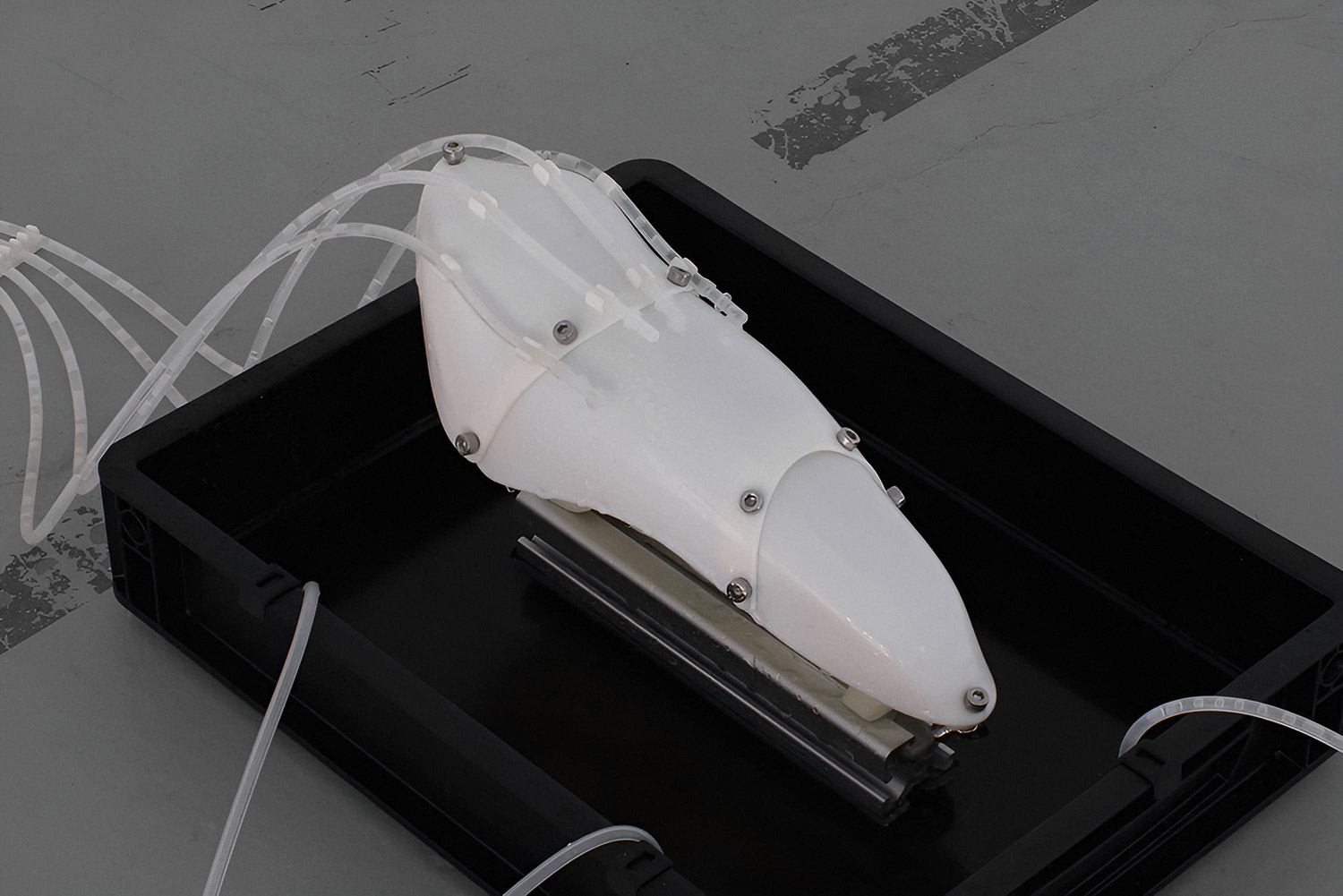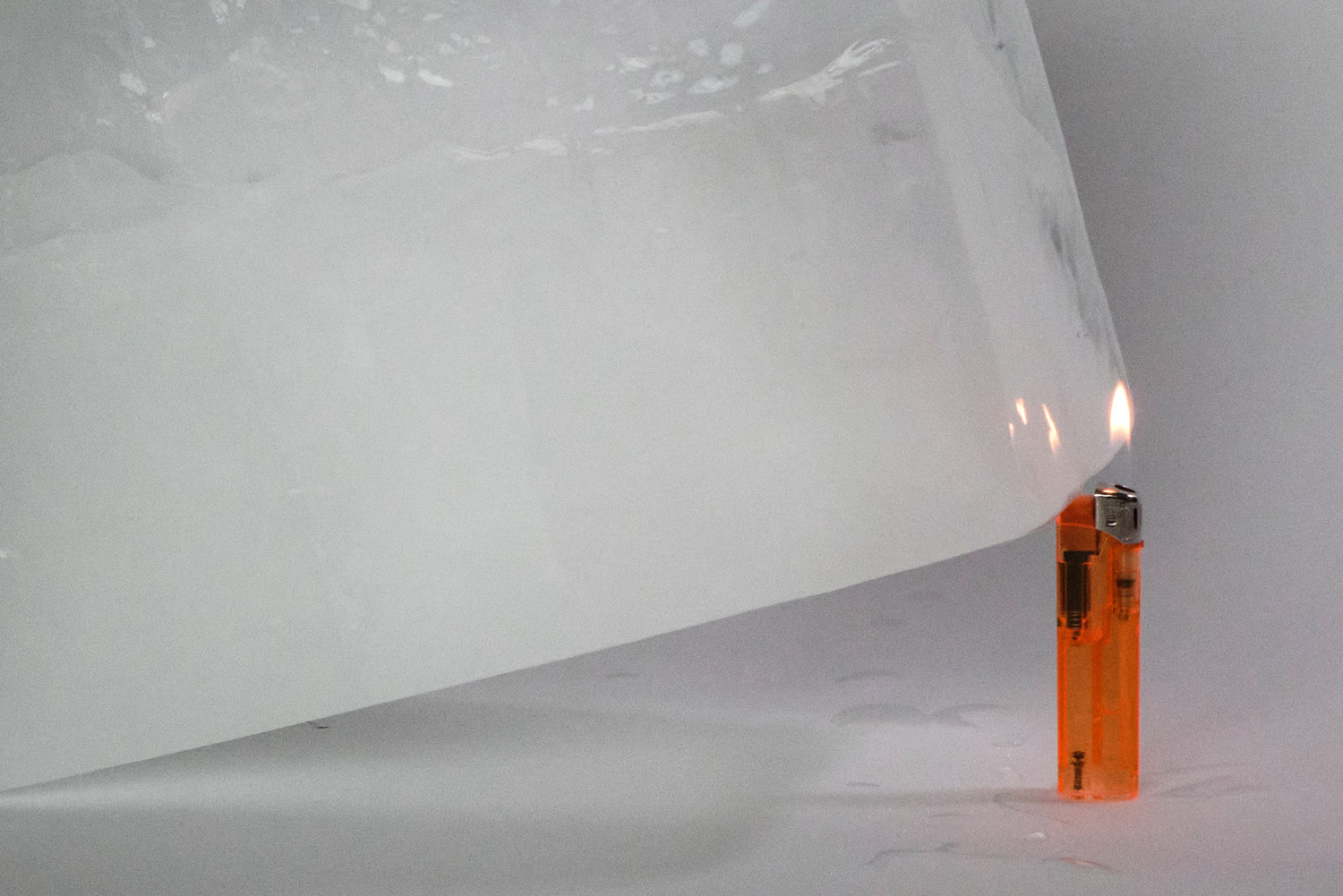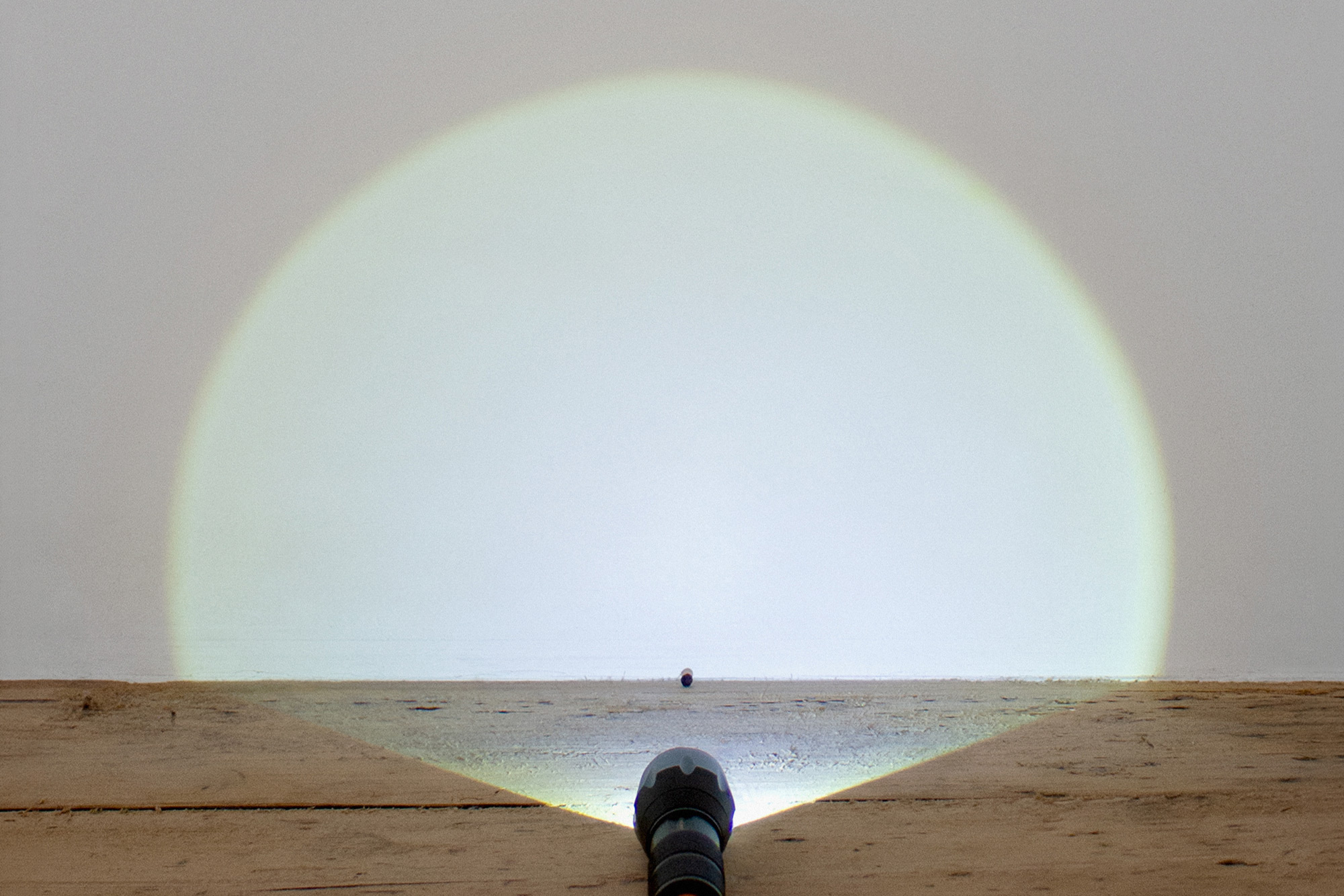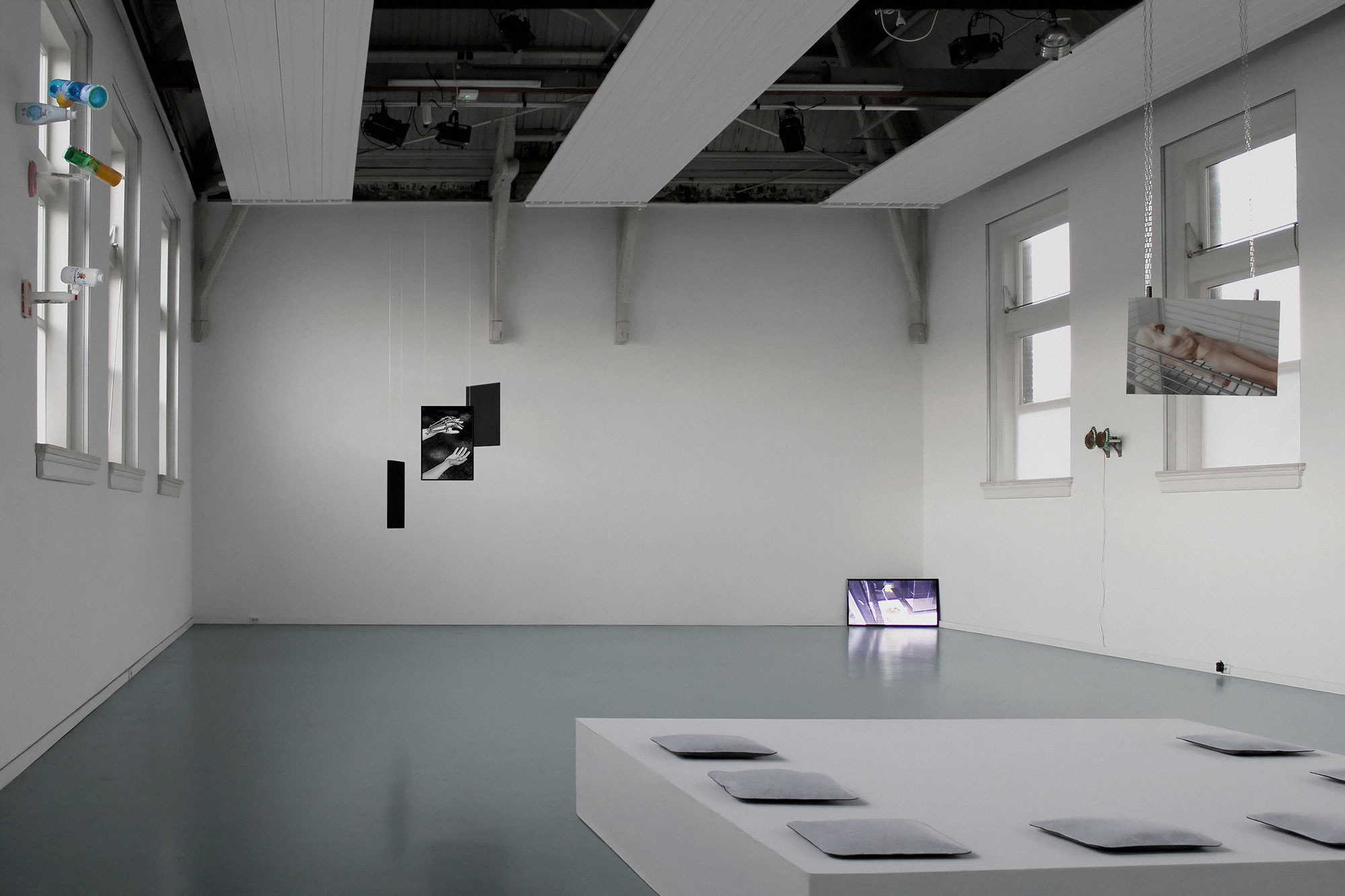
'Machine Echoes' is the first of three group exhibitions in the ESC 2034 series curated by 0—1 Gallery. Part I stages a romantic, almost neutral meeting of circuits and soil.
Part II, Industrial Tension, captures the moment machines dent reality and strain the organic. Part III: Roaring Into Being, lands in a world largely coded by technology, with nature surviving only as memory. Together, the three exhibitions ask how far the balance can tilt before it snaps.
By exploring the futures of nature and technology, the exhibition covers themes such as artificial intelligence, the transformation of communication, and the future of ecological awareness. From digital phenomena to ecological sculptures, each work invites us to reflect on these evolving relationships. Additionally, each piece challenges us to rethink how we interact with our environment, offering a glimpse into the decade ahead — a conversation between nature and technology.
Established in 2020 as a digital initiative, the ESC platform has consistently pushed the boundaries of contemporary art. Each year's theme, 'A decade into the future,' invites artists to imagine what the world might look like ten years from now.
Now, this exhibition marks a significant milestone for 0—1 Gallery as ESC transitions from an online format to its first physical event. After receiving over 600 submissions, 26 artists were selected to participate in the ESC 2034 series. 'Machine Echoes' will feature the first group, setting the stage for an exploration of our shared future.
'Machine Echoes' took place at See Lab in The Hague, Netherlands, from October 19-26, providing a more immersive and impactful experience.
Artists
Andrea Martinucci
Turbomondi (Melodia), 2021
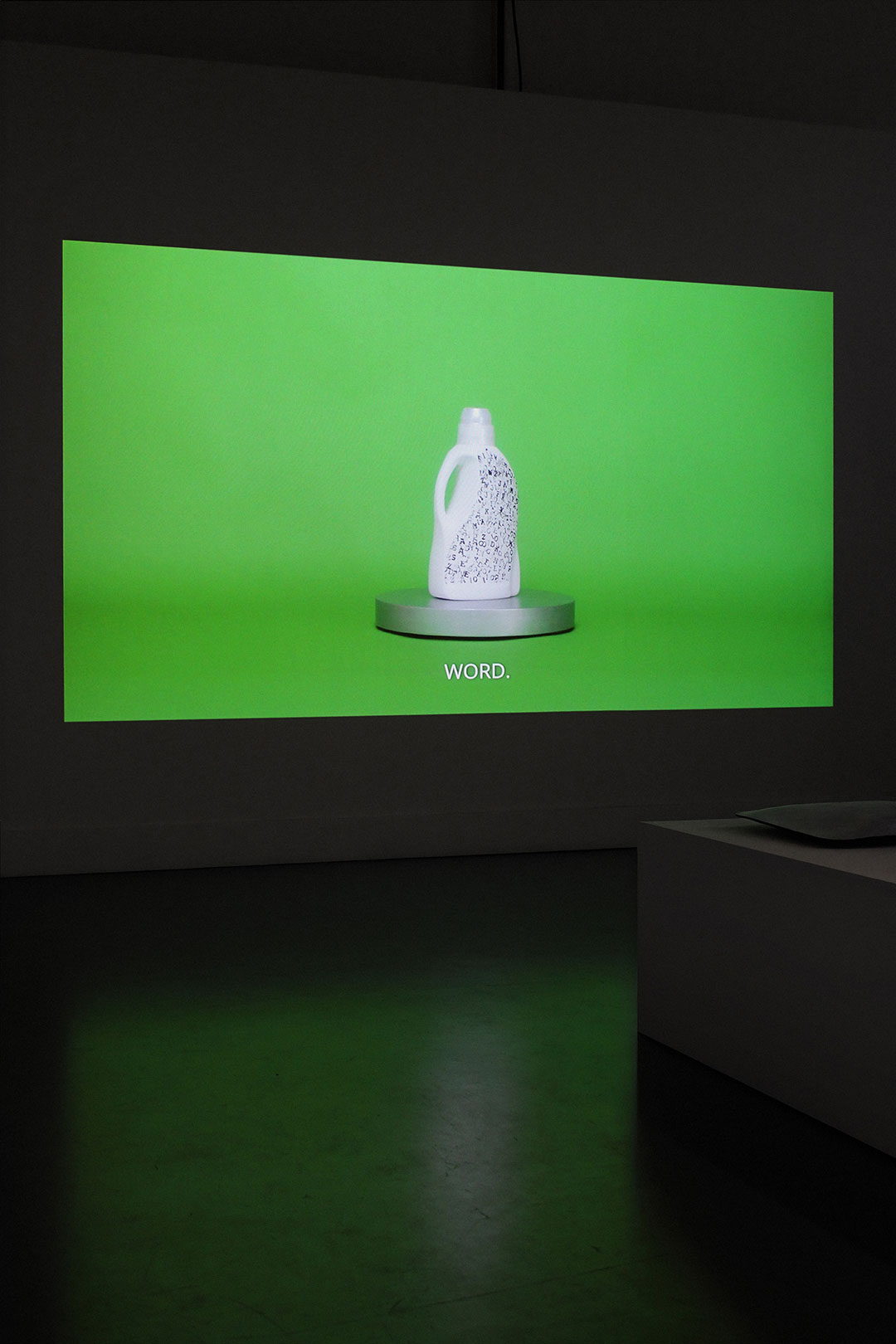
Andrea Martinucci, based between Milan and Rome, explores fiction, theory, and identity through a multidisciplinary practice spanning painting, writing, and moving images. His work treats archives and personal traces as flexible materials, expanding narratives through multiple voices. Often drawing from digital sources, these traces lead to unexpected interpretations and layers of meaning. This process prompts reflection on memory, identity, and communication within social and political contexts.
Turbomondi (Melodia) is a hypnotic experience within worlds that interrogates the communicative power of the word, its persuasiveness, and the mechanisms it implements in dictating the bonds of sociality. By bringing to life situations generated by an unconscious that draws from the depths of the imagination to create new possible panoramas, the artist continues his experimentation freely inspired by the language of cinema and advertising, without denying a reference to visual poetry, to investigate communication mechanisms as a subject. A mysterious story, a film made of static and motionless frames, without tracking shots or other camera movements. The work represents the key to the broader research the artist is developing with Turbomondi, a galaxy of suspended worlds populated by creatures neither human nor alien, challenging the anthropocentric vision of a universe that may not have been exhausted.
Turbomondi (Melodia) entered the collections of the Istituto centrale per la Grafica as the winning project of the Cantica21, Italian Contemporary Art Everywhere initiative. Promoted by the Ministero degli Affari Esteri e della Cooperazione Internazionale (MAECI) — Direzione Generale per la Promozione del Sistema Paese (DGSP) and the Ministero della Cultura (MIC) — Direzione Generale Creatività Contemporanea (DGCC), the initiative promotes and enhances Italian contemporary art.
Credits: Turbomondi (Melodia) by Andrea Martinucci / script by Barbara Bigi, Andrea Martinucci / script supervisor Laura Sinceri / cinematographer Jacopo Farina / camera assistant Raffaele Diacono / set designer Benedetta Maestro / set designer assistants Romeo Steiner, Weronika Wolińska / editing Beppe Leonetti / music and sound Ivano Pecorini / visual effects Leonardo Casani / executive production NOS Visual Arts Production / translation Maria Vittoria Di Sabatino / special thanks to Officine De Rolandi — Milan, Aurelio Di Virgilio.
Jakub Geltner
Nest 11, 2023
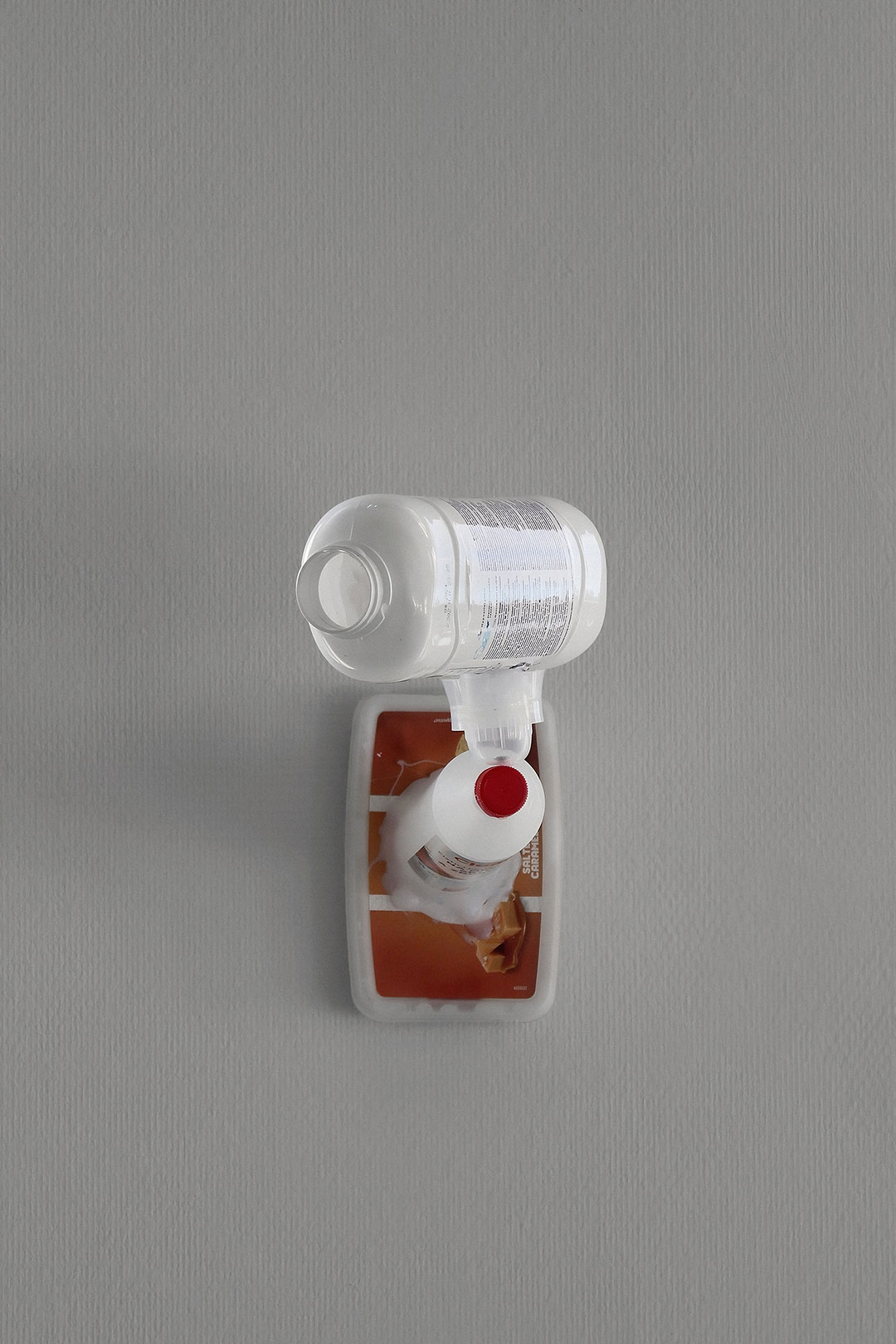
Jakub Geltner, based in Prague, is a visual artist known for his public installations that address themes of technology, surveillance, and the environment. Born in Karlovy Vary, Geltner studied at the Academy of Fine Arts in Prague and the Korean National University of Arts in Seoul. His Nest series, which began in 2011, has grown to include multiple installations worldwide, each examining the increasing visibility of technology in public spaces.
Nest 11 continues Geltner’s exploration of surveillance through a series of wall-mounted sculptures made from plastic waste. The discarded materials are shaped to resemble clusters of CCTV cameras, symbolizing the merging of environmental and technological concerns. Geltner reflects on how both waste and surveillance systems are becoming inescapable parts of urban life, questioning the impact of technology on privacy, security, and the natural world.
By repurposing waste materials, Geltner’s work also critiques the unsustainable nature of modern technological systems and their environmental footprint. His use of everyday objects, transformed into symbolic forms, encourages viewers to consider the lasting effects of both technology and waste on contemporary life. Geltner’s installations act as social commentary, addressing the technological and environmental challenges that define the modern era.
Domas van Wijk
An Art Science Salad, 2024
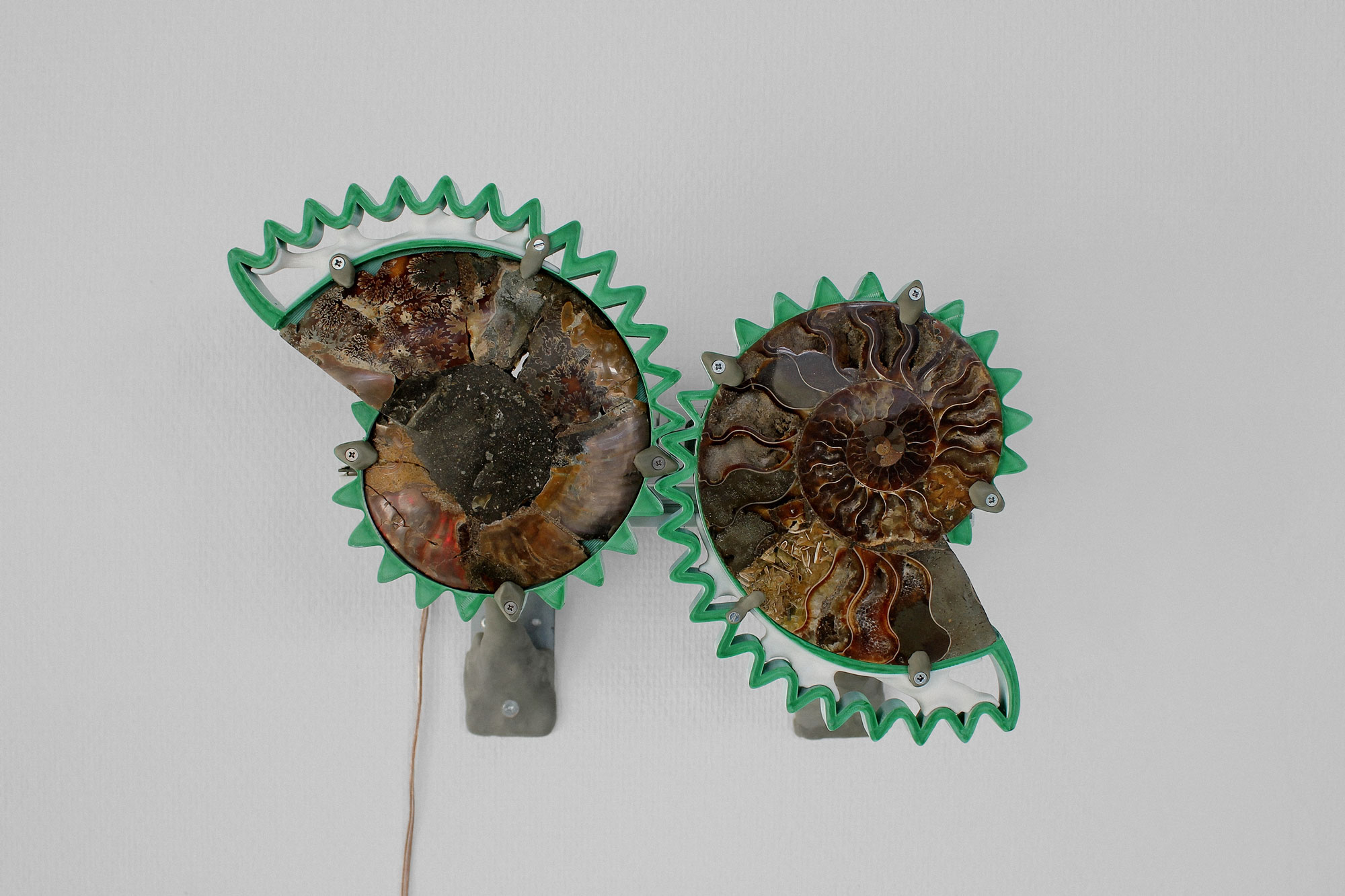
Domas van Wijk, based in Utrecht, creates kinetic installations that explore the ambiguity between nature and technology. His work often exists in a state of flux, blending natural elements with mechanical structures. By focusing on these fluid boundaries, van Wijk reflects on how technology and organic life intersect, blurring the lines between clearly defined states.
An Art Science Salad combines nautilus shells with 3D-printed frameworks, evoking the motion of gears. This kinetic installation draws inspiration from both natural forms and mathematical concepts, particularly the Fibonacci sequence, which has been used to explain beauty in both art and nature. The spiral of the nautilus shell, while often linked to this sequence, serves as a metaphor in van Wijk’s work for the intersection of art and science. However, van Wijk challenges these traditional associations, treating such grand theories as historical curiosities rather than scientific truths.
The installation’s constant movement mirrors van Wijk’s interest in the interplay between the human and non-human worlds. While referencing both the natural beauty of the nautilus spiral and the calculated logic of modern AI systems like Midjourney, the work reflects on how art and technology evolve together. In doing so, it questions how these seemingly disparate elements will shape our future understanding of art and creativity.
Joanna Grochowska
TRANSHUMANISM, 2024
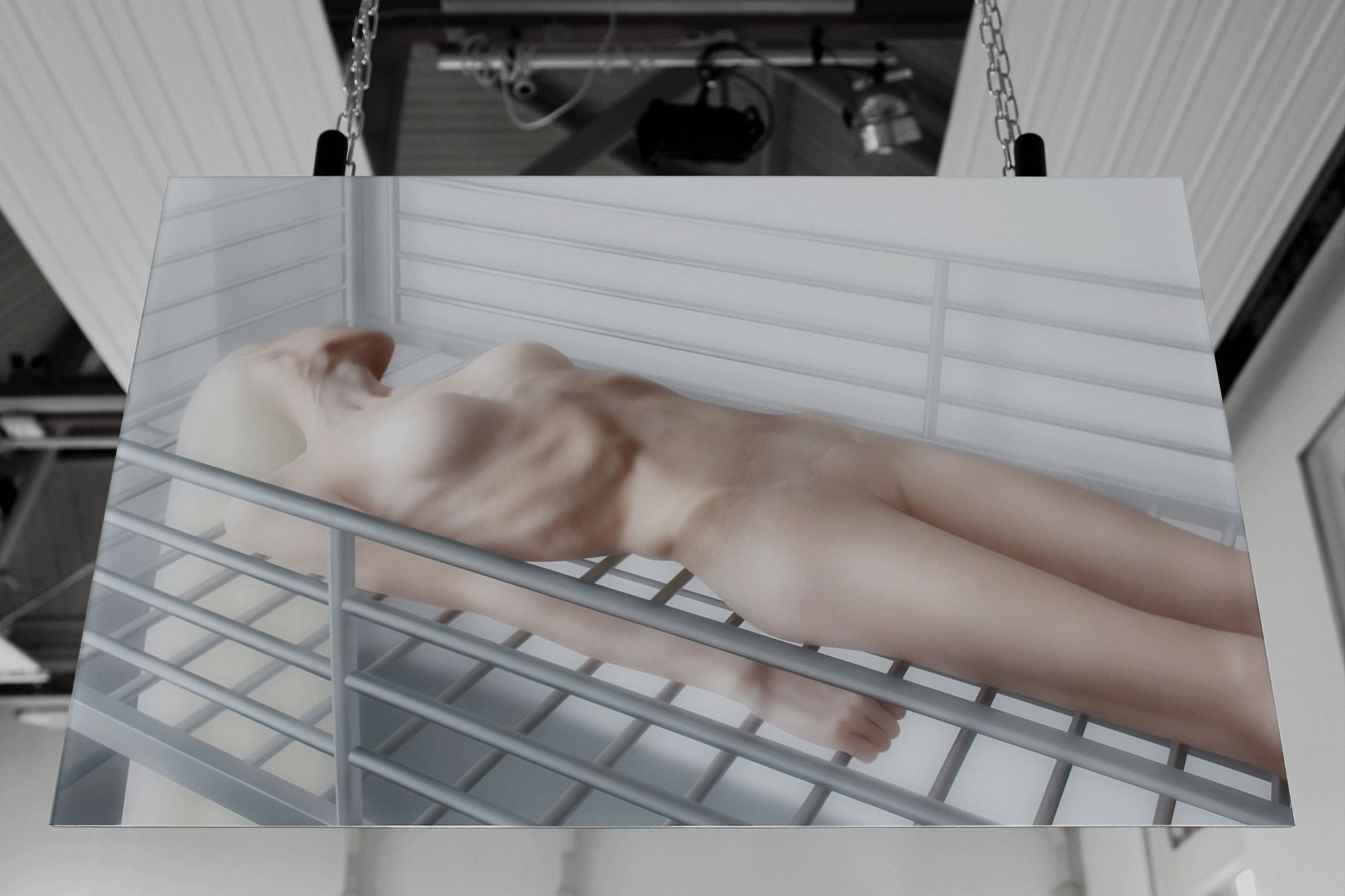
Joanna Grochowska, based in Palm Springs, California, is a contemporary artist whose work focuses on transhumanism, human enhancement, and the future of identity. She holds an MFA from the Academy of Fine Arts in Warsaw and has exhibited her work globally. Her artistic practice explores the intersection of technology, body, and identity, with particular attention to the posthuman figure.
TRANSHUMANISM, an art print on Diasec, is part of Grochowska’s ongoing investigation into the future of the human body and its relationship with technology. The work portrays the human figure as a hybrid between organic and artificial, reflecting on the concept of morphological freedom and the potential for human enhancement. Grochowska’s hyper-realistic imagery captures the tension between natural forms and technological augmentation, symbolizing the possibilities of genetic modification and transcending biological limits.
Inspired by transhumanist philosophy, the work delves into themes such as body modification, gender fluidity, and the future of human identity. It poses fundamental questions about the ethical and philosophical implications of a world where the lines between the human and the machine are increasingly blurred. Grochowska's figures are not just visual representations but embodiments of the possibilities offered by technological progress, prompting viewers to reflect on the future of humanity and the moral choices that come with it.
Chloé Azzopardi
Non Technological Devices, 2023
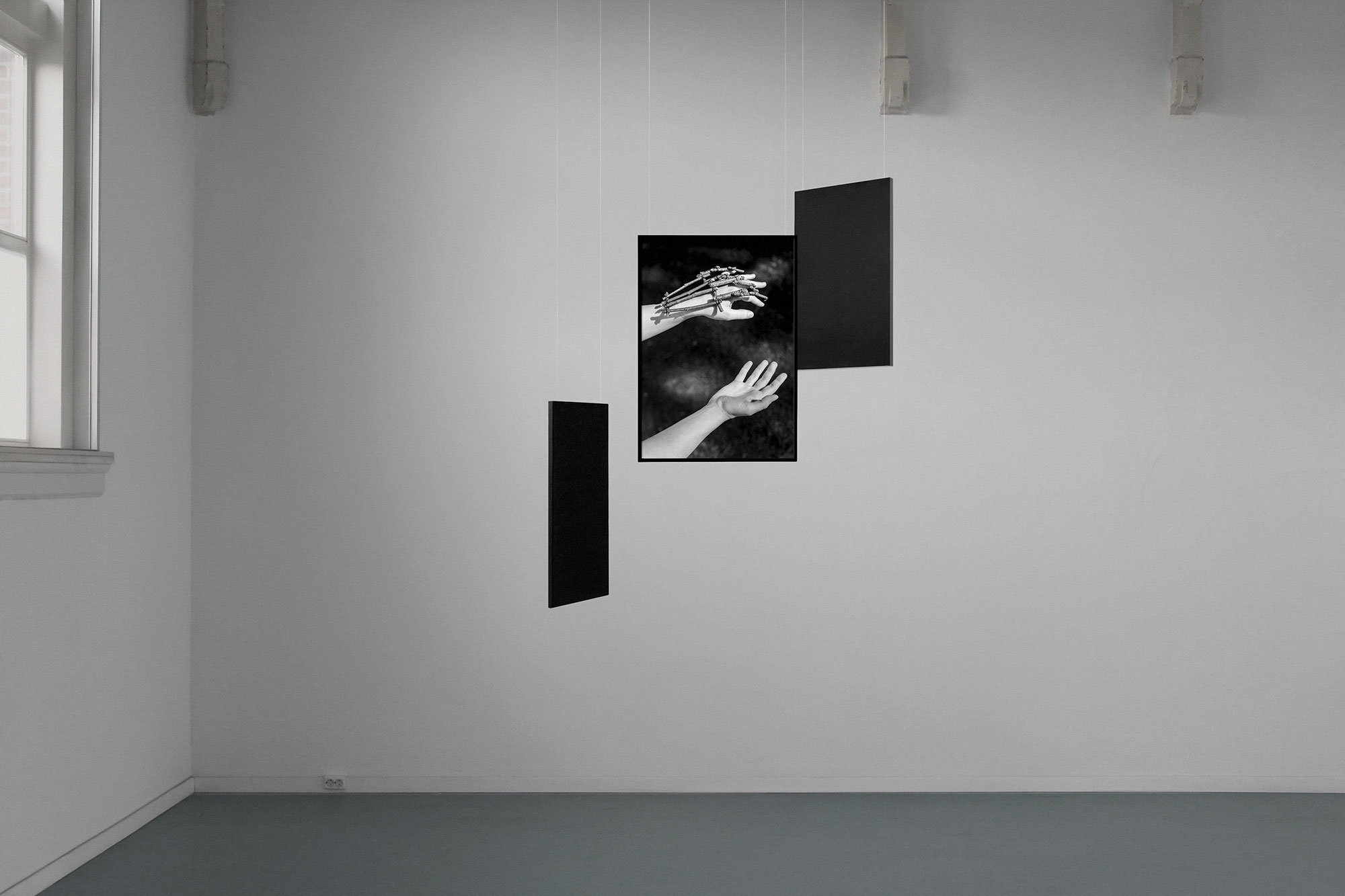
Chloé Milos Azzopardi, based on an island near Paris, works across photography, performance, and installation to create long-term projects blending experimental and documentary approaches. Her practice generates fictional worlds that provoke reflection on ecology, technology, and how we imagine the future in response to environmental crises. Azzopardi’s work focuses on creating alternative futures and possibilities for ecological self-defense.
Non Technological Devices is a series of black-and-white photography that explores the intersection of nature and technology. Using natural elements, Azzopardi creates composite tools that mimic everyday technological devices. These objects, both organic and science-fiction-like, blur the boundaries between body extensions and hindrances. The project envisions a future where technology and the environment coexist, offering new ways to reconsider how we live alongside Earth's creatures.
Shaped by both personal inquiry and political events, this series reflects Azzopardi’s commitment to ecological activism. In Non Technological Devices, she investigates how the climate crisis could reshape technology and force society to rethink its relationship with the natural world.
Sarah Butler
A Study in Patience and Practicality, 2024
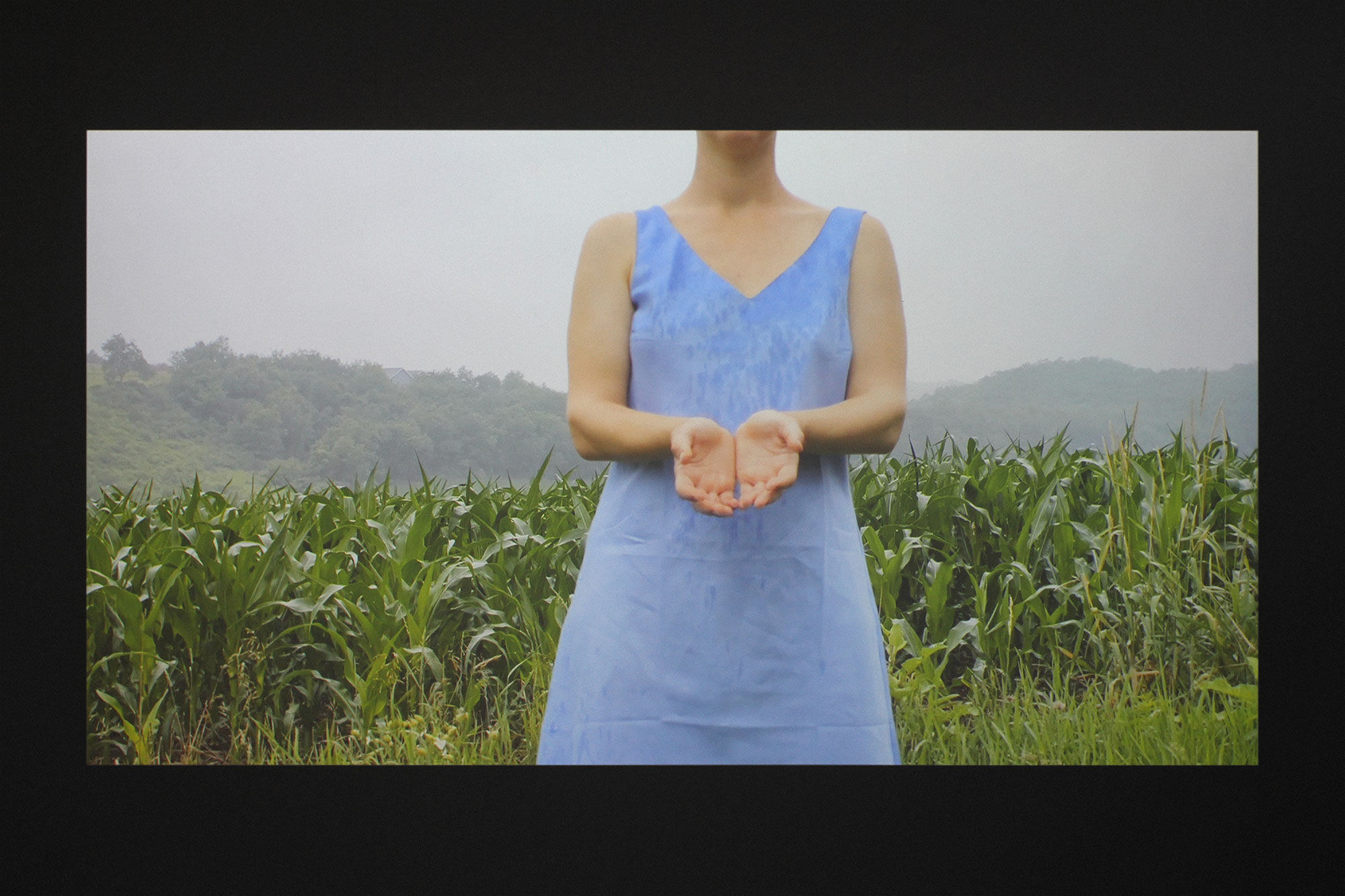
Sarah Butler is a Berlin-based artist whose multidisciplinary practice encompasses movement, film, wearable structures, and vocal harmonies. A graduate of Cornish College of the Arts, Butler has performed and created work internationally, collaborating with a range of artists and institutions. Her projects span dance-theater, film, and sculpture, blending elements of performance with visual art to explore themes of slowness, patience, and connection.
A Study in Patience and Practicality is a video project that investigates the concept of slow movement as a meditative practice. In this series, Butler performs mundane tasks—such as walking or making a sandwich—at an incredibly slow pace, sometimes taking hours to complete a simple action. The footage is then sped up to simulate a “normal” tempo, while the surrounding environment becomes the primary focus. Through this technique, Butler invites viewers to shift their perception of time and reflect on the often-overlooked beauty of the natural world. The project emphasizes the importance of slowing down and paying attention to the richness of the present moment, suggesting that mindful awareness is essential for both personal well-being and environmental stewardship.
Butler’s work merges performance, poetry, and film to create layered narratives that reveal the intersections between time, space, and human experience.
Lorenzo Zerbini
Plant Supervision, 2024
Lorenzo Zerbini, born in Dolo and based between Venice and Madrid, is a transdisciplinary artist whose work bridges technology, ecology, and philosophy. He holds a Bachelor's degree in Visual Arts from IUAV University of Venice and is pursuing a Master's degree in Transdisciplinary Art at Universität für angewandte Kunst Wien. Zerbini’s work frequently investigates the shifting dynamics between the human and non-human, using video and appropriated digital media to challenge conventional perceptions.
Plant Supervision, an 11-minute video loop, subverts traditional surveillance by replacing human subjects with plants. Appropriating footage from private CCTV cameras, Zerbini explores what happens when plants become the focus of control technologies. The video creates an ontological shift, questioning our passive understanding of plants by portraying them as subjects worthy of scrutiny. By highlighting "plant blindness," the human tendency to overlook plant life, Zerbini urges viewers to rethink how we engage with the natural world in an era of technological dominance.
The piece not only critiques the normalization of surveillance but also reflects on broader ecological implications, particularly as the world faces an environmental crisis. By engaging with these themes, Zerbini prompts reflection on how technology can be redirected to foster a more sustainable relationship with the environment, advocating for a deeper integration of ecological awareness into our technological systems.
Eva Anerrapsi
It Was Day And I Was Thinking About Night, 2021
Eva Anerrapsi, born in Athens, Greece, is a visual artist and graphic designer whose practice spans analogue and digital media. She studied graphic design at Vakalo Art & Design College and visual arts at the Athens School of Fine Arts. Her work often focuses on the textures, gestures, and relationships that emerge between different visual elements. Through mixed-media, poetry, and narrative films, Anerrapsi explores themes related to intimate communication and its intersection with modern technologies.
It Was Day And I Was Thinking About Night is a 4-minute video filmed using the reflective surface of a closed laptop. The piece questions what remains real when space is removed and how the storyteller’s gaze shifts when filtered through digital reflections. Anerrapsi's approach captures the tension between poetic introspection and the detached realities of contemporary life. The video combines natural daylight with the dark, reflective blackness of an inactive computer screen, mirroring the contrast between personal desires and the fragmented nature of modern existence.
The work reflects on how we perceive the world as it becomes increasingly mediated by technology. Inspired by the introspective writings of Rainer Maria Rilke, a renowned Austrian poet known for exploring existential themes, Anerrapsi examines how intimate communication is reshaped by digital environments. The video explores the evolving relationship between the digital and the real, reflecting broader shifts in perception and interaction in the modern age.
Mandy Williams
Vanishing, 2023
Mandy Williams is a London-based artist working with photography, video, and sound to explore themes of landscape, environmental change, and politics. She holds an MA from the London College of Communication and has exhibited widely, particularly focusing on the English coastal regions of Kent and East Sussex.
In Vanishing, a 6-minute video, Williams documents the erosion of coastal landscapes due to climate change, blending footage of cliffs and coalmining areas with archival material and drone shots. The work critiques the impact of the fossil fuel industry and reflects on the global climate crisis through the metaphor of vanishing coastlines. Williams juxtaposes the personal with the global, using the receding landscapes to evoke a broader conversation about political inaction and environmental responsibility.
The video also examines the evolving role of visual media in addressing ecological concerns, asking whether photography and film can still raise awareness in a world oversaturated with images. Through her distinct approach, Williams invites reflection on the intersection of human industry and environmental fragility, exploring how we navigate the climate crisis and its implications for the future.
Ana Esteve Reig
Lucky Images, 2024
Ana Esteve Reig, based in Madrid, Spain, explores the construction of social archetypes and human behavior through video installations. She dramatizes collective identities by using fiction, popular culture, and virtual reality to examine the individual’s place in society. Esteve Reig’s work focuses on how fictional narratives — whether literary, cinematic, popular, or digital — shape our shared reality. Her storytelling combines carefully selected locations, performers, and narratives. This approach highlights how technology influences human perception and interaction.
Lucky Images was born from months of experimenting with the AI tool Runway Gen2. Esteve Reig sought to use AI as a new artistic medium. She questioned whether its often stock-like imagery could still spark a sense of magic or wonder. In Lucky Images, she embraces the imperfections of technology to simulate visual phenomena tied to luck, like shooting stars, rainbows, and the green flash. The video reflects on our relationship with technology, asking if machine-made images can evoke the same emotions as natural events. By presenting AI as both a tool and guide, Lucky Images challenges viewers to consider the blurred lines between reality, simulation, and the digital world.
Esteve Reig’s curiosity about how digital tools reshape human experiences often drives her work. She pushes the limits of these technologies, uncovering moments of unexpected beauty in their flaws.