‘… we never changed. And so everything starts to melt. The ritual becomes the ruin — a performance of aftermath that nobody stops.
What was once set in stone now wears at the edges: systems sweating through their casing, images flaring into omen, machines learning human habits of relief. A world trained too well in repetition keeps staging the same ending in different forms.’
Following two earlier exhibitions (→, →), ESC 2035 arrives at its third and final chapter: ‘… we never changed.’ Eight international artists, selected through the open call, bring the sequence to its last state. Across the wider ESC exhibition cycle, 0—1 has traced unstable relations between nature, technology, bodies, and built systems. What began with the fading of human presence, and then moved into repetition without progress, now settles into something heavier. That movement ends in burnout, erosion, ritual, failed repair, and forms of control — a world circling the consequences of never quite making it. The future governed by exhaustion and automated decay is here.
Partnering with …ISM, an experimental project space for contemporary art, the exhibition took place in a historic building from 1631 in The Hague. Usually centered on artists’ ideas and plans for works that still exist only in thought, the space became a fitting setting for futures that feel both projected and already underway.
Artists
Raphael Pohl
yet lonely hue I.III, 2025 / AT
Borrowed objects keep their former lives attached: domestic, commercial, or industrial, ordinary enough to be overlooked. In Raphael Pohl’s installations, they enter a spatial choreography of small displacements. A kiosk item, a fragment of language, a surface, or a repeated gesture belongs to a scene that never explains itself. Kitsch and narration lose their decorative role and disturb the value attached to routines, materials, and use. People, objects, labour, and attention remain linked by substitution, delay, and the strange afterlife of use. Around them, separation and proximity trade places.
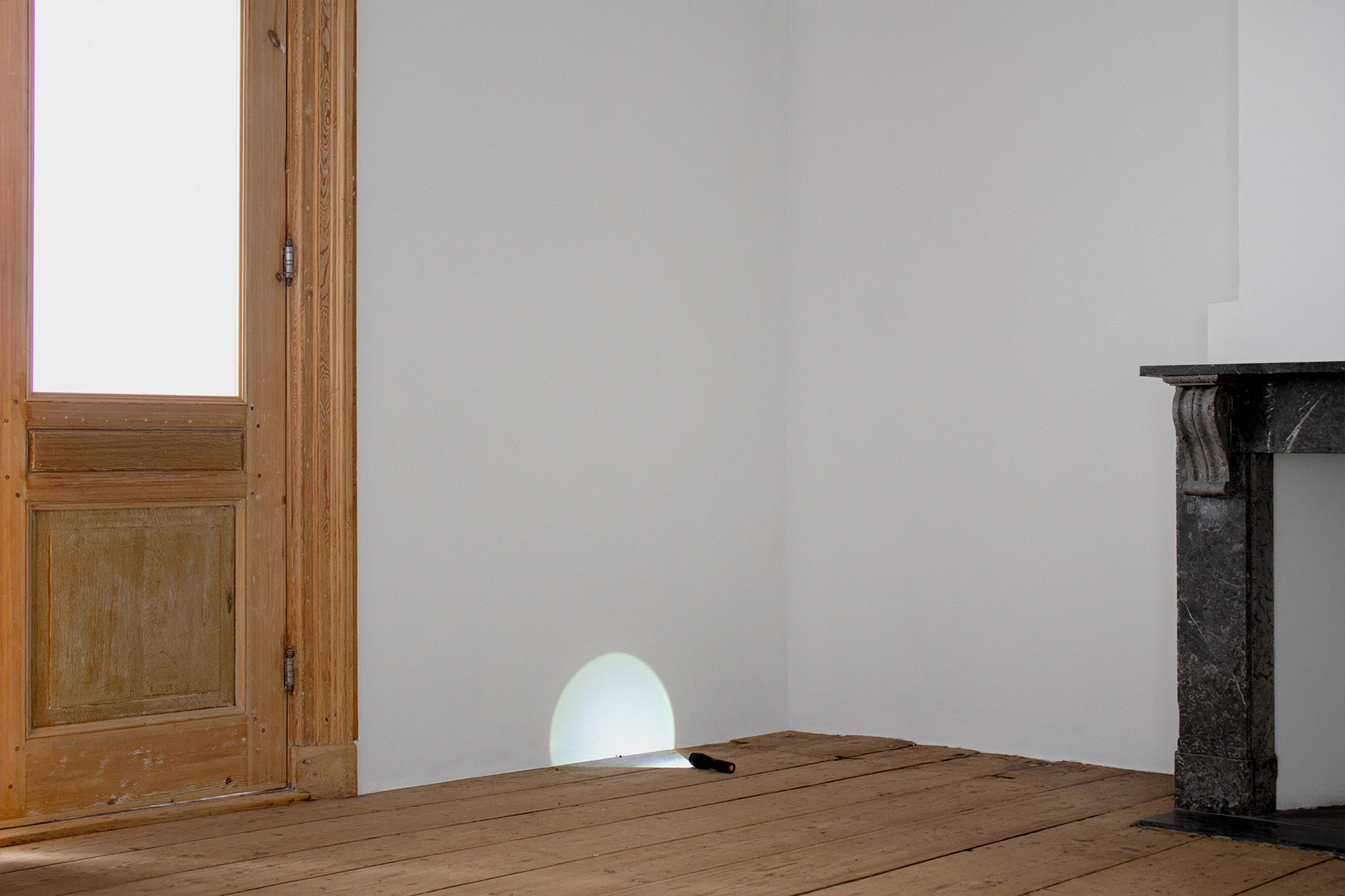
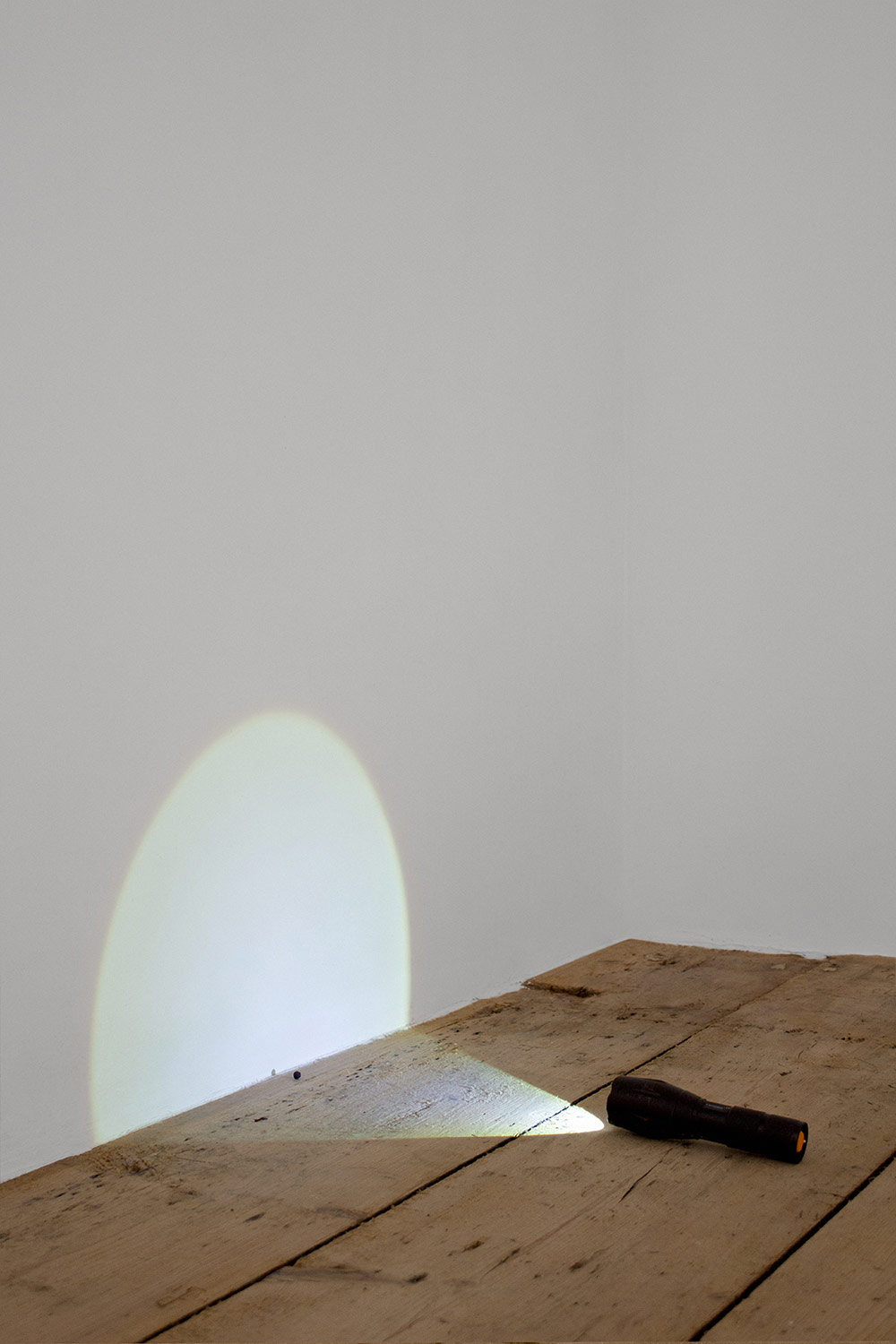
yet lonely hue I.III (2025) reduces Pohl’s logic to a scene of almost nothing: a beam of light, a peppercorn, and a bare wall. The elements are minor, but the attention given to them feels too exact, as if some larger function has been removed and only its smallest evidence remains. Light acts less as illumination than pressure: witness, measure, failed announcement. A larger ritual or economy seems to have collapsed into one small point of focus.
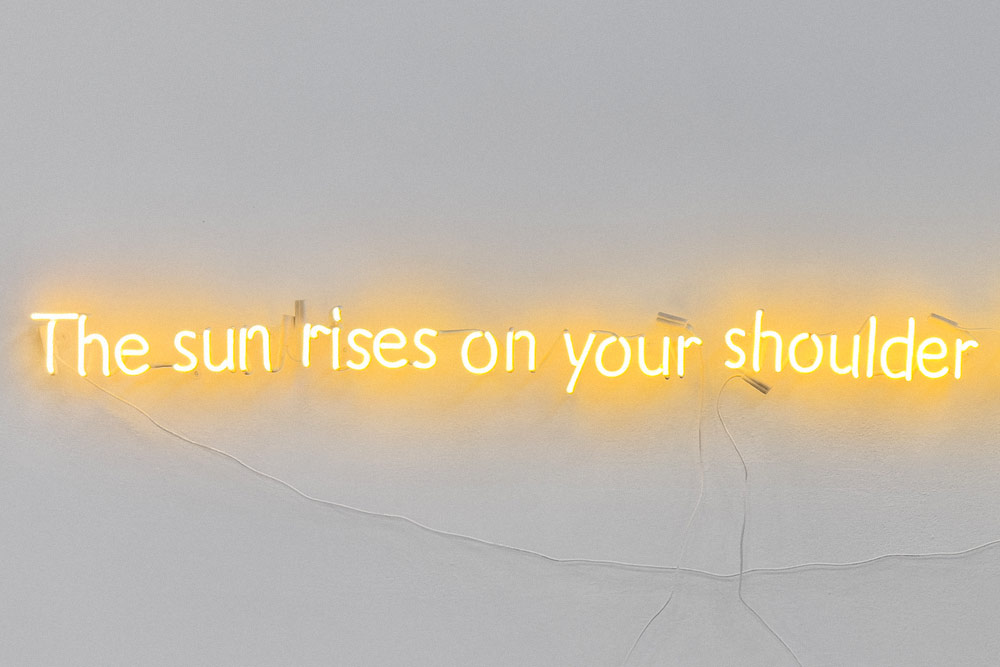
"(north to east)
Fabric remembers weight it never held.
Metal stands without standing for anything.
A surface misplaced,
a function withdrawn.
Between warmth and artificial light,
roots that never touched soil.
The tape whispers direction,
but nothing moves.
A frame without an image,
a gesture left unfinished.
It lingers — not by choice,
but because forgetting takes time."
Sofiia Yesakova
Ugly scenes, Nuances 4.2, 2025 / UA
Sofiia Yesakova’s language comes from a hard meeting point: sacred image, technical plan, and emotional pressure forced into one structure. A carved line recalls an icon, blueprint, wound, instruction, or border, depending on the distance. Religious iconography and Renaissance painting face constructivist severity and minimal restraint as systems for belief, violence, and control. Her sculptures resemble fragments cut from a temple wall and then moved into the present tense. Between gentle and rigid, illusion and structure, feeling takes architectural form.
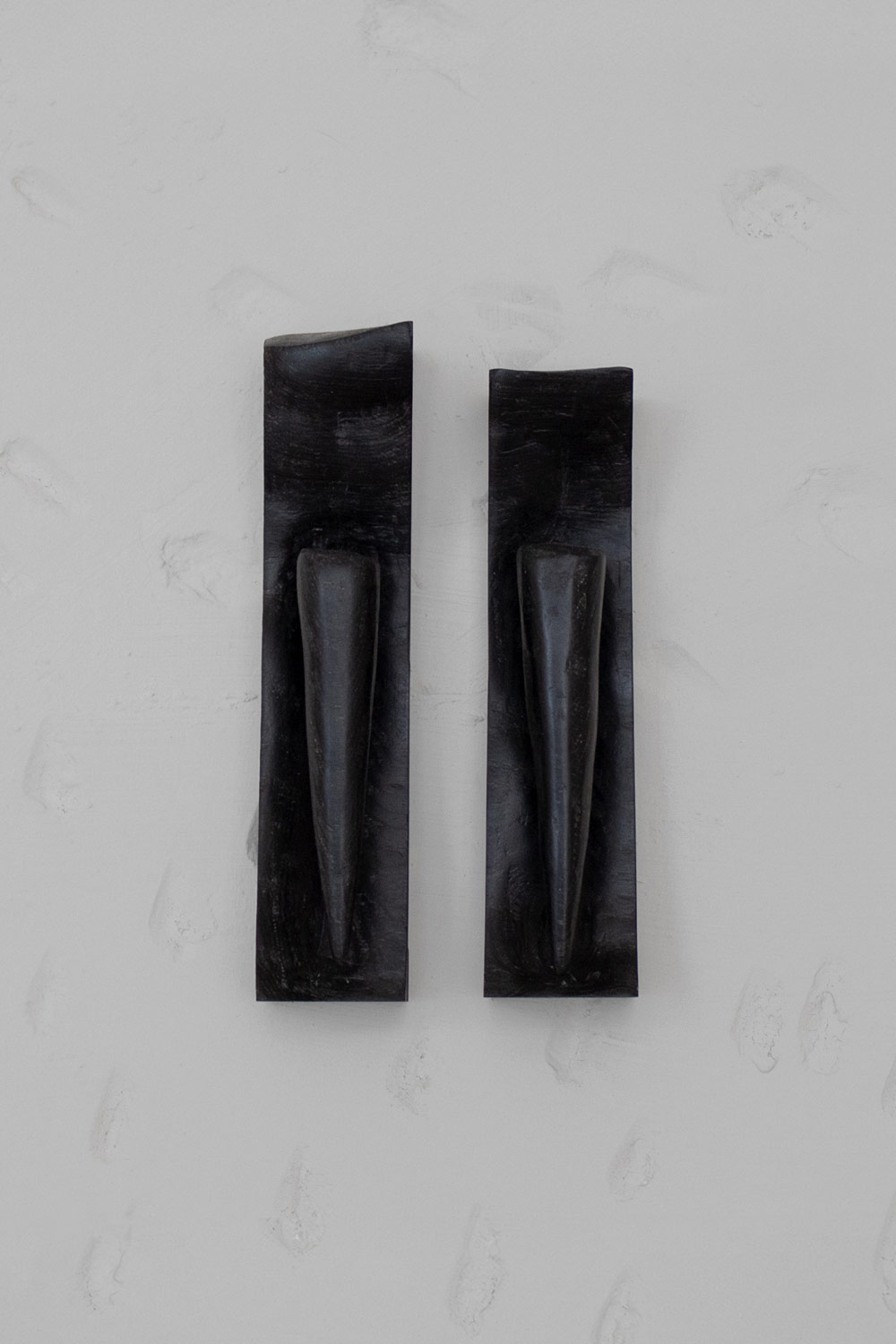
Ugly scenes, Nuances 4.2 (2025) comes from a series in which violence enters as order rather than image. Black pigment covers carved details, while fragile vertical forms are cut by horizontal repetitions that suggest lists, bureaucratic forms, or records without end. Yesakova draws on punitive restraint: intensity is contained, as if anxiety has been locked into line. History files its own cruelty; catastrophe is translated into classification, repeated as a desperate attempt to systematize a world sliding toward disaster. A monument of distance, a dark archive for events made harder to feel because they have been so carefully arranged.
Leonardo Magrelli
The Plant, 2025 / IT
Images, for Leonardo Magrelli, are unstable material: found, handled, edited, and made uncertain again. A background in design, art history, and book production makes the photographs feel carefully assembled rather than simply taken. Research and reuse guide their visual order. They are not exactly staged, but arranged with pressure, moving between conceptual photography and documentary attention. Archival fragments, found footage, post-photography, and installation extend that logic further, until the source is harder to pin down. Visual culture as collective memory: fragile, hybrid, and easily detached from where it began.
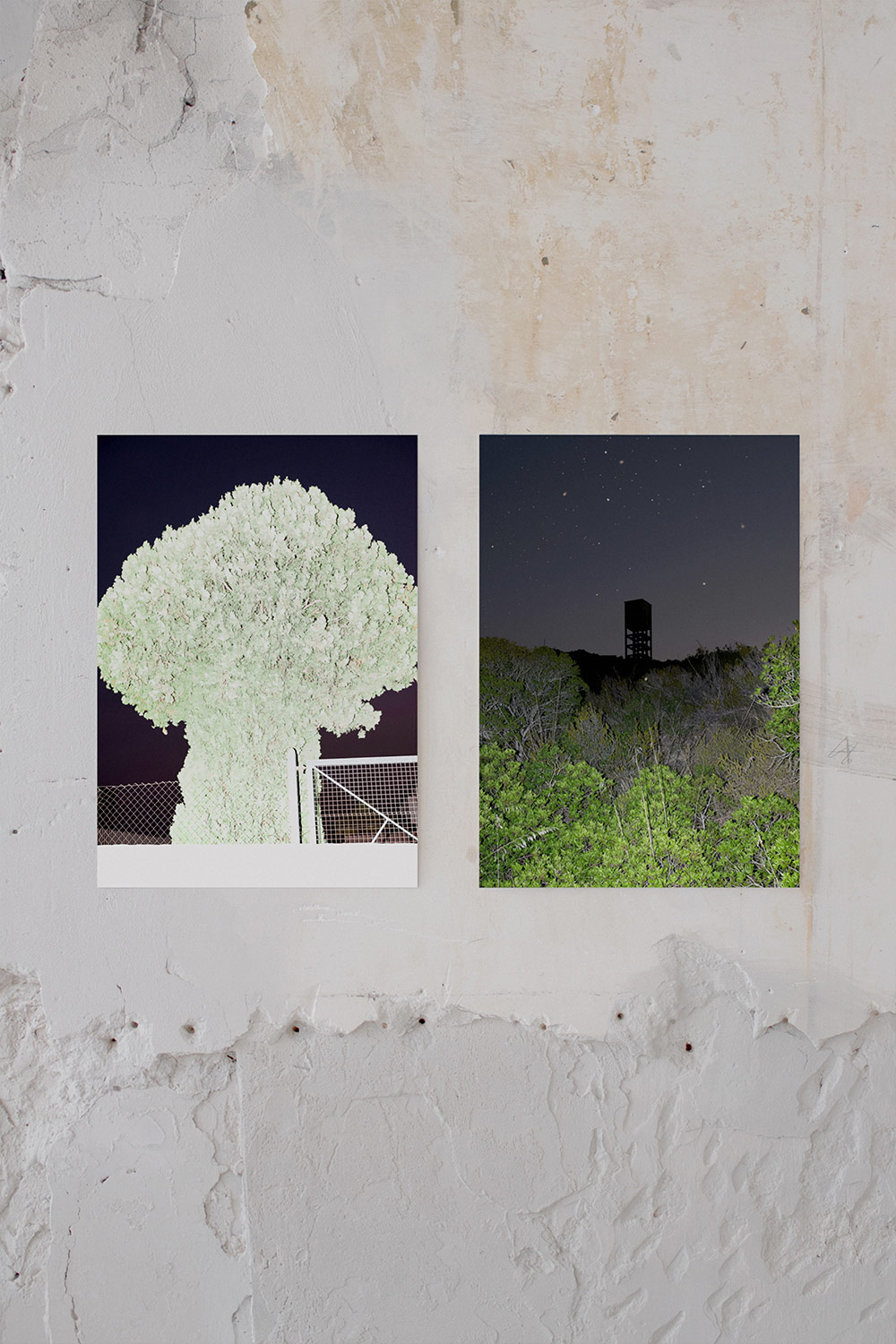
The Plant (2025), an ongoing photographic project made near several energy production sites, is gathered into the image of one possible but unnamed place. Shot at the edge of day and night, the photographs follow vegetation, industrial structures, and the spaces around nuclear energy. Magrelli’s flash marks his presence while also echoing the glare of an explosion, lighting the plant as both organic growth and a powerhouse. Post-atomic cinema and documentary images of nuclear tests run through the series, placing the site in a charged interval. Ecological anxiety, energy production, and the strange beauty of a place waiting for impact gather under one warning.
Otto Ostermann & Malte Oing
Computer Smoking, 2025 / DE
Malte Oing and Otto Ostermann meet around technology as something social, spatial, and already incorporated into daily behaviour. Oing looks at the internet age from within the habits it produces: surveillance, consumption, scrolling, and the infrastructures that underpin them. Photography, digital techniques, and installation materialise that pressure, often with humour at the edge. Ostermann follows the technologisation of rituals, labour, policing, and shared space, using observation, digital recreation, and documentation as research tools. Together, they treat technology as an environment of pressure, routine, control, and relief.
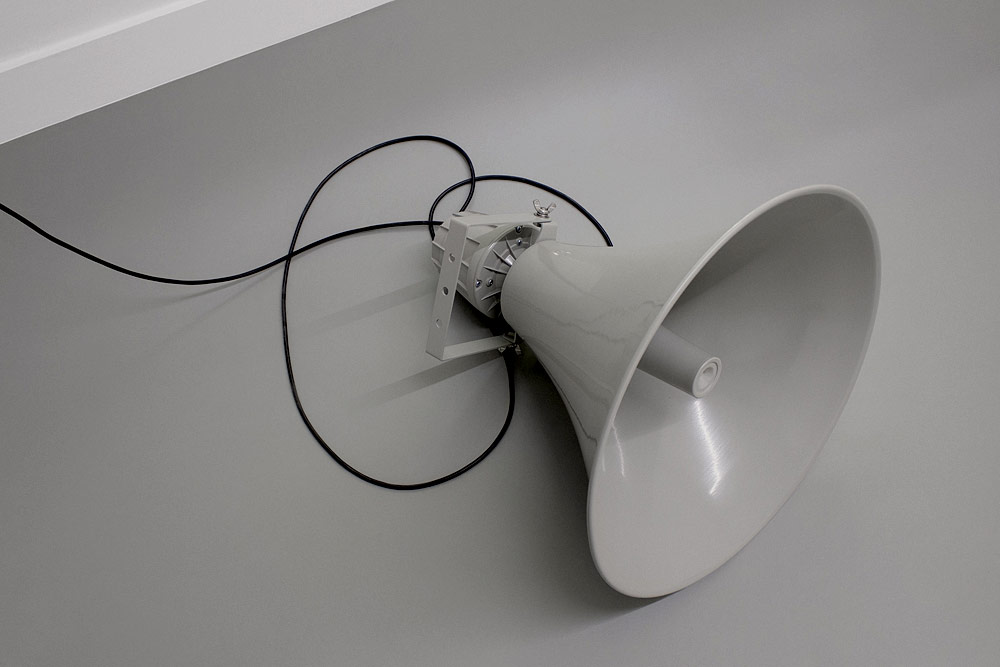
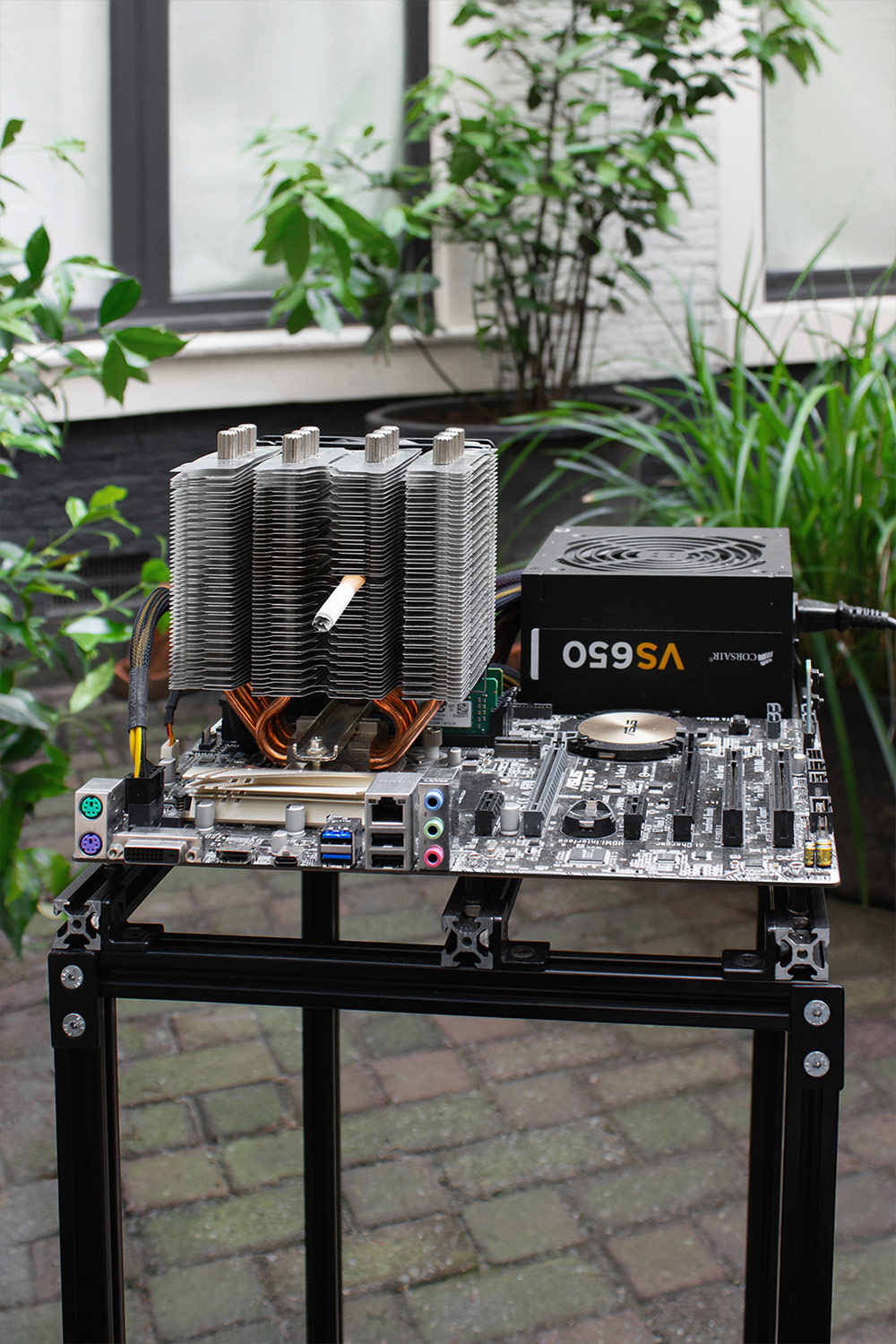
Computer Smoking (2025) presents the computer’s cooling system acting as a smoking body. Inside the machine, the CPU performs calculations, generates heat, and relies on airflow to keep the system from overheating. Instead, that airflow draws on a cigarette, sending smoke and residue back into hardware meant to stay clean and efficient. The gesture links digital labour to smoking as a ritual of relief: a pause, a coping mechanism, a class marker. The same ritual becomes a slow form of damage in conditions of exhaustion and limited autonomy. A machine engineered to process data ends up performing stress. Do automated systems inherit only human labour, or also the habits, wounds, and toxic forms of care that come with it?
Jason Cook
Contortion, 2024 / FR
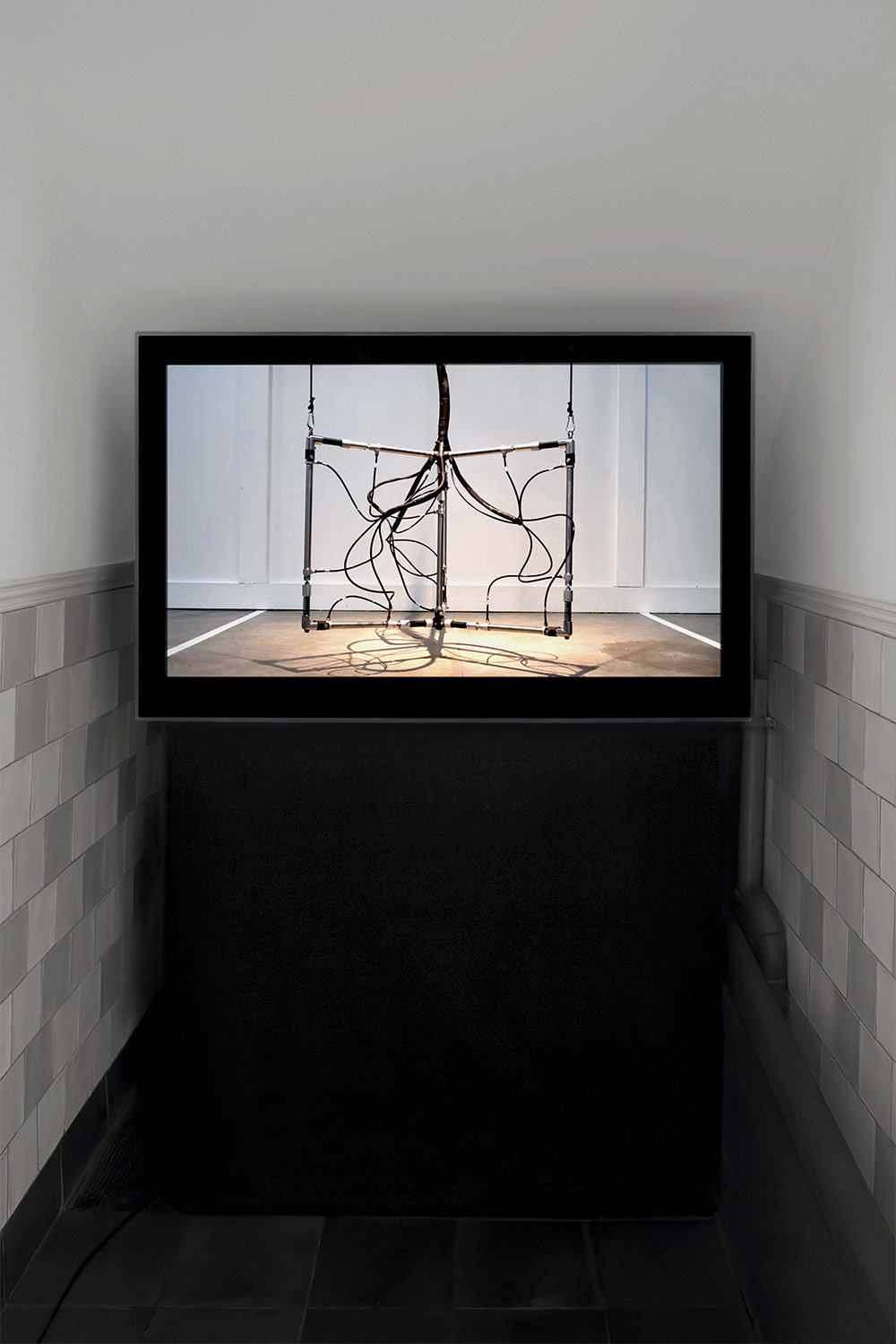
Jason Cook’s practice gives machines the habits of bodies: reflex, tension, rhythm, and strange intention. Trained in electronic and digital fine arts, he uses robotics, code, light, sensors, motors, and handmade mechanisms to open uneasy exchanges between people and technology. Machines appear as nervous companions rather than clean instruments — reacting, stalling, performing, and carrying small traces of humour, discomfort, and control. Their behaviour develops out of timing, friction, misfires, and small mechanical failures, and the technical begins to feel almost alive.
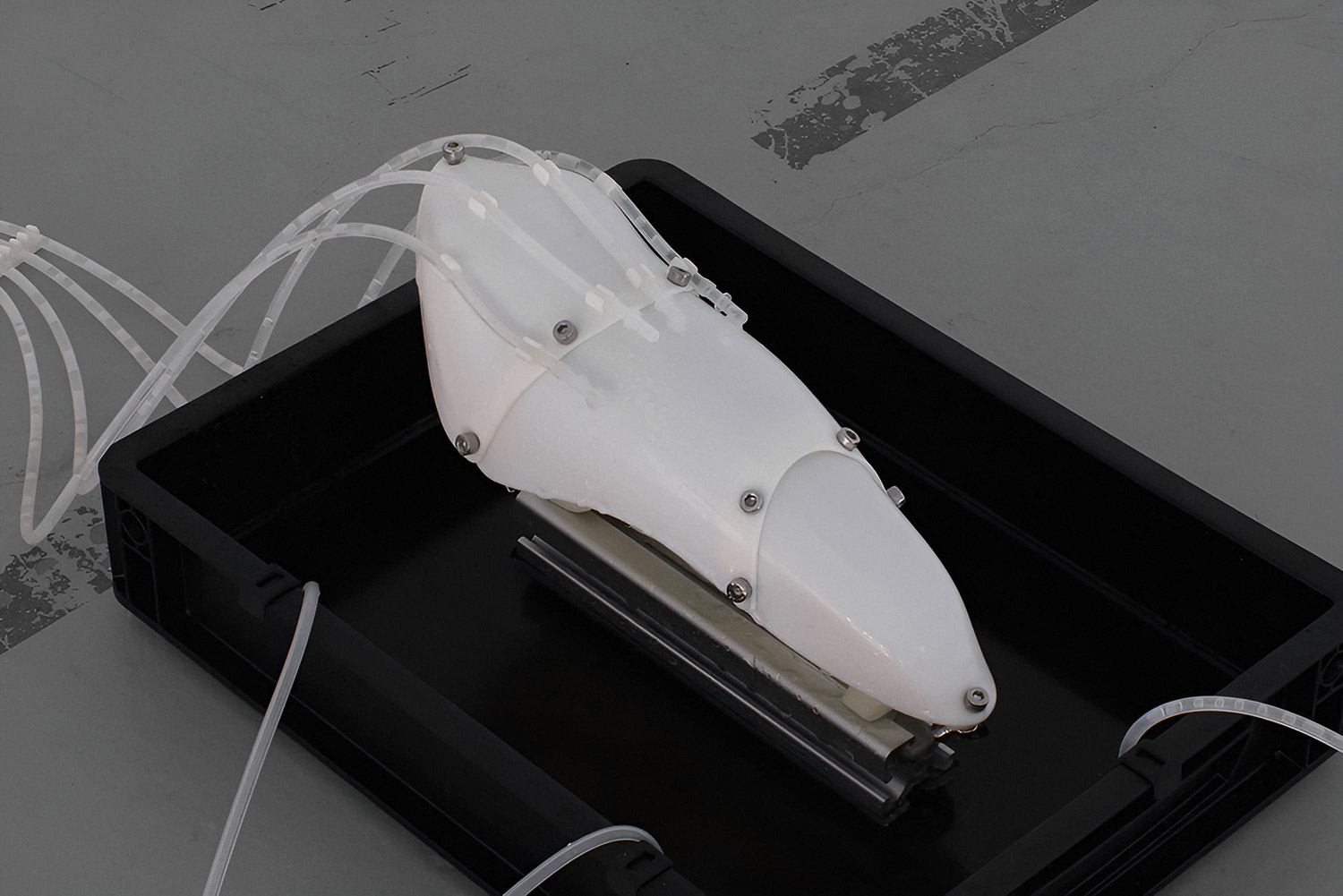
Contortion (2024) is an interactive pneumatic sculpture built from a trihedral frame, aluminum, steel, nylon, pistons, springs, air tubes, and custom electronics. The form first appears solid and contained, with its geometry held in place by a clear mechanical order. Once activated, pneumatic actuators push air through the structure, bending, pulling, expanding, and shifting it unpredictably. The viewer’s presence or absence determines the sculpture’s response, so the work changes in a direct exchange between body and mechanism. What looks like a fixed construction becomes a moving system caught between imposed constraint, physical pressure, and the attempt to act otherwise.
Linda Nasdalack
Given Enough Eyeballs All Bugs Are Shallow, 2024 / DE
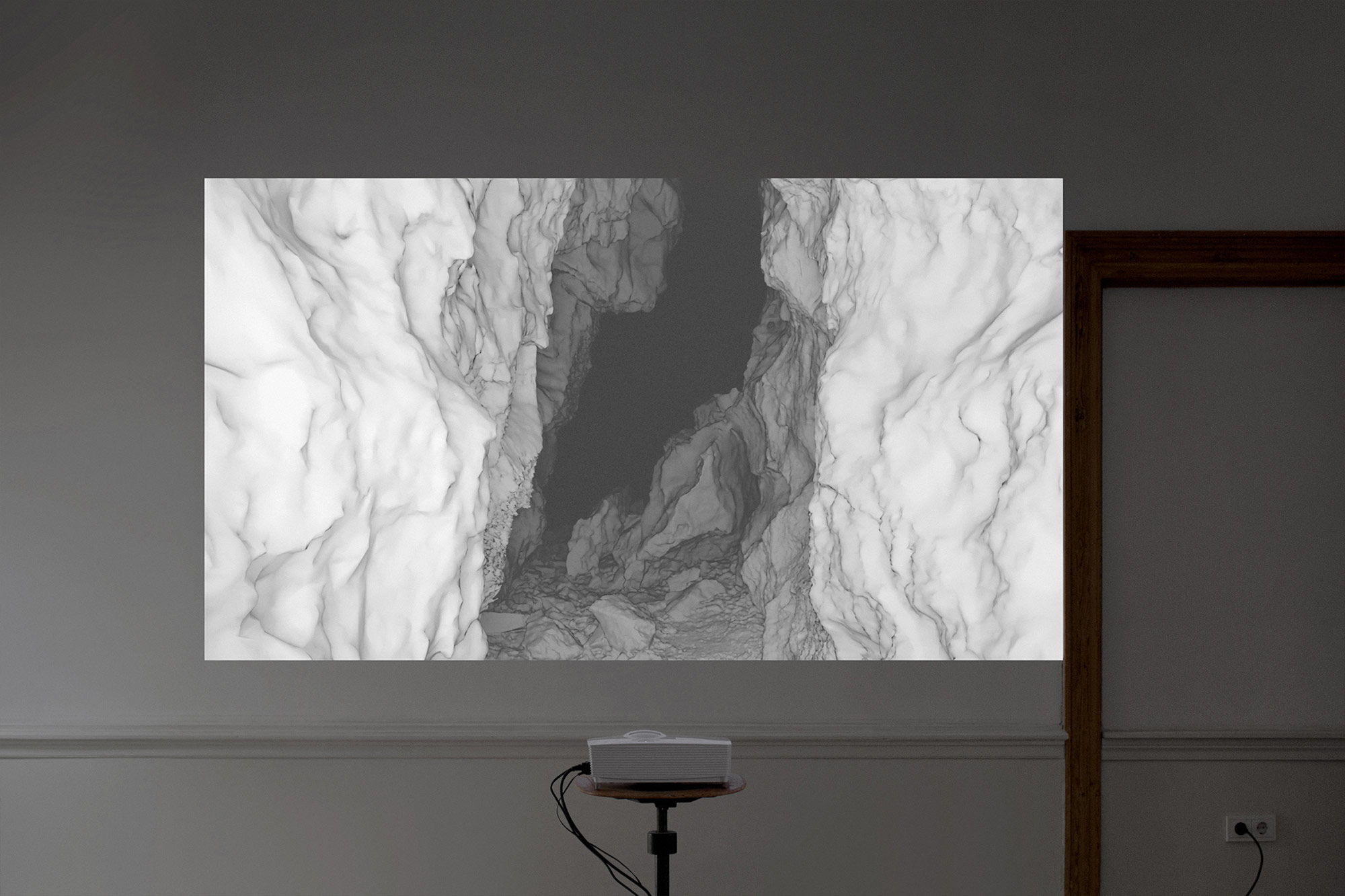
Linda Nasdalack works with what has no stable image: memory, trauma, fear, anxiety, and the daily pressure of social norms. Across photography, 3D video, sound, sculpture, and installation, invisible states gain a spatial form without reaching full clarity. Her queer-feminist position points to visibility as something unstable, a condition in which bodies can be exposed, misread, excluded, or pushed outside the normal frame. The image often arrives as a trace: partial, unstable, and charged by the matter left outside visibility. A logic of recognition reads only within the limits of its training, and Nasdalack returns to that blind spot.
Given Enough Eyeballs All Bugs Are Shallow (2024) takes place in virtual cave environments, leaving vision with almost nothing to hold onto. Point cloud scans, photographs, ambient sound, and fragments of dialogue on ambiguity create a remote, dark, and only partly readable space. The title refers to a well-known idea from debugging — enough observers should make every problem visible. Here, that promise breaks down. More looking does not bring control; it deepens the uncertainty. The installation leaves personal fear and planetary anxiety in the same dark field, shaped by life inside increasingly virtual, unpredictable worlds.
Colin Lyons
Operation Habbakuk, 2023 / CA
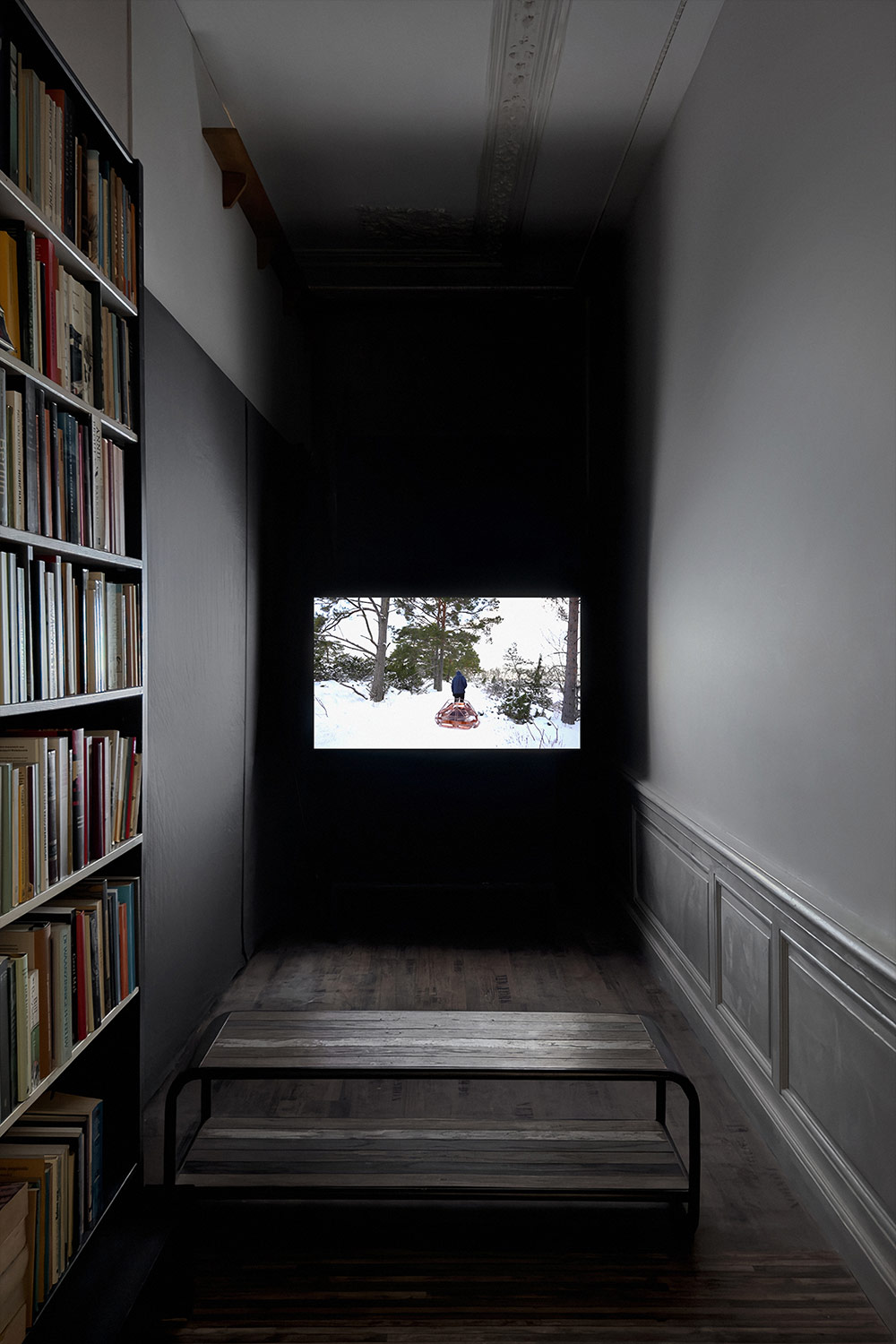
The first landscape behind Colin Lyons’s practice is Petrolia, Ontario, the birthplace of the North American oil industry. His projects begin where industry has finished speaking: ruins as inheritance. Mine tailings, decommissioned landfills, flood infrastructure, brownfields, remote islands — all marked by extraction. Printmaking enters as chemistry rather than image alone, feeding site-based and performative installations, machines, field tests, and prototypes. Industrial waste passes from experiment into ritual, somewhere between chemical test and ceremony. What gets exposed is the old faith in controlled intervention, and the dream of nature remade by technology.
At the centre of Operation Habbakuk (2023) is a failed wartime invention: Geoffrey Pyke’s 1942 plan for an aircraft carrier made from pykrete, a mixture of wood pulp and ice. The prototype was abandoned at the bottom of Patricia Lake. Around eighty years later, Lyons returns to the idea on Örö, a decommissioned military island in Finland, with a frozen one-person naval life raft. The raft follows the logic of current Arctic geoengineering proposals: thicker ice, reflective silica, artificial icebergs, and chemical fixes for a warming sea. A ritual of tailing-pond water, pyrite, naval remains, desalination, mist, and silica tries to keep the raft alive. Are artificial processes and controlled interventions saving nature — or just making another monument to the same industrial logic that damaged it?