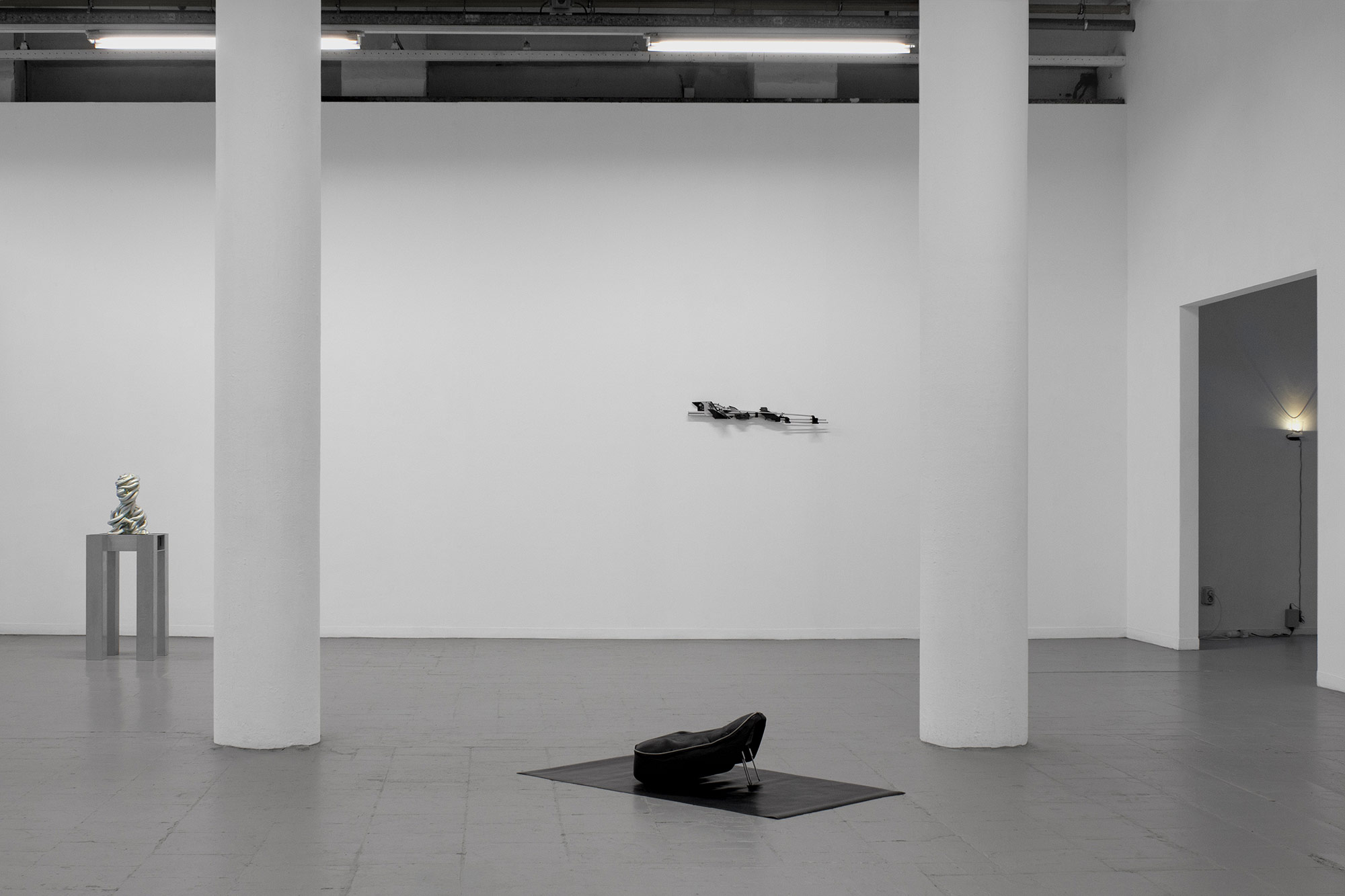
Roaring Into Being marks the final phase of ESC 2034’s evolving study into digital futures, concluding a conceptual trilogy. It traces a trajectory from subtle machine-nature interactions toward a world shaped almost entirely by technology.
The exhibition moves between the rumble of machines, the resonance of nature, and the shifting terrains of digital evolution. Each work reflects on humanity’s changing relationship with technology — its imprint on the environment, the body, and ways of seeing.
Looking at the convergence of the synthetic and the organic, in Roaring Into Being some works treat ecology as metaphor, others as method. The divide disappears, questioning interdependence, and tracing the fragile systems we inhabit. Digital landscapes wrap around human forms; closed-loop environments fold organic and artificial into each other.
Across the exhibition, technology appears not as future, but as condition — embedded, felt, and already altering what it means to be physical, connected, or alive.
ESC 2034 chapters: I — Machine Echoes, II — Industrial Tension, III — Roaring Into Being.
Artists
Chang Hsin Yu
Listen to the Light — Routine, 2024
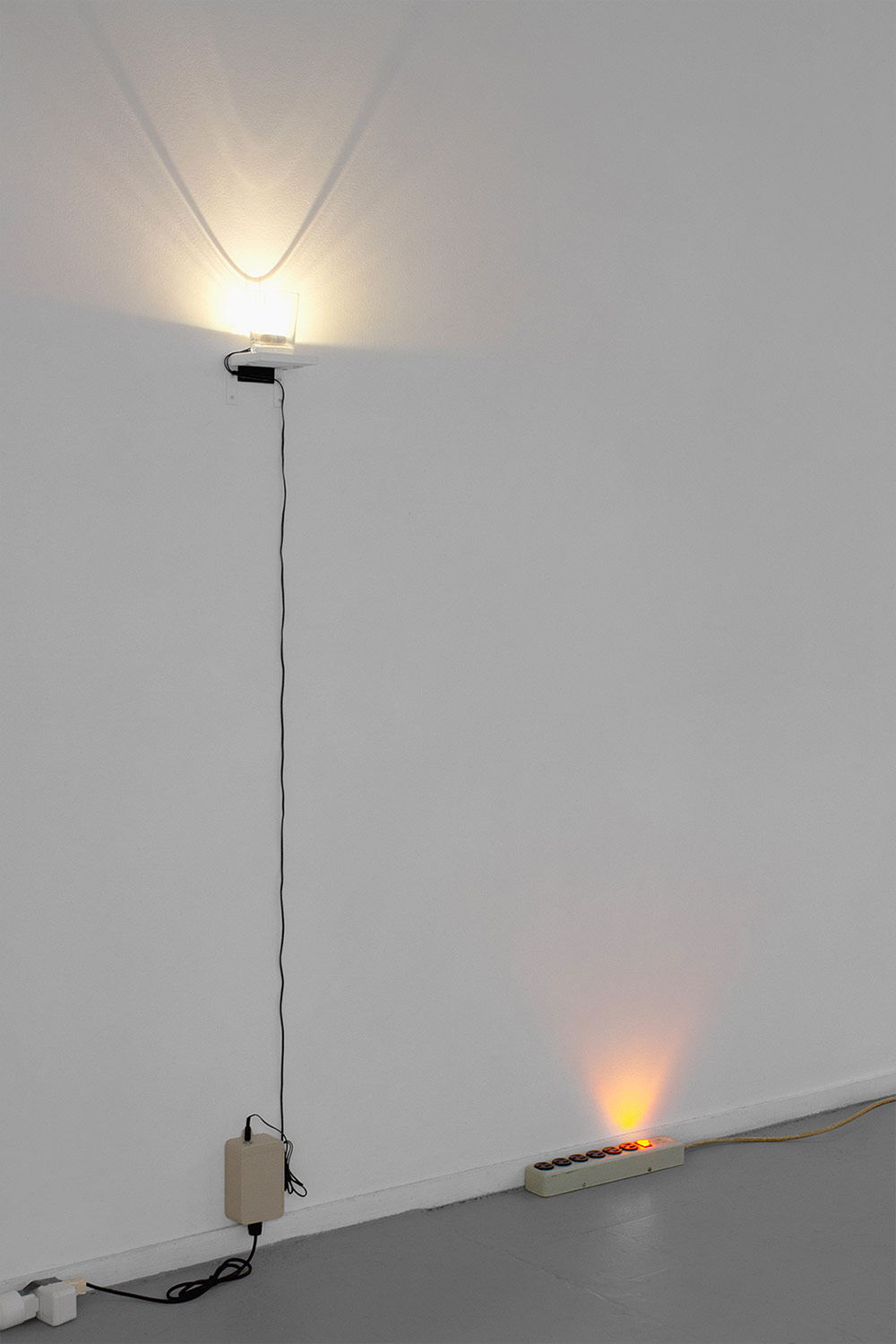
Sound goes ahead and traces edges, corners, and distance. It flows like a current and breath in one motion, abstract yet direct, an invisible force that defines the room. Chang Hsin Yu makes translators for it: sensors, small circuits, and code that map motion, light, and air to tone. He studies a space’s capacity and mechanism — how walls shape what is heard and how a device carries that change. Generative rules leave the system open so life can enter; randomness feels more alive than a fixed plan. City noise and studio tone share one field. He follows perception, lets the room find its rhythm, and listens for the moment a device becomes a place.
Listen to the Light — Routine works as a simple chain. A handheld detector with a solar cell captures quick changes in light and outputs voltage; an amplifier and small synth stage make the signal audible to navigate by. It gathers the constant waves of manufactured daylight and returns their activity as sound. Each source answers differently, so walking defines how the piece is heard.
Andrea Samory
Signal 4.1 - Serpent, 2025
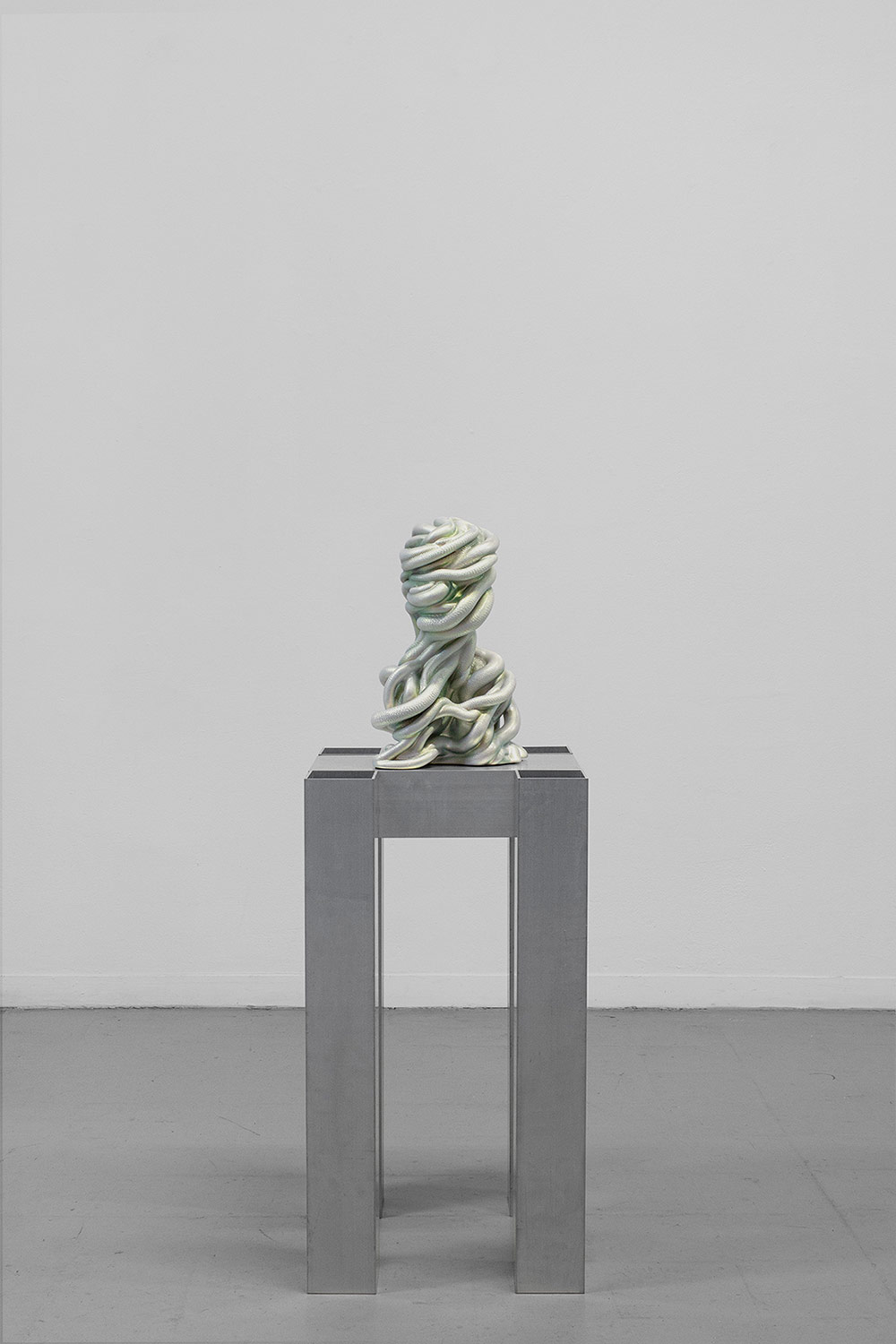
Post-internet logic: virtual images and unseen pressures made physical. Andrea Samory follows virality and similar routes that direct attention, then reworks familiar icons until they feel close and slightly off. Animation, 3D sculpting and printing, plus special-effects hand casting, give screen habits weight and presence. Themes circle growth, entropy, myth, and hubris (overreach dressed as progress). The surfaces look precise and glossy; on a second look, you notice seams, scale, and subtle hints designed to catch empathy.
Signal 4.1 – Serpent extends that threshold study: the edge where recognition begins, and how strong feeling can travel through a near-abstract form. Drawn as a single coil, it stretches from virtual to physical and turns screen logic into something you can walk around. The sculpture operates as a sign rather than a depiction. Made for quick lock-on and return, it rehearses how signals survive online. A small change in viewing angle switches the message from invite to warning, sometimes both at once. As a subconscious cue, the image acts before thought, directing movement and steering gaze.
David Bowen
fly revolver, 2013
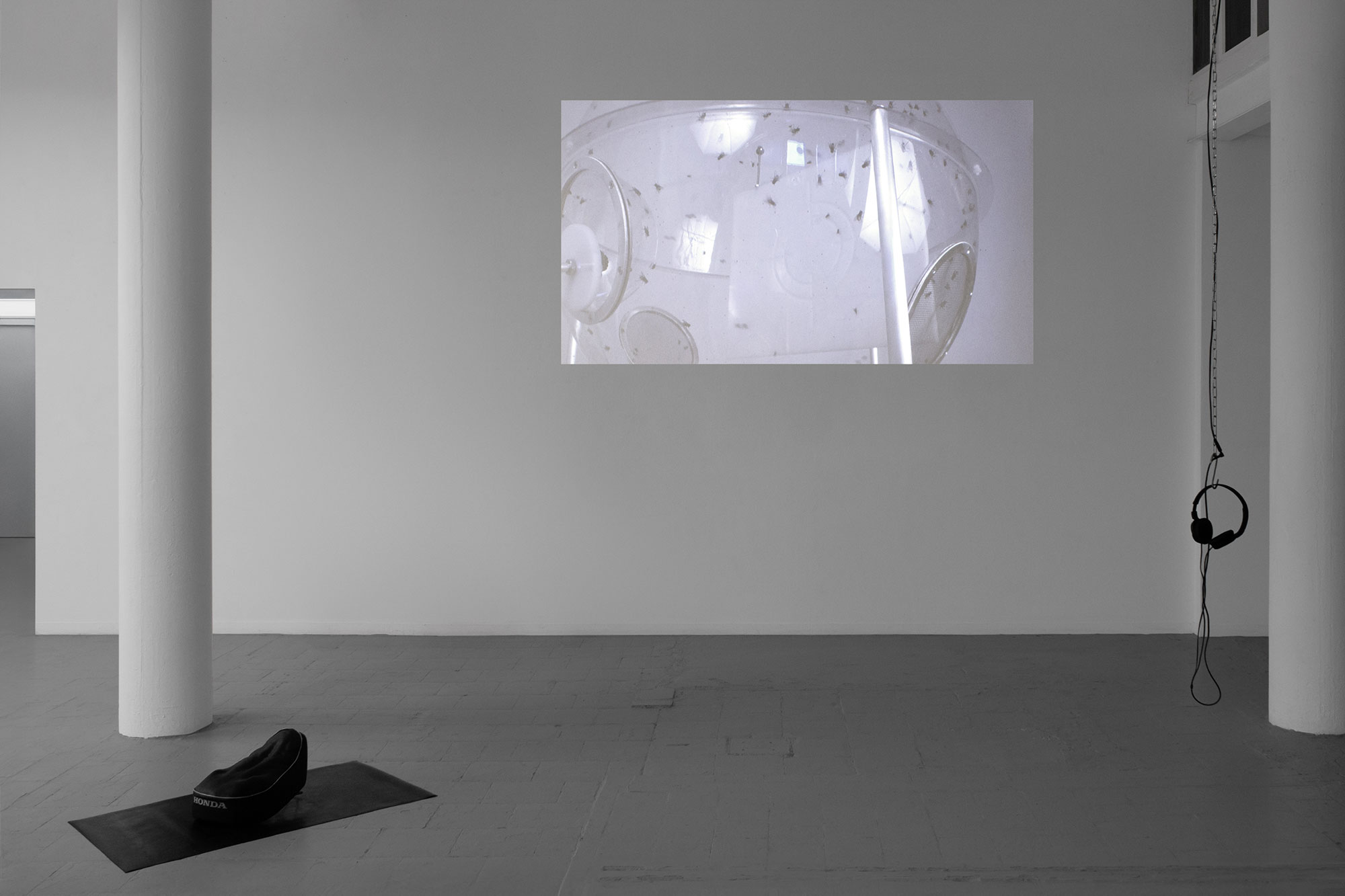
Wind draws lines, water keeps time, plants send voltages, and insects mark positions. David Bowen builds instruments that turn these cues into motion: cameras and sensors route signals to motors, and you can trace cause and effect. Projects range from a cloud-played piano and a plant-driven machete that maps leaf resistance to robotic joints, to a field of 50 motorized twigs that point at passing space debris. Attention follows the system’s logic: read, translate, move. Rules, delays, and limits shape the response; the source never rests. The work is observation turned kinetic: small rules, clear chains, and the world composes directly.
fly revolver hands aim to a small colony of houseflies. The flies live inside an acrylic sphere with a target backdrop that defines the coordinate field. A camera observes while custom software parses positions in real time and drives a pan/tilt rig that aims. Once started, the system runs autonomously. One fly in view, the barrel follows; many flies, the motion averages; when a fly is detected at the center of the target, the trigger fires. Seeing becomes coordinates; coordinates set the aim; mechanics follow. The system decides what qualifies as a target and when to act.
Maxime Lechêne
DRS 0.2, 2024
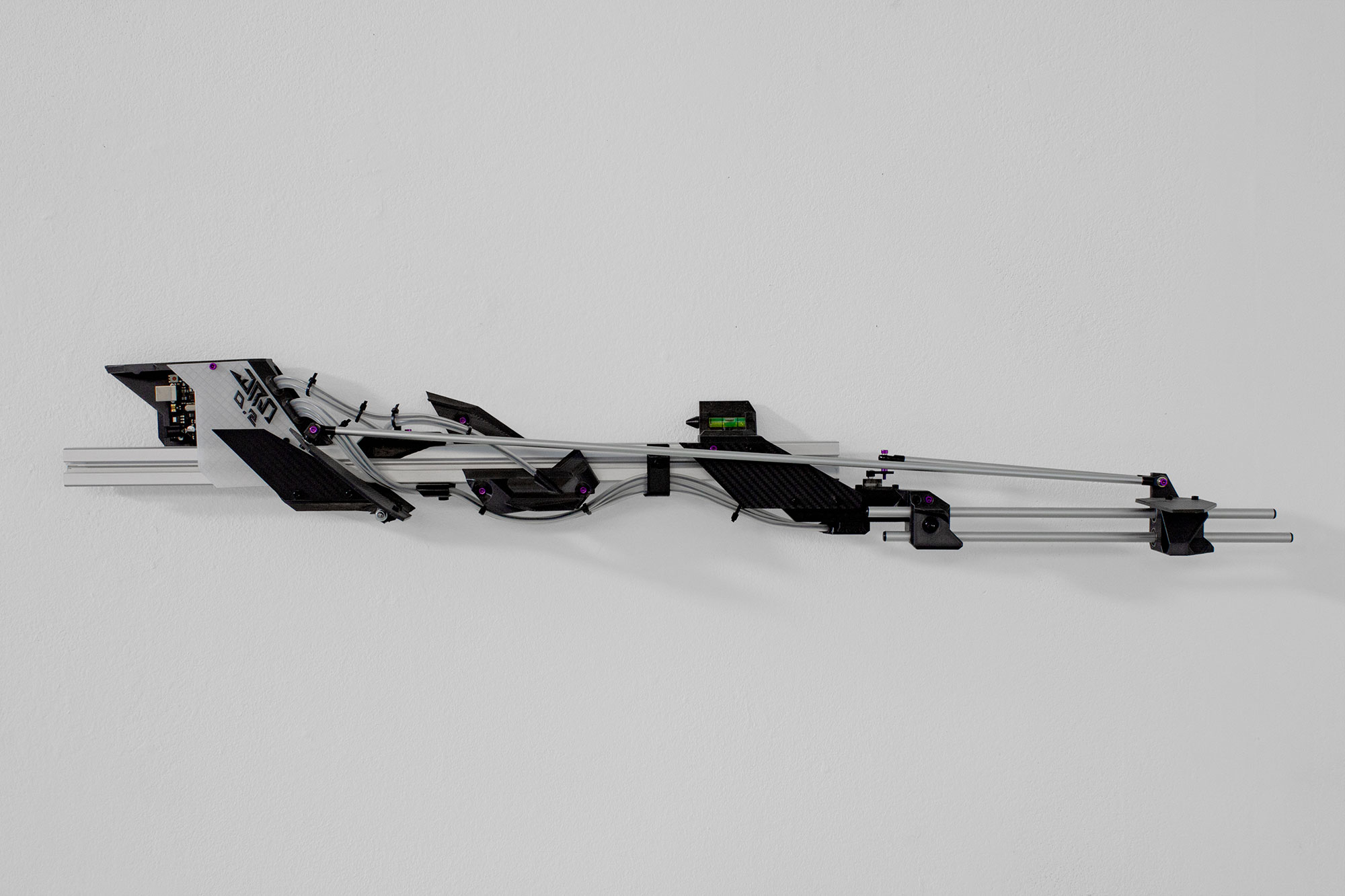
Working on the edge between object design and sculpture, Maxime Lechêne builds from purpose outward. Function defines the shape; form follows last. Industrial culture is the dictionary: machined tolerances, aero panels, components that look right because they work. He looks at how objects claim bare, dehumanized urban space — how use records itself in wear and how desire builds around utility. Volumes narrow where resistance rises, and surfaces adjust rather than force through.
DRS 0.2 begins from a single idea: a body that can change itself to move through air with less effort. In F1, the Drag Reduction System opens the rear wing in set zones to cut drag and gain speed for passes. In Time Attack, drivers chase a single lap and run oversized wings for corner grip. Racing technology is read like birdflight — a small shift in wing or angle rewrites the air. Aerodynamics as material: panels align to air, edges take the easy route; movement listens to wind before will, weighing speed against the world it crosses.
Egosito
Spike Harp, 2024
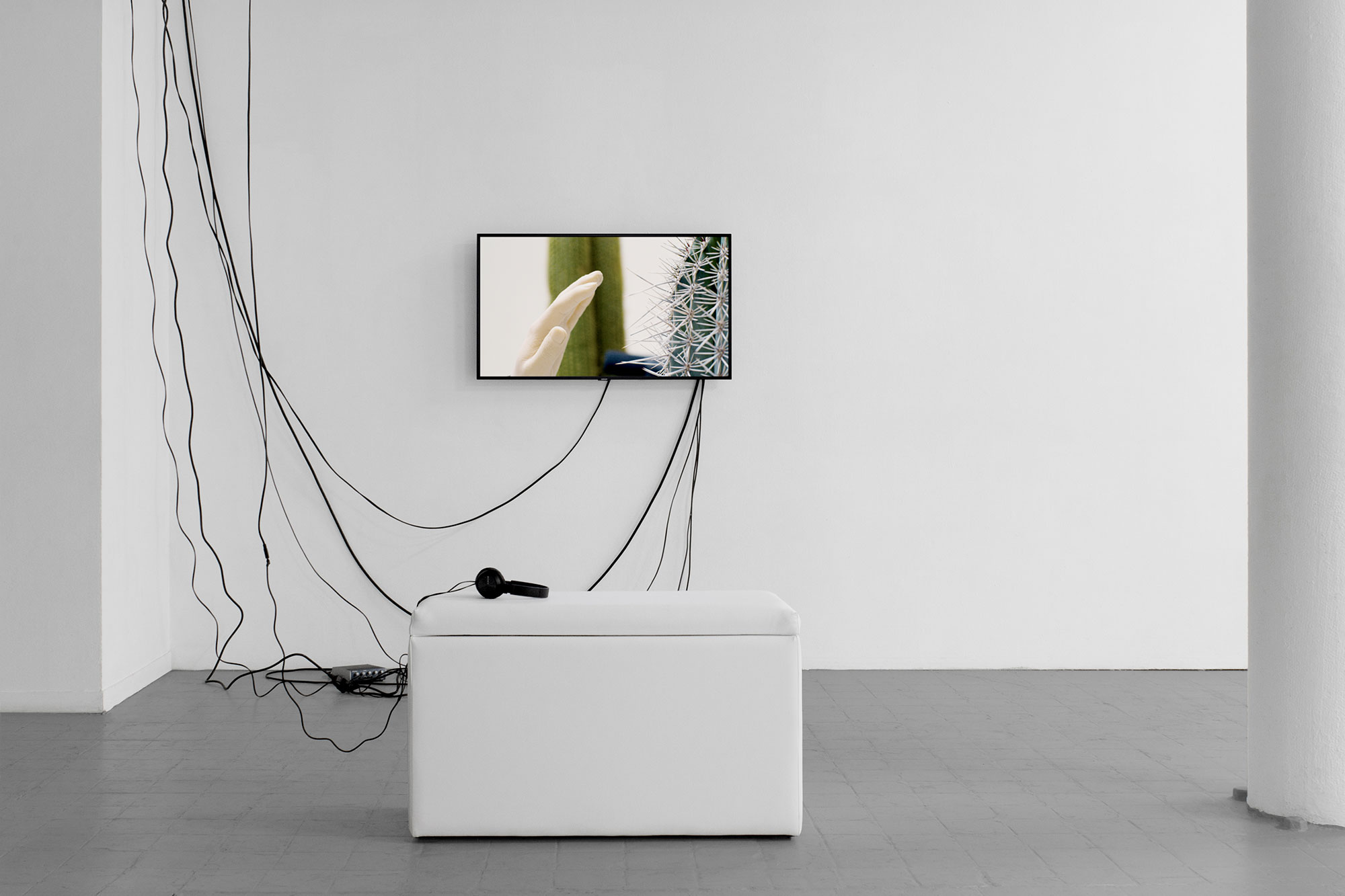
Mechanical choreography, not music — simple actuators, careful timing, sound born from contact. Egosito practices where sound, motion, and touch meet; small devices translate contact into tone. Friction comes through brush, wobble, and tap; the loop makes that tension audible. Repetition strips the gesture down to rhythm. Pressure and proximity control what is seen and heard, with timbre shifting as contact length and force change. Tuning ordinary hardware like instruments, the artist tests when a mechanical gesture feels present enough to hold attention.
Spike Harp sends a robotic hand around three cacti on a predictable path. Contact produces bright, clicking tones, somewhere between taut ticks and light percussion. Each pass leaves a record of small cuts, scuffs, and thinning skin — a trace with its own pattern. The device defines the terms of contact and the level of sound, and still it reaches again. Care and refusal press together, and the cost surfaces as scars. Nature sets a limit, and the machine keeps testing.
Sophia Gatzkan
Drift, 2022
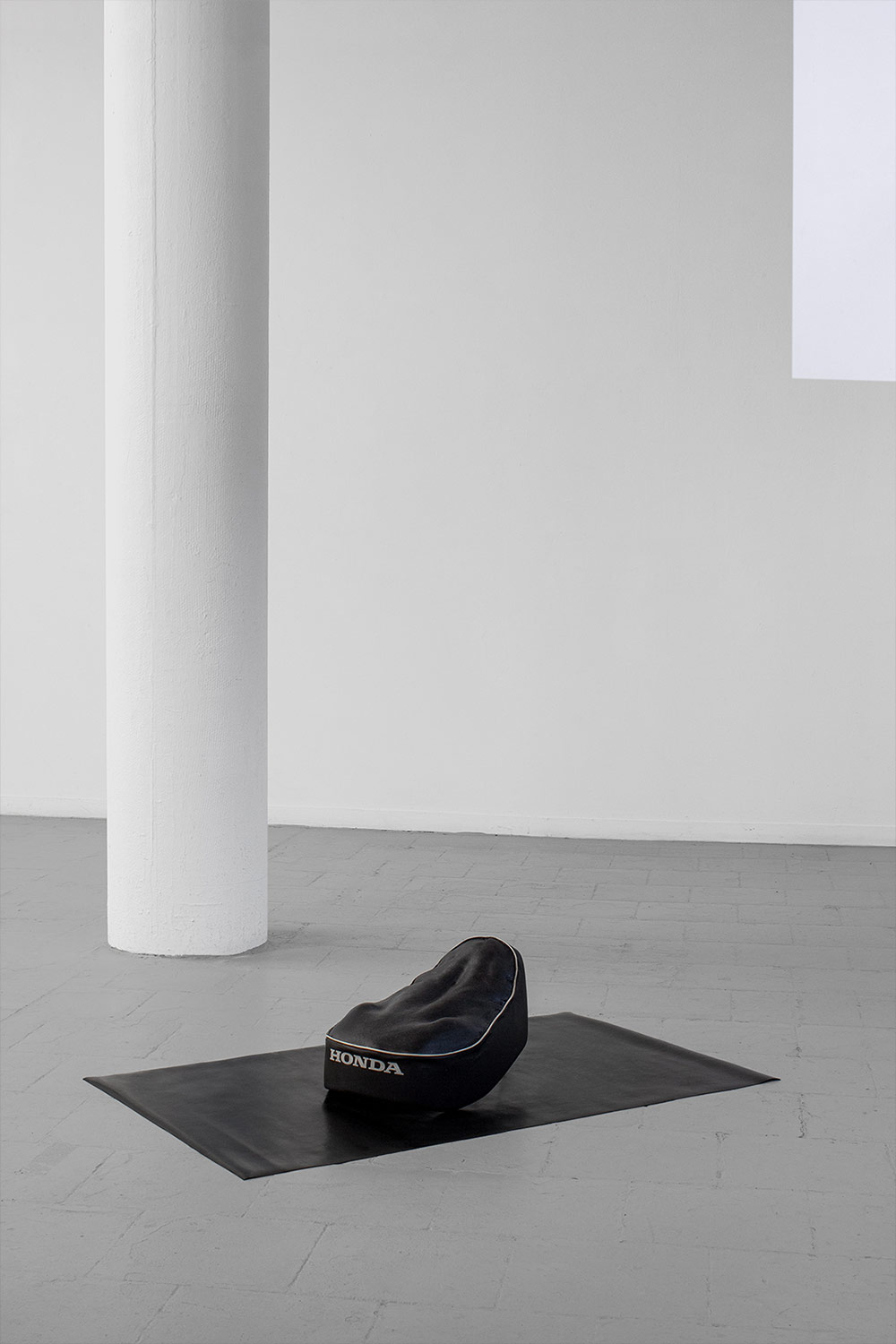
Looking at the body as a changing system, for Sophia Gatzkan, technology is part of its tissue. Her focus centers on non-normative morphology and disability discourse as a structure for thinking. Ideas morph through text and stage before settling into material. Casts, shells, and found parts are controlled with cold precision; materials harden into skins, while the surfaces invite a warm human touch. Prosthetic references gather into objects that ask who gets to count as whole. From there, enhancement registers as desire and support, even as pressure to integrate technology into the self remains.
Drift extends this logic. A hybrid seat-body stages pleasure, care, and control in one frame. The silhouette suggests support and speed at once; the gloss meets soft volumes; joins and seams are visible. It imagines attachment as intimacy more than repair, a body that changes shape with its tool. The result is a posture more than a gadget: how a person might inhabit machine logic and keep the animal edge.
Johannes Thiel
Post SHIELD (Hydrokinetic Pool), 2024
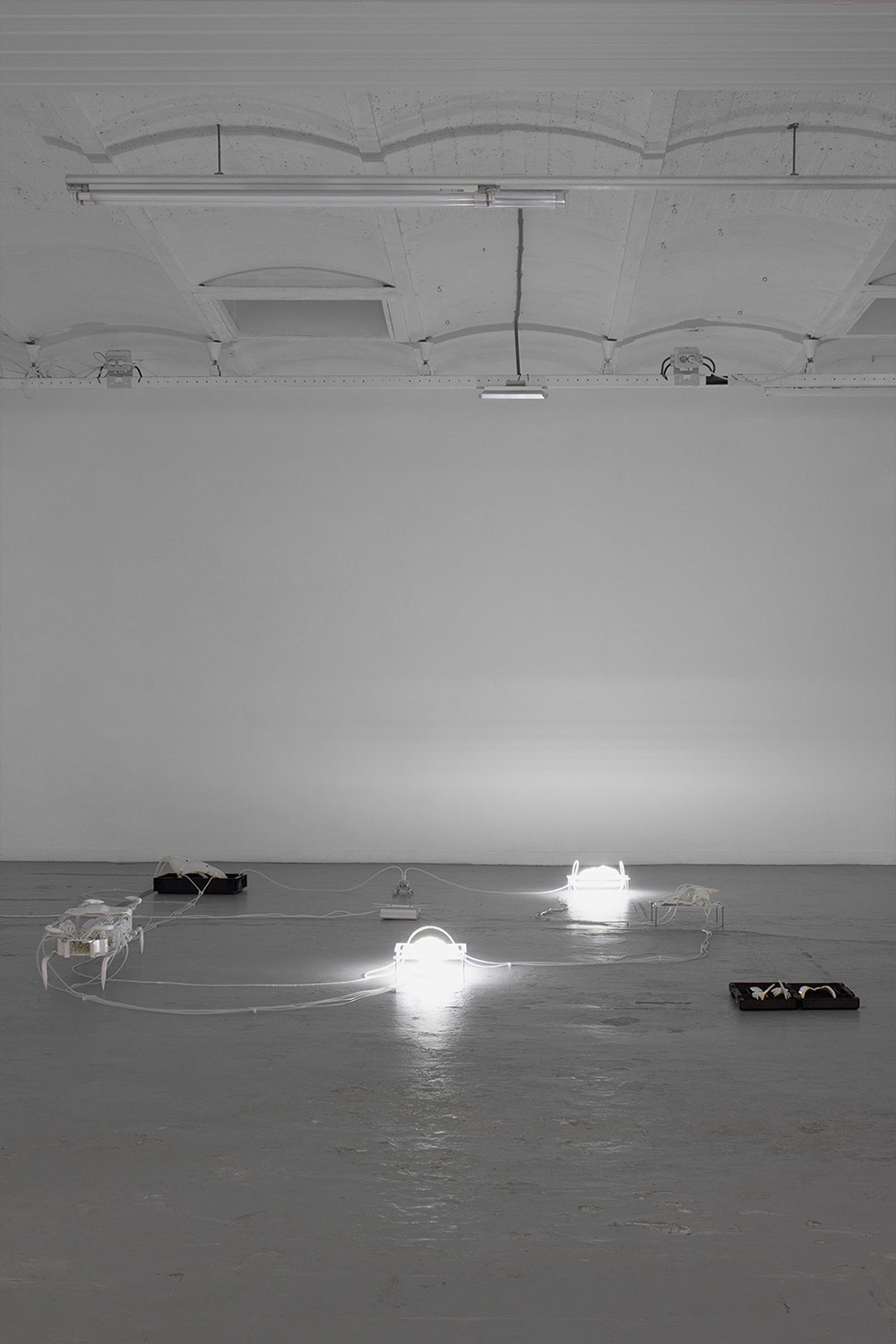
Through industrial logic and algorithmic rules, Johannes Thiel engineers systems made to be tools, but they behave like bodies. Soft robotics and pneumatics move in measured cycles; printed parts and polished shells function as the skin; diagrams run underneath as a way to think. Fabrication and digital design drive the process: 3D printing, laser cutting, microcontrollers, valves, and air lines. Construction stays visible; the logic carries across formats. With a feel of prosthetic fragments or biomechanical prototypes, his work simulates function rather than delivering it. Patterns from organisms and repeated rules introduce small shifts until precision starts to feel alive.
In Post SHIELD (Hydrokinetic Pool), that approach arrives as an anatomical plan. A silicone core “breathes” on pneumatics; air and fluid flow through a shielded reservoir, then return via silicone lines to the start, closing the loop. Bionic interfaces and illumination frame the scene like a clinic and a habitat at once. Protection can mean exchange; circulation is a kind of care; a system can feel alive with only small motion and steady regulation.
Lotta Stöver
Sleep Like Mountains, 2025
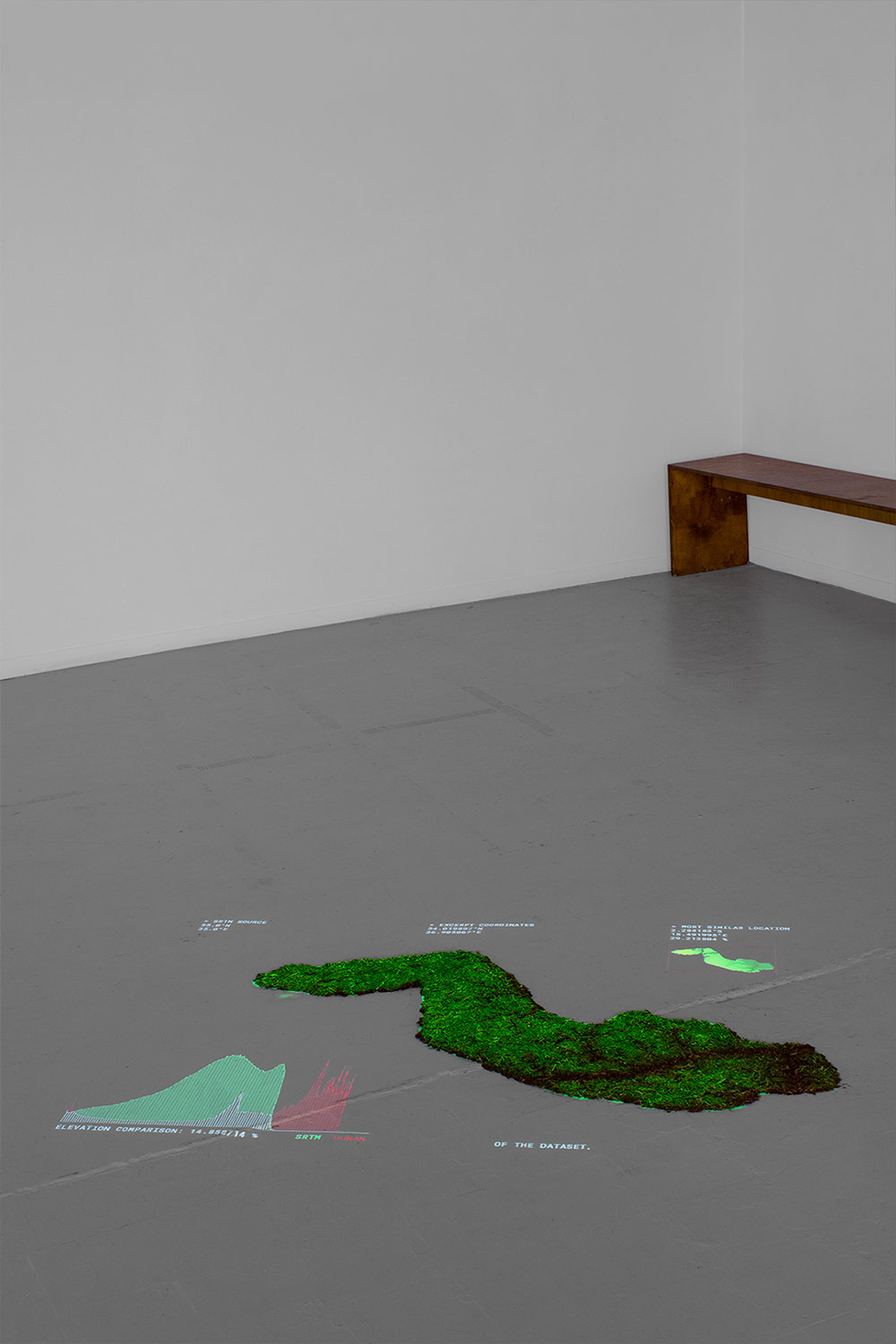
Sensor rigs, code, images, and text work side by side, a small lab for close attention. Among custom circuits and compact software, Lotta Stöver treats technologies as social actors. Data works as material, refined through making. Error and reduction are part of the practice; what digitization skips or rounds can reveal connections. She lets prototypes stay open so ideas and tools evolve together, and writing accompanies electronics as an instrument. Her work asks who is recognized as natural, social, or other-than-human.
Sleep Like Mountains explores belonging through measurement: SRTM elevation data (NASA’s radar-based digital topography) align planetary relief with the scale of a body. After earlier live scans, this iteration is precomputed and projected onto a body-shaped ground relief, annotated with small algorithmic notes. On-screen prompts guide attention to being, casting the visitor as both viewer and subject, “part of the dataset.” Human and landscape are held as relation rather than control. Scale collapses to your step; for a minute, the mountain takes your shape.