'... the world paused. Nobody’s here, but something still is.
The systems haven’t shut down completely: screens, wiring, dust, and light still translate motion, heat, and air into tone. It’s what’s left when presence dissolves: a soft outline of a power that used to mean something. Moments, held deep, fog the room; memory without archive, body without agency, signal without anyone left to receive it. In suspension, remnants, not yet ruins, keep instructing from a world we already lost. What’s left isn’t us. It’s what we built to contain us — climate systems, language, surface, interface. All still here.'
The ESC 2035 trilogy starts with this first chapter, ‘The world paused.’ Formed through an open call of over 600 submissions and a final selection of 22 works, this first exhibition brings together eight artists. It reads like a weather report from the edge of tomorrow — slow signals from a world that keeps running even when we step out of frame.
It continues the questions opened in ESC 2034, where technology appeared not as future but as condition, already shaping what it means to be physical, connected, or alive. But what happens when the systems we made are all that's left? Dust and residue, tired surfaces, human print as archive; a forest of sound circuits, warmth from neon, interfaces fossilised into stone, movement held in a human rhythm.
Artists
S. Mercure (CA)
Dust and maybe MORE, 2025
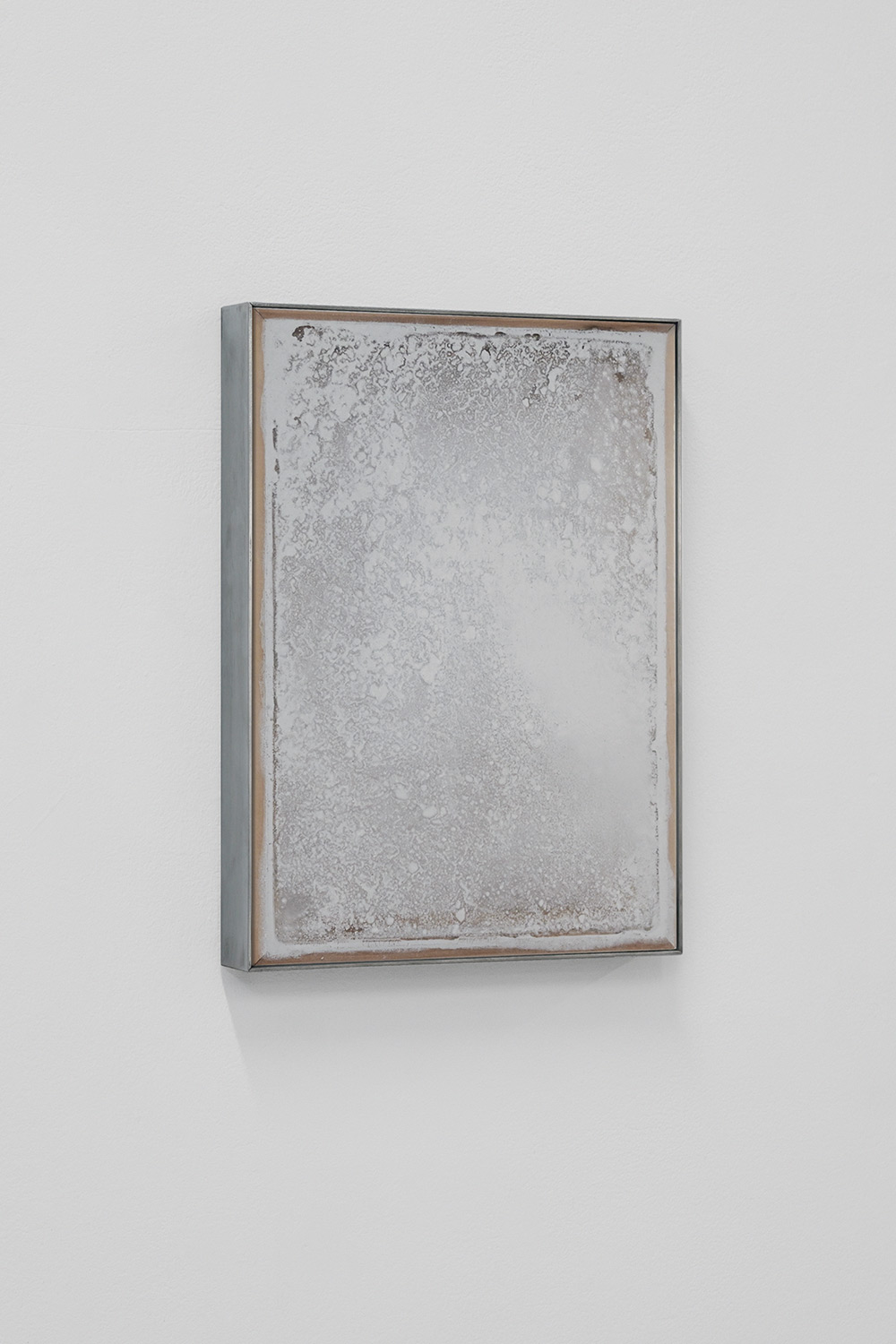
For S. Mercure, a project is a living mechanism defined by its boundaries. The rules are set before the work even begins: what can be used, when it appears, and how it changes. Every sample, every sequence, and every timing is written out in advance. The exhibition space acts as an agent — a sensitive surface or a listening body — where the process stays central. The final form is just the tension between the method and what is actually seen. Sometimes a single source starts the chain: a signal between two facing speakers, or an archive of unfinished recordings. Everything else develops inside that narrow frame. These small variations in the script don't feel like accidents; they are the logic that turns each iteration into a study of cause and effect.
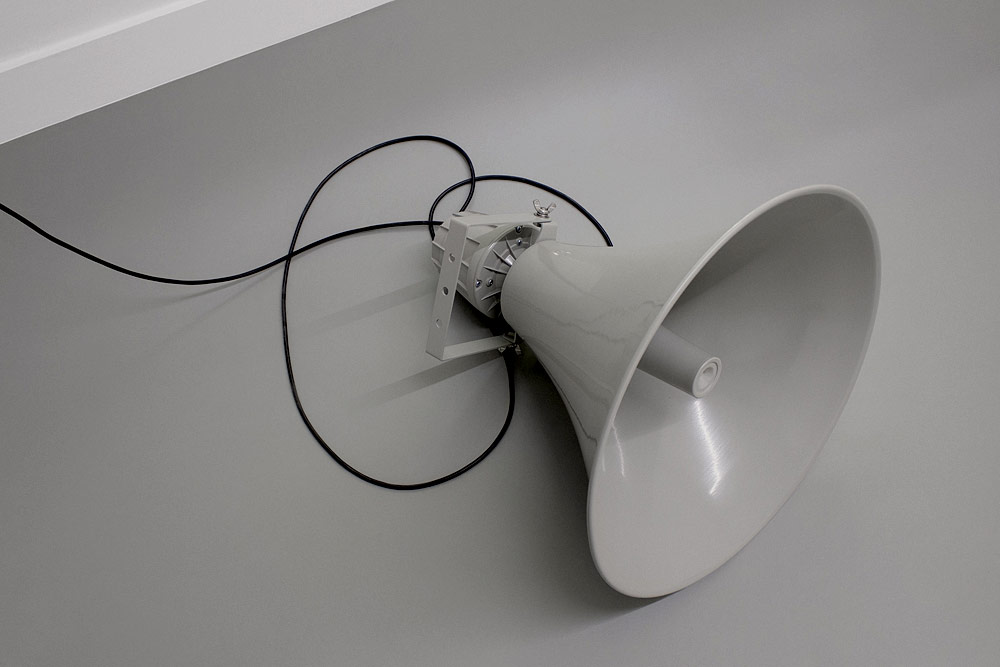
Dust and maybe MORE (2025) grows from a simple sequence: collect, transform, replace. Wall dust and condensed air are taken from the room and combined into a liquid that functions as a material index of the site. From this substance, a painting is activated at a distance, storing the climate and surface of the space as color and texture. During the exhibition, a single neutral placeholder panel remains on the wall, holding the spot in light and shadow. The actual painting remains outside the gallery; these surfaces only meet within edited images, where a conceptual replacement joins them. The project lives in this overlap, where extraction, presence, and institutional framing outline the work’s existence.
Francesco Zedde (IT)
Thicket, 2025
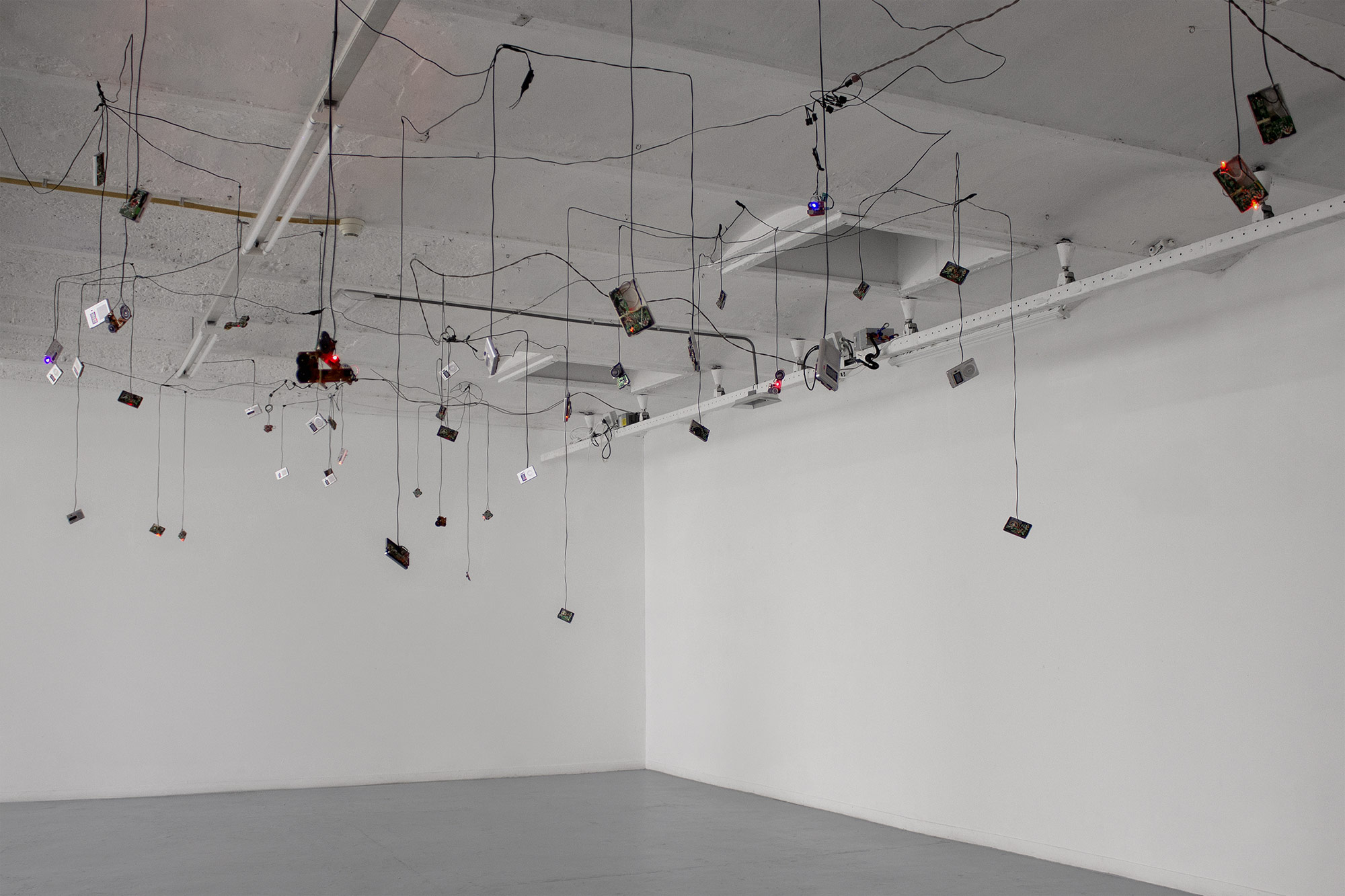
Tension between chaos and control defines the instruments Francesco Zedde builds — machines that react to the room, the light, and the people within it. A sound engineer trained in electronic music and sociology, he uses hacked electronics to turn obsolete consumer junk into a living archive. Each unit is a piece of discarded technology, rewired to fight back against its factory programming. His research into spatial sound and augmented instrument design lets the architecture of a room act as a resonating body, where the device collapses into the space. He rejects the static score, favouring setups where listener and hardware co-create the friction. In his system, the “instrument” is a volatile entity that responds to the sociology of the crowd — a rhetorical strike against corporate waste and a quiet love letter to noise.
Thicket (2025) creates a forest of noise, suspending a hundred hacked circuits from the ceiling like a swarm of electronic insects. Each unit functions as a tiny screaming sculpture where light gains volume through a photoresistor. The character of the sound changes with the light’s intensity. Hyper-aware of the observer, the high-sensitivity sensors detect presence several meters away and can trigger a reaction. This simulation of the natural world, manually tuned and calibrated, is built from the very things that destroyed it. It’s a listening exercise in a world that’s forgotten how to hear — where the only fauna left is the machine, chirping through the imitation we built to replace the real thing.
Junya Li (CN)
Sun Letter, 2025
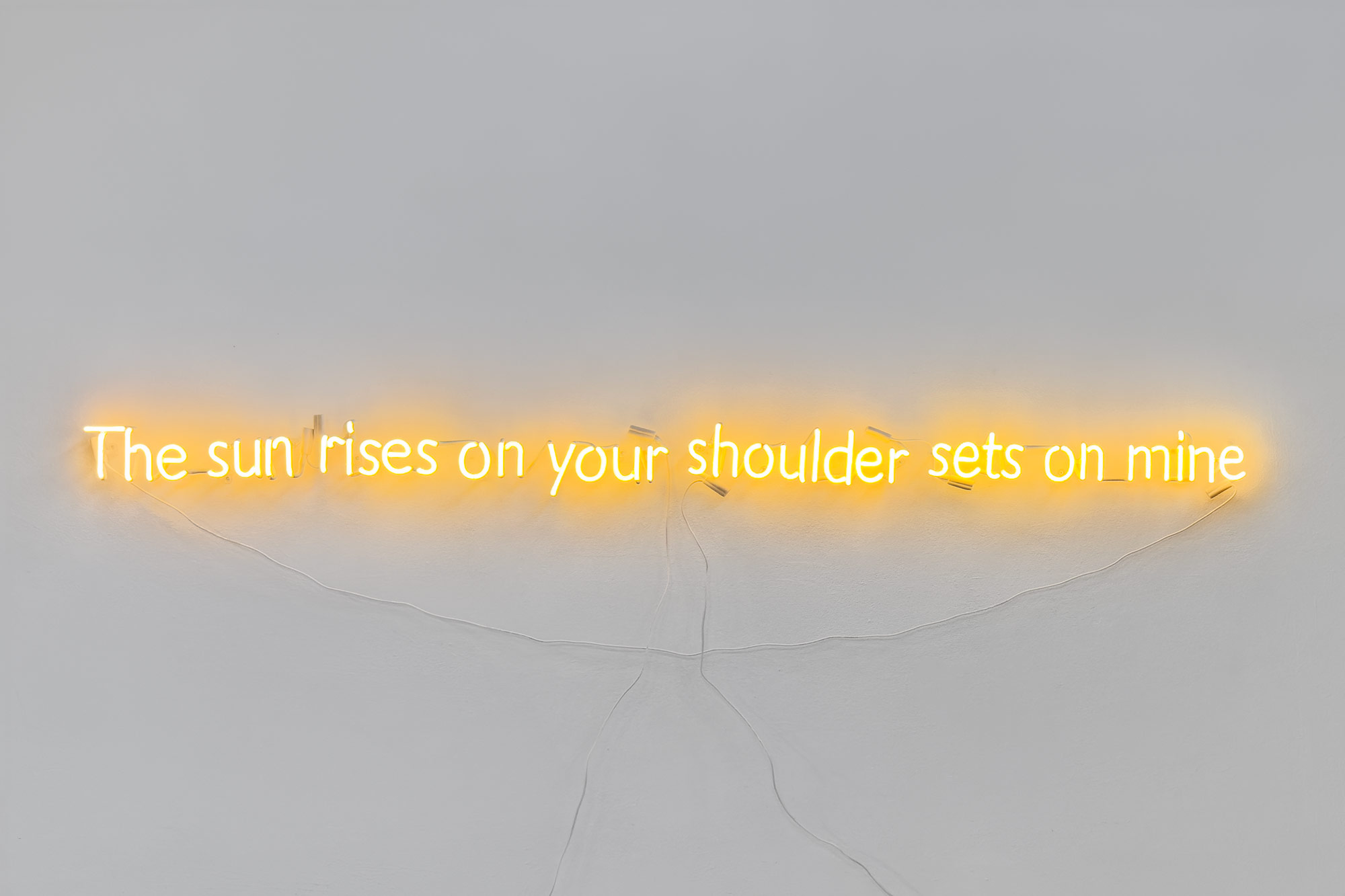
Taking a step back, Junya Li hands control over to a stranger, a system, or a clock. Delay itself becomes the material. This reality is built out of administrative fallout — timestamps, instructions, and the paper-thin logic of the archive. Here, narratives are manufactured to alter perception and behavior — what’s noticed, and how that changes what happens. Instead of producing an object, the focus stays on the reframing of the event. As an action-chain: each work is triggered by a protocol or a threshold. Found materials are gathered and reset until their internal logic meets the real world: timing, permission, authority. It is a deliberate search for that thin edge where a work is never finished, until the gap between action and outcome exposes the structure of relations.
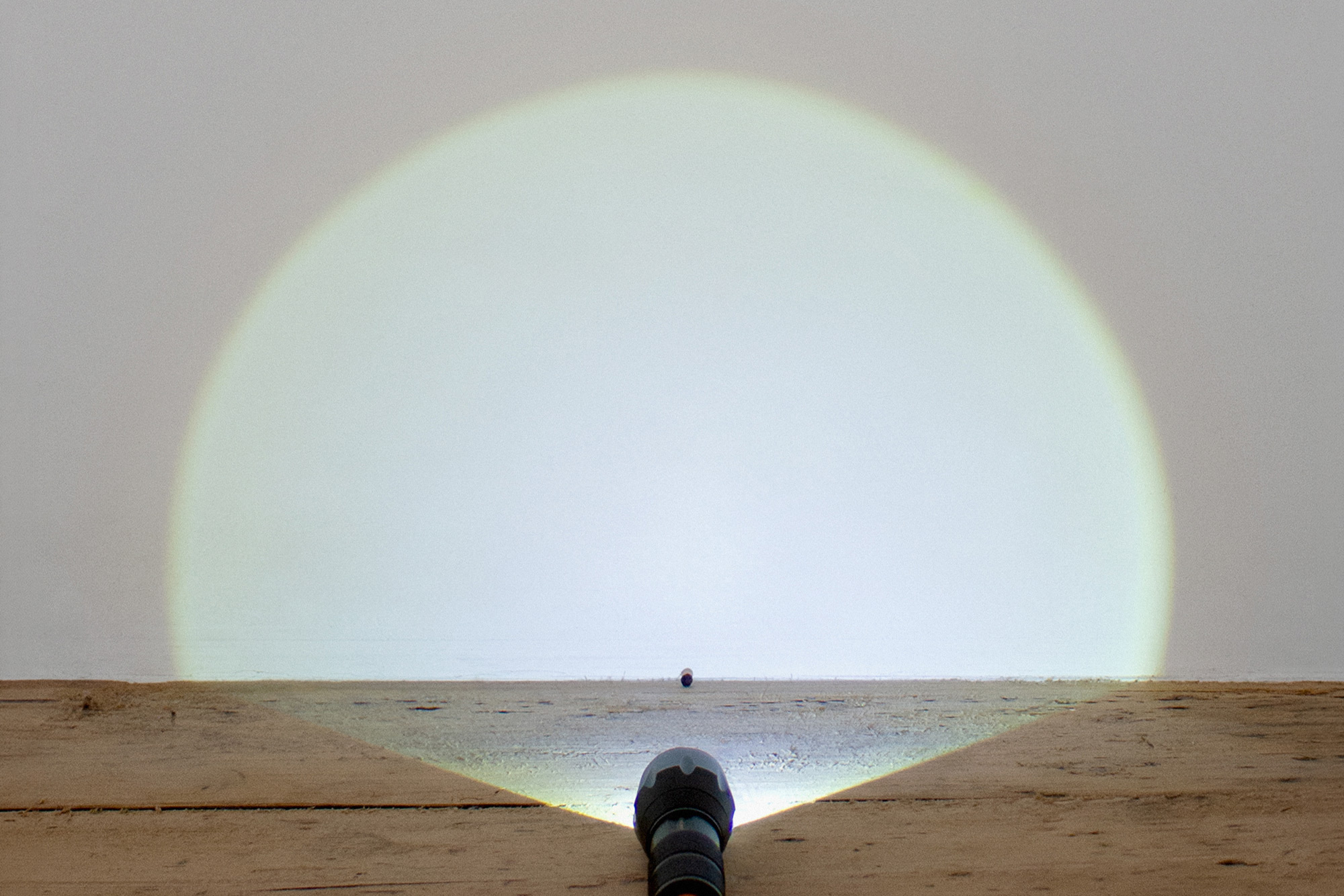
Following the logic of a letter, Sun Letter (2025) imagines a line of light moving like the sun along uneven lines of exchange, carrying connections across distance. In China, there is a saying: “日出而作,日落而息” — “Work with the sunrise, rest with the sunset.” The piece stretches that part of the day. It began with a selfie — a fleeting image of sunlight touching a friend’s shoulder. To bring that light into the physical world, the neon was outsourced to Shenzhen, allowing the economics of production and shipping script its origin. Each shipment adds labels, dents, and customs marks, turning the box into a log of everyone and everywhere the letter has passed through. In the space, stacked boxes can set how high the neon hangs, so the line of light only rises as far as its own path allows. It lives in the motion of being sent, waiting for someone to find the light and stand within it.
Laury Hooghuis (NL)
Under Reconstruction, 2020
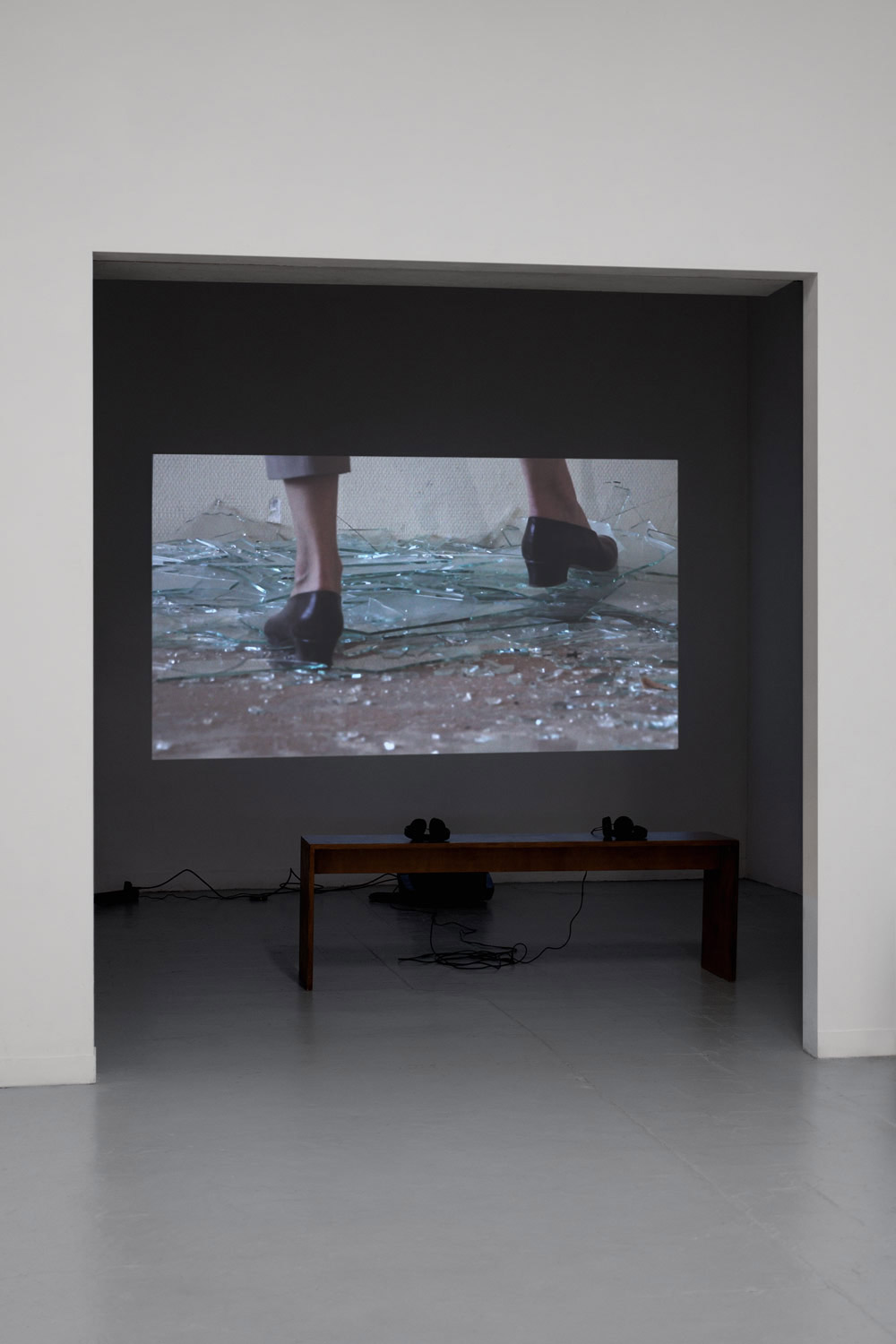
Built environments act as a sensing device for the internal world in the work of Laury Hooghuis. Navigating the border between film, installation, and moving image, she investigates the precise points where perception shapes a sense of self. Image, sound, and architectural composition bear equal weight, defining the filmic space as a shared construction between on-screen bodies and the observer. Characters reside in precise framings where rooms and built edges enforce constraints. Psychological imbalance, memory, and the influence of technology imprint the work. Atmosphere replaces explanation: repetition, silence, and slight rhythmic shifts construct the reality. Inner states and external settings fuse; the mood propels the story.
Under Reconstruction (2020) examines the disorientation of being a stranger in one's own consciousness. A fragmented presence navigates the debris of a dismantled room, acting as a single mind looking for clues in the midst of chaos. The choreography of glances and pauses is a search for a new orientation within a landscape of loss. Time warps into an inner dimension; the sound of mechanical impact reveals suppressed emotion. As resistance gives way to force, the machinery dictates a new momentum — dragging the subjects toward a necessary, if frightening, evolution. The walls fall away to leave only the anxiety of exposure. It is a search for a home within the collapse of the self.
Tobias Krämer (DE)
Floors, 2025
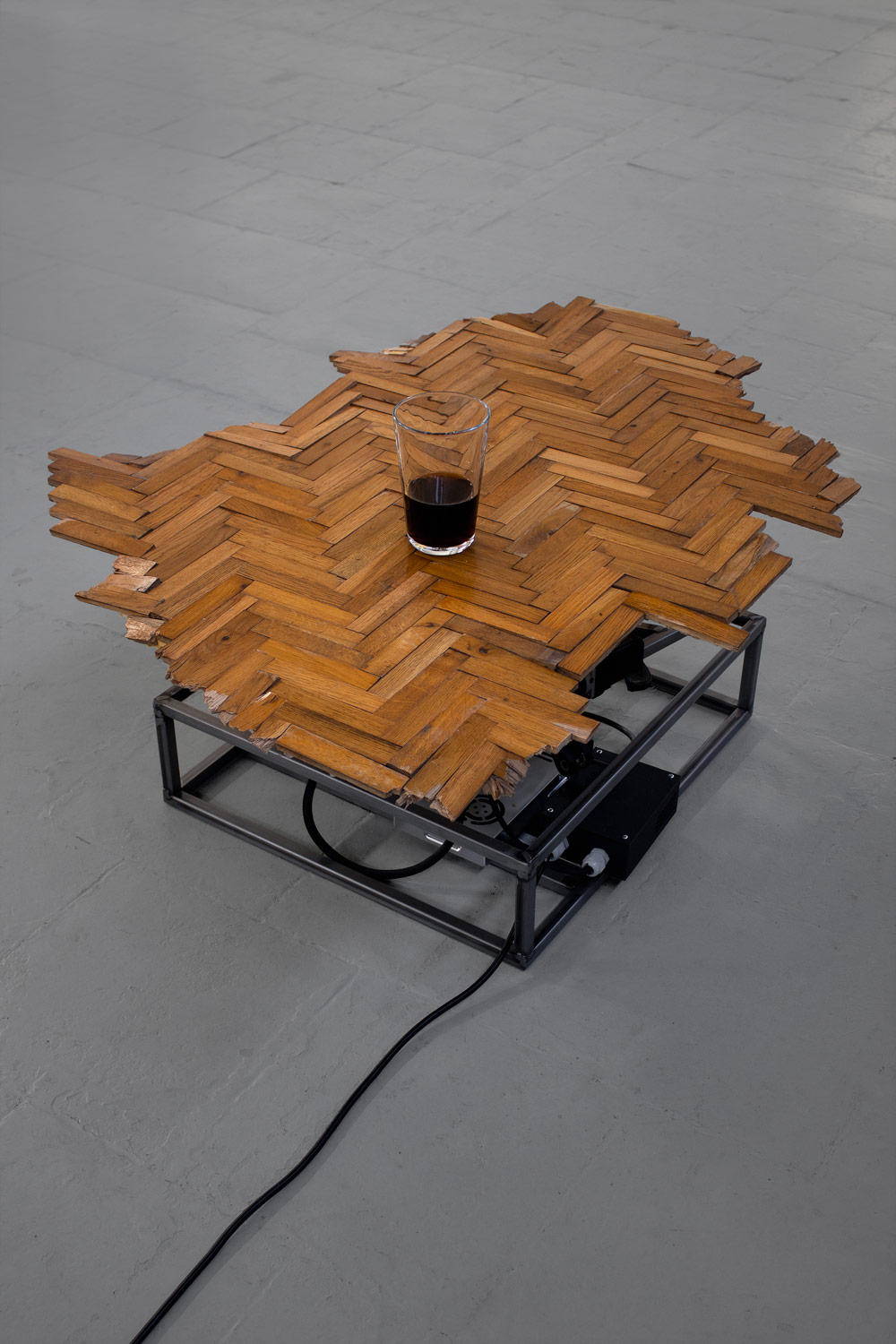
Human absence made visible through a choreography of aimless, rhythmic tension. Tobias Krämer constructs unstable bodies at the border of sculpture, choreography, and engineering. Movement is meant to reveal fragility and transformation — the poetic experience rather than functional motion — central to Krämer’s work. Industrial motors execute movements between fluid, meditative states and sharp, physical impulses, often mimicking involuntary human tics or the visual markers of skin under pressure. In this loop of hesitation, mechanics are stripped of their utility. The industrial is pushed to its limits by organic materials that follow the code, creating a future where precise technology must cross the inherent unpredictability of the living. Between control and surrender, the work examines how technical systems influence the human body: whether they alter, strengthen, or destabilize the physical self.
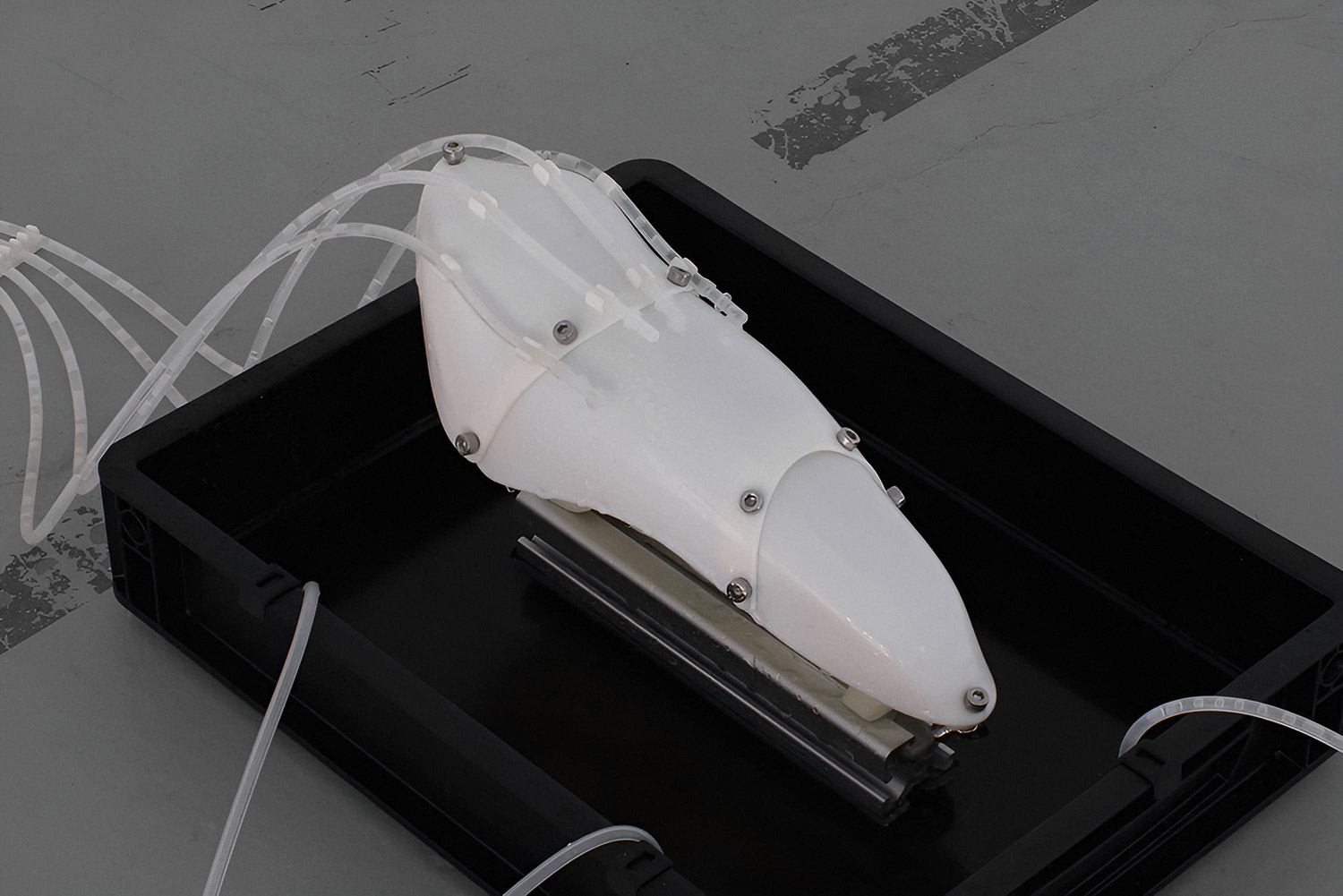
Floors (2025) simulates a variety of movement sequences that give the impression of a fixed platform drifting on a synthetic ocean. The sculpture exists as a kinetic still life — a low structure that carries architectural fragments and leftover objects, suggesting a past presence. As the programmed motion runs, moments of sharp tension emerge as individual elements seem close to tipping. Suspension replaces resolution. The arrangement, caught in a near-catastrophe, in the rhythmic sway and shifting remnants, produces a narrative of constant instability.
María Esteve Trull (ES)
Sobre Terreno, 2024
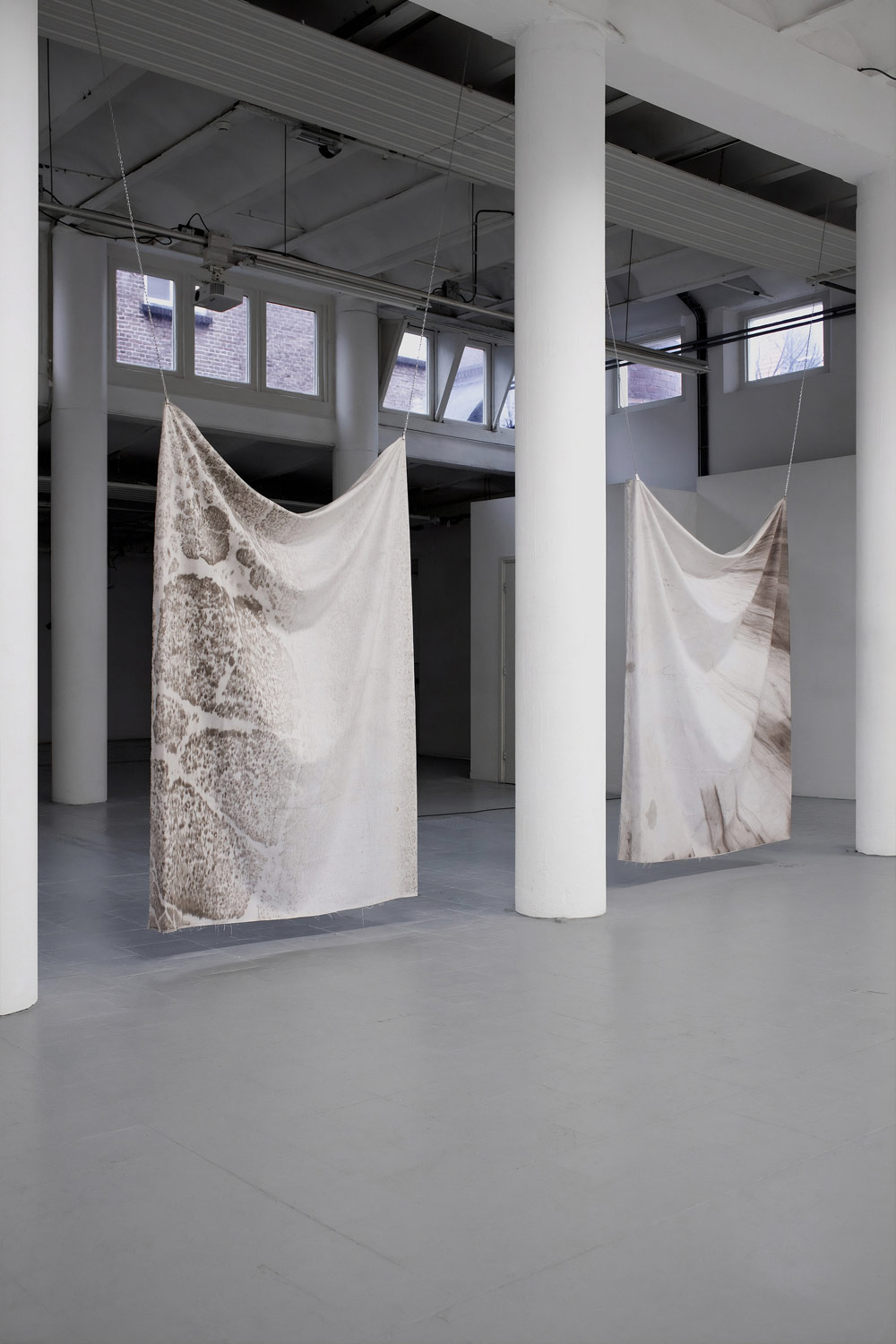
Somatic depth and motion through space allow María Esteve Trull to develop an expanded study of landscape. Moving between emotion, gesture, and time, her sensitive language observes and inhabits fragile environments, especially damaged or deteriorated ones. By treating the landscape as both subject and methodology, she translates a personal, intimate longing for nature into a formal practice. Training in contemporary dance places the body as a sensing and recording device. Contact transforms the site into an open-air studio, with movement at the core. Using frottage, she lifts the texture of the terrain — a direct print of the places she crosses, like uninhabited topographies gently altered by each human presence.
Sobre Terreno / On Terrain (2024) functions as an exchange of textures. Through the body’s passage, the ground is treated as a skin to be felt and recorded. Listening to the slow shifts of the earth beneath the feet, the body moves through these damaged environments, gathering the residue of water, moss, stone, and light. This dialogue between body and territory reveals the friction of a life passing over a landscape. In a patient sequence of searching and contemplation, the ground operates as an archive for these contacts. Once folded and stored, the fabrics, heavy with information, hold onto the tactile weight of the earth in a world where that contact feels increasingly out of reach.
TJ (Tianju) Chen (CN)
Interfaces, 2024
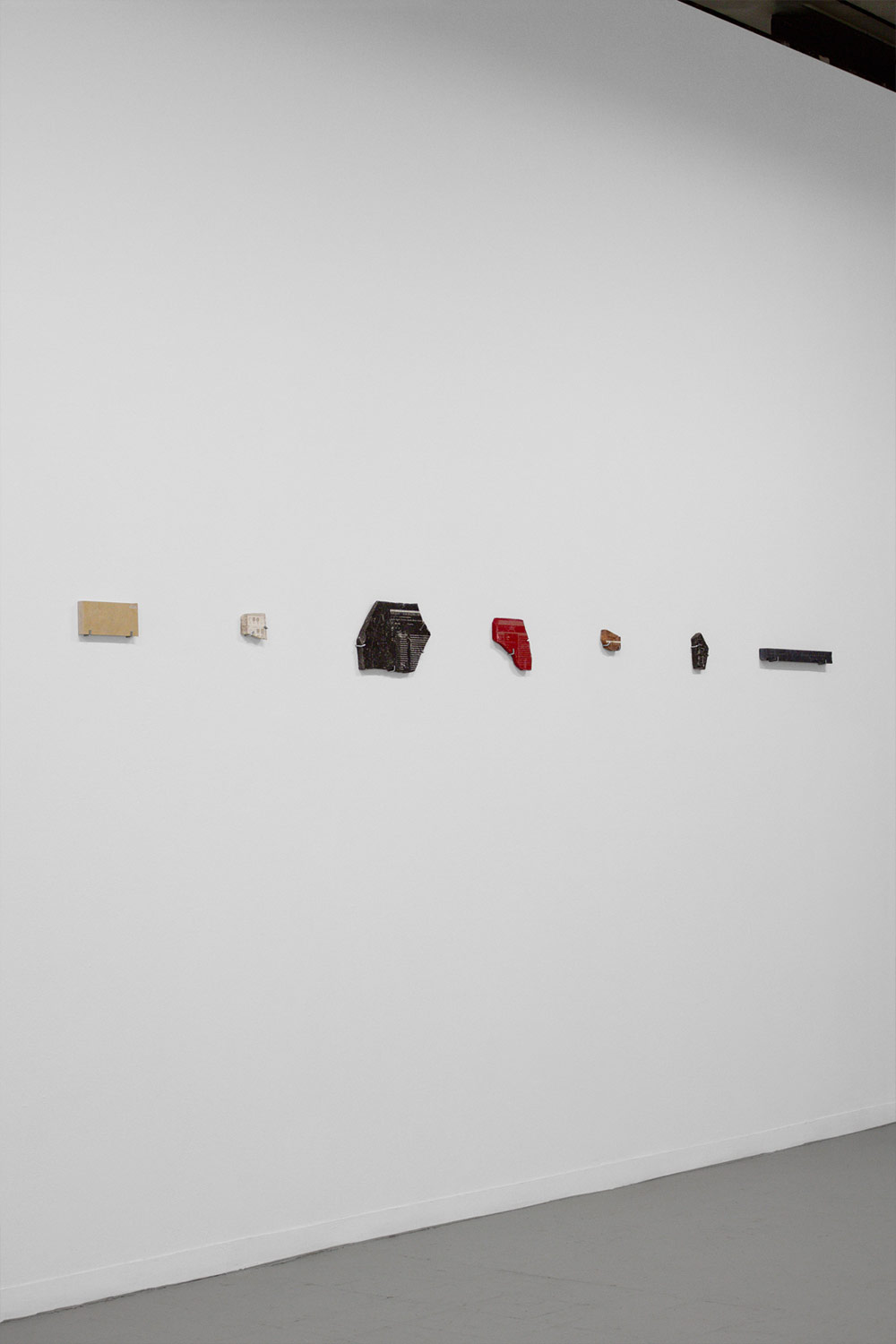
TJ Chen deconstructs the systems that promise speed and convenience, exposing interfaces and platforms as engines that dictate labor, attention, and desire. He dismantles the everyday symbols of digital life, turning "seamless" design into physical artifacts that reveal the strain of failure, delay, and overload. This practice operates in the friction between a fascination with function and a skepticism toward its promises — treating technology as a set of habits we inhabit rather than tools we simply use. By forcing these ubiquitous systems into the foreground, TJ interrogates their impact on our time, our work, and our sense of self.
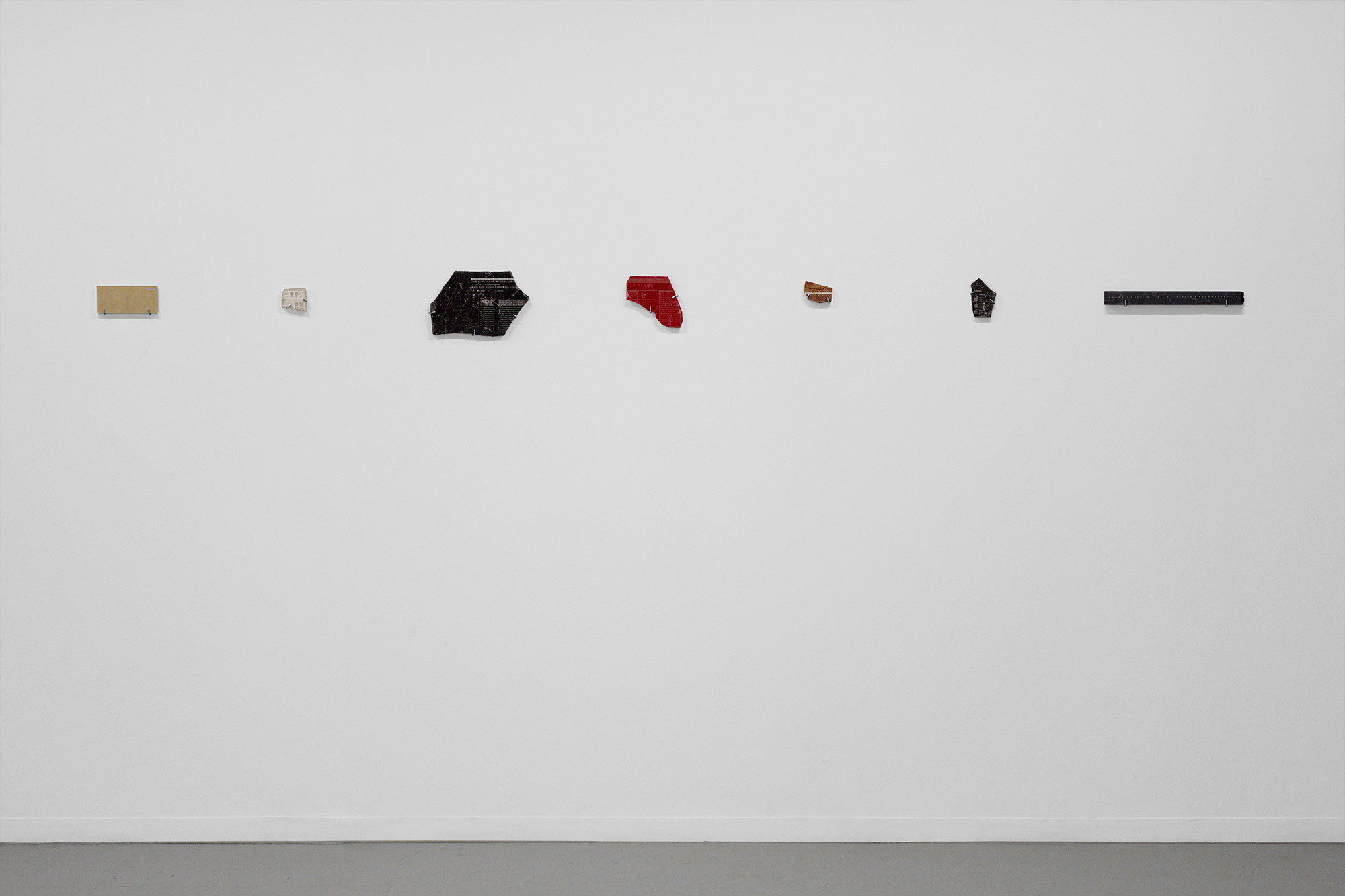
Since 2022, the series Interfaces has fixed the fleeting environments of the screen into the permanence of stone. By engraving pop-ups, menus, and cursors into one of the world’s most ancient materials, TJ creates a strange archaeology of the now, transforming dynamic pixels into weighty, fossil-like relics. These works capture the "amphoral" movement of navigating digital space, documenting a specific memory of interaction that borders on addiction and overwhelm. As today’s systems render themselves obsolete, these static stones remain as monuments to a vanished digital age. They no longer perform a function; they simply record the urgent, constant touch of a generation before it disappears.
Todd Clare (AU)
Surface Memory, 2025
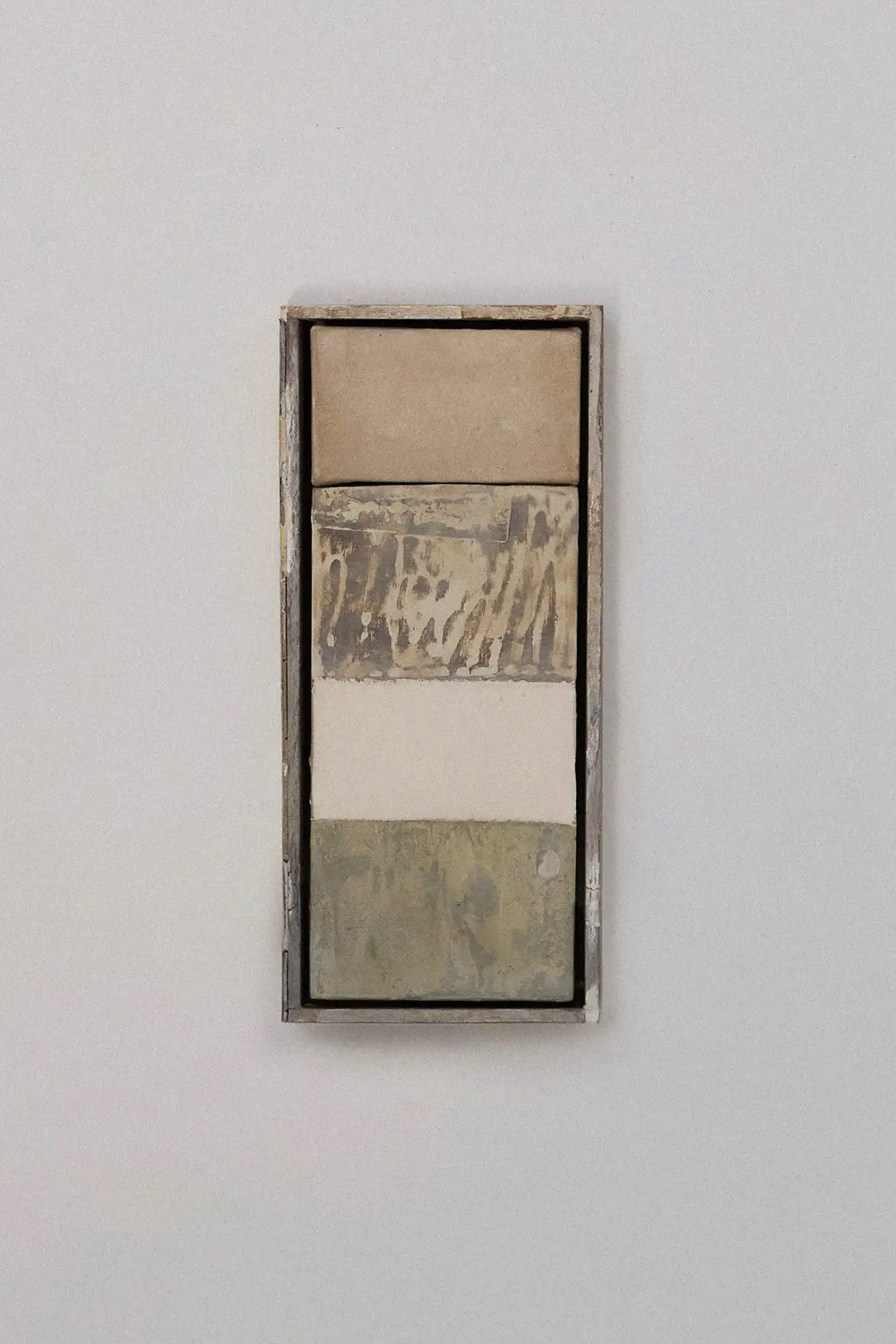
Building painting as a fragment of a larger structure allows Todd Clare to capture how age, repair, and use leave their own record. He begins at the edge of attention: an old paint line, a chipped corner, or a patch of mismatched plaster. House paint, glue, sand, paper, wood, plaster, cement sheet, canvas, and dust are all central to his process. In a composed rhythm, layers are built up and cut back, bound, and transformed through long-term care. It is a presence earned through time rather than claimed in a moment. Marks arrive by chance and are kept on purpose. Imperfection and endurance shape a way of thinking about emotion and lived experience. In a culture pulled toward the virtual, his paintings keep faith with what has been made, unmade, and made again.
Untitled (2025), from the Surface Memory series, exists as one of those narratives, physically unburied and given its own weight. Sanding and reapplication leave ghost layers that show contact, weather, and care. Erosion, cracks, and worn color act as the mechanics of how a place preserves its history. The work leans gently toward the future: toward a time when buildings arrive ready-made, when images outlast the things they depict. It holds onto what has been patched and kept. Even in that future, a single repaired surface might still embody more information about a life than a perfectly new facade.