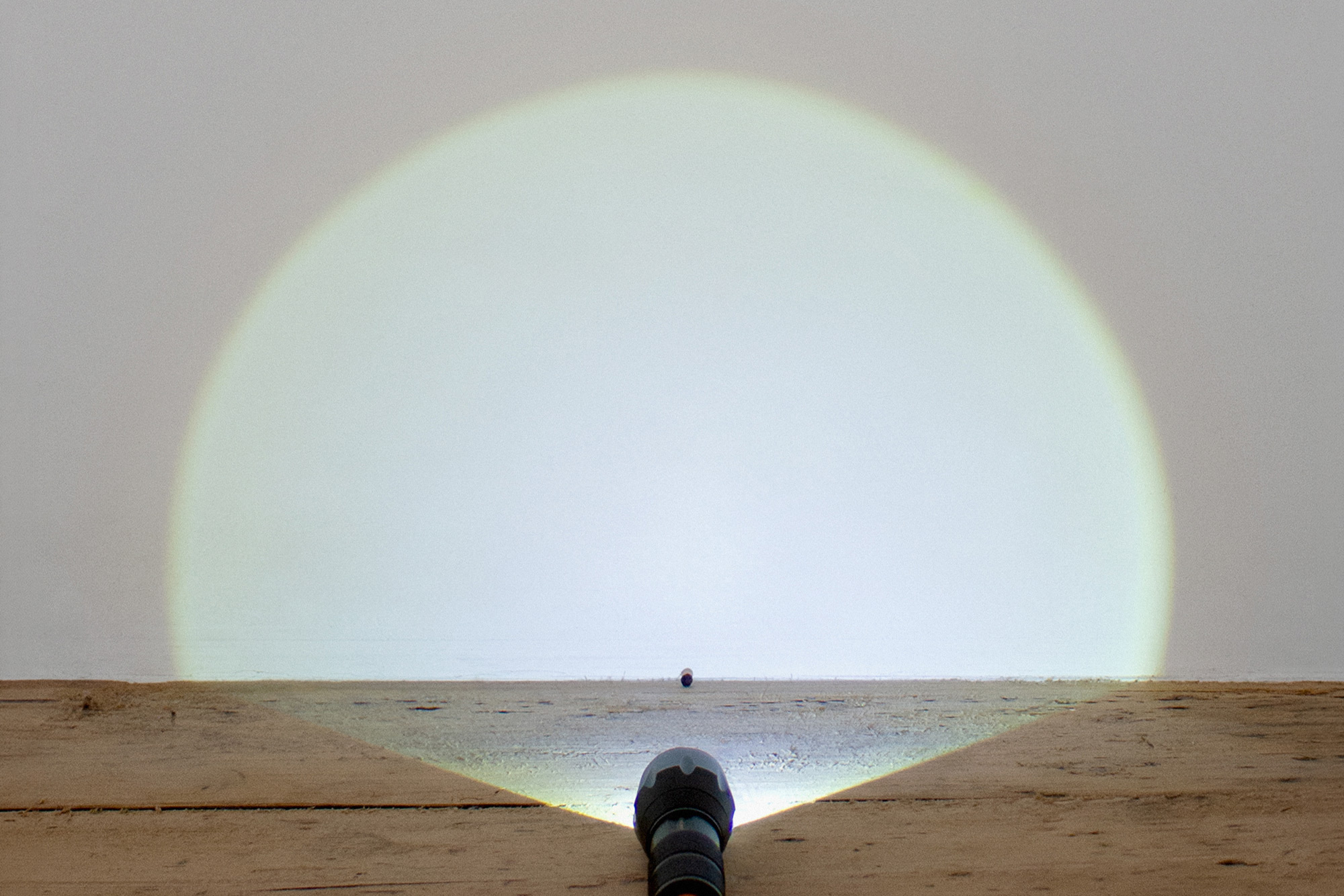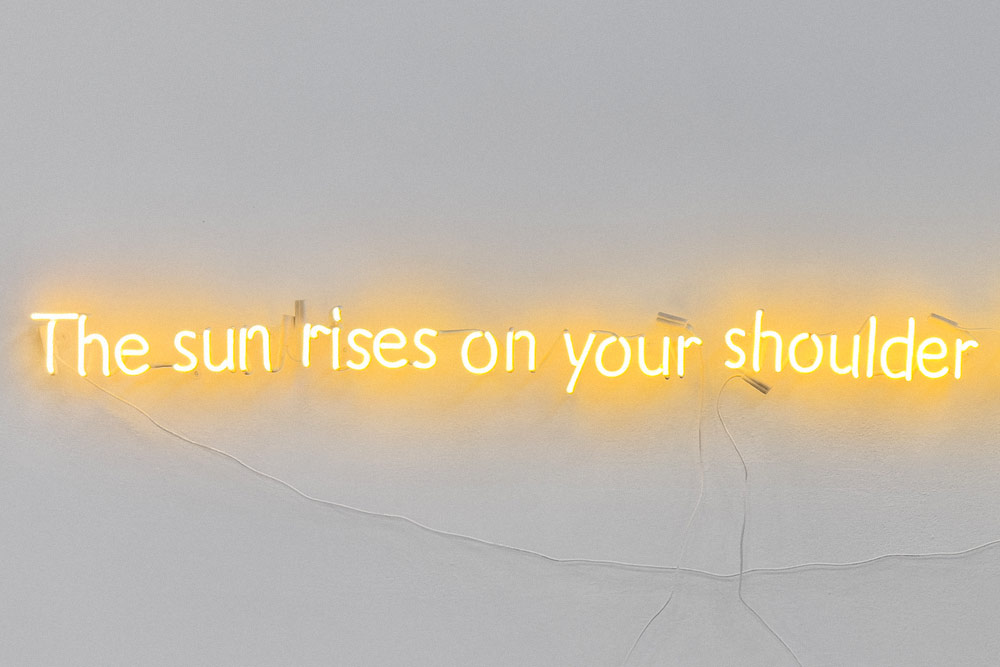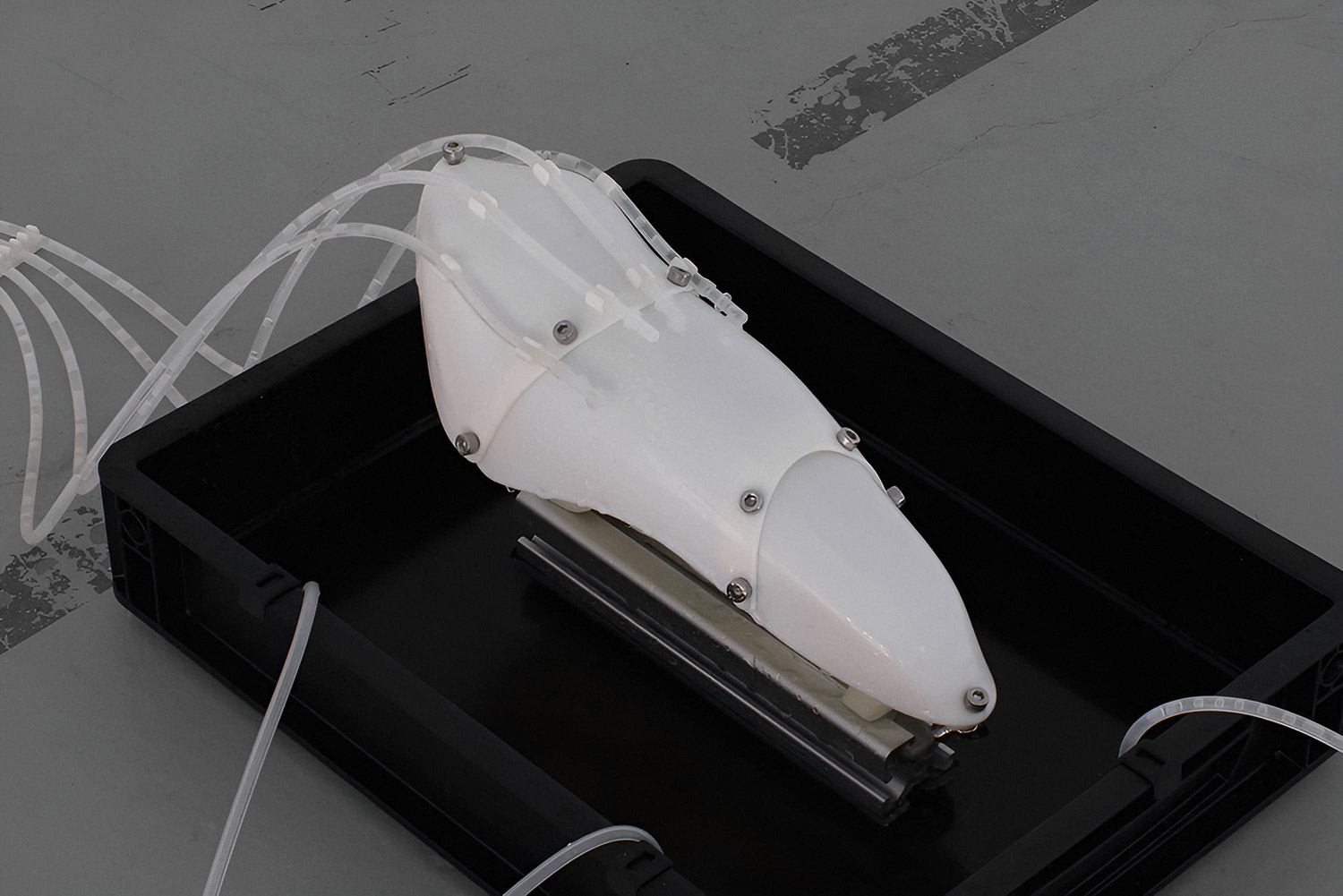
‘... we kept going. The landscape defined by precise, engineered lighting: machines orbit the system; bodies turn within a wheel.
A cold reality takes hold in which collapse is not an end but a daily routine. No pause, just a permanent frequency — a system that lost its exit route and chose repetition instead. In this architecture of fatigue, rules dominate in an ancient but poetic way. Adapting to a logic of the repeating gestures, the engineered nature executes the closed-circuit routine of a machine.
Power movement without advancement, endurance operating life. This is a world running on inherited muscle memory, performing a script that no longer requires human input to continue.’
Where the first phase observed presence dissolving (→), this second state is about rhythm refusing to stop. ‘We kept going.’ — the second chapter of the ESC 2035 trilogy. From over six hundred submissions, seven artists remain to execute this permanent frequency.
The ESC sequence began with a nature-dominated landscape before technology appeared as a strict condition. Now, the narrative reaches a locked state. Repetition has embedded itself so deeply that the capacity for change is gone — leaving only the machine’s routine.
In collaboration with the At SUNSET, led by Marius Lut and Rob Knijn, the exhibition took place in a former girls’ school in Scheveningen. The site’s history of discipline provides the physical floor for a script running on repeat; a space where institutional memory meets a future that refuses to stop.
Artists
Andrei Nacu
Except in the context of time..., 2017 / RO
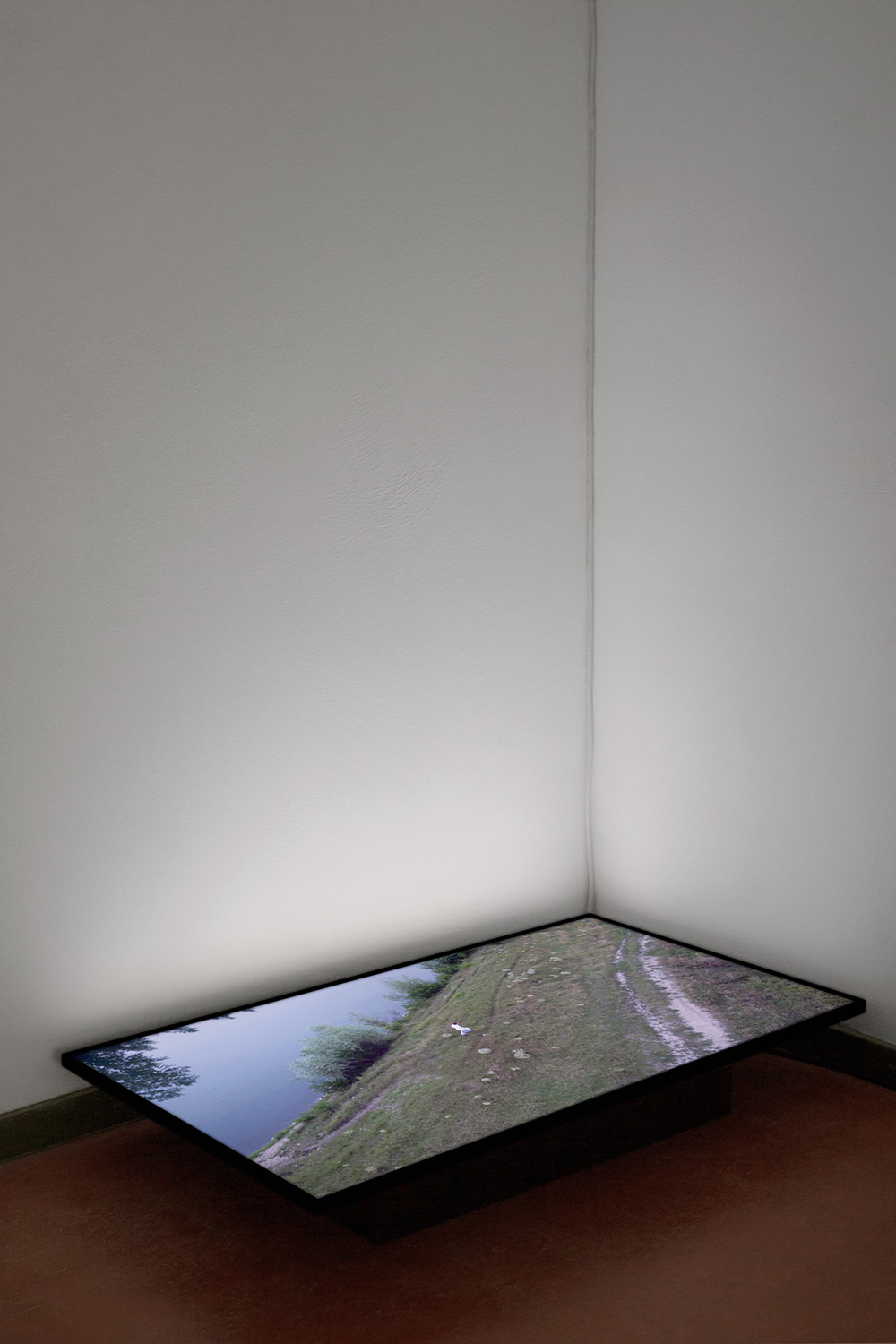
Performance and lens-based media provide the terrain for Andrei Nacu, hosting a friction between personal memory and social history. The human body is positioned as a measure of political time. This is especially true in charged geographies when the tension between the individual and the state reaches a breaking point. By leaning into minimal, determined gestures, Nacu drops documentary formalities to feel out the physical and psychological lines that keep us apart. Once the clarity of these divisions fails, the frameworks meant to categorize our existence are seen for what they are.
Except in the context of time... takes place at a looping bend of the Prut River, directly along the border of Romania and the Republic of Moldova. Armed with a bucket, the artist carries water upstream to downstream in a Sisyphean attempt to accelerate the river’s natural flow manually. Solitary labor, as such, reframes the landscape, exposing the water as a lawless weight. In an era defined by technological speed, this simple vessel adapts geological rhythm in a sharp act of resistance. It’s a letting go of the illusion of human control, forcing a realization that these constraints hold us, and we live inside them.
“It’s very strange to be going through this change
With no idea of what it’s all been about
Except in the context of time…”
Bea Targosz
AFAIK, 2024 / PL
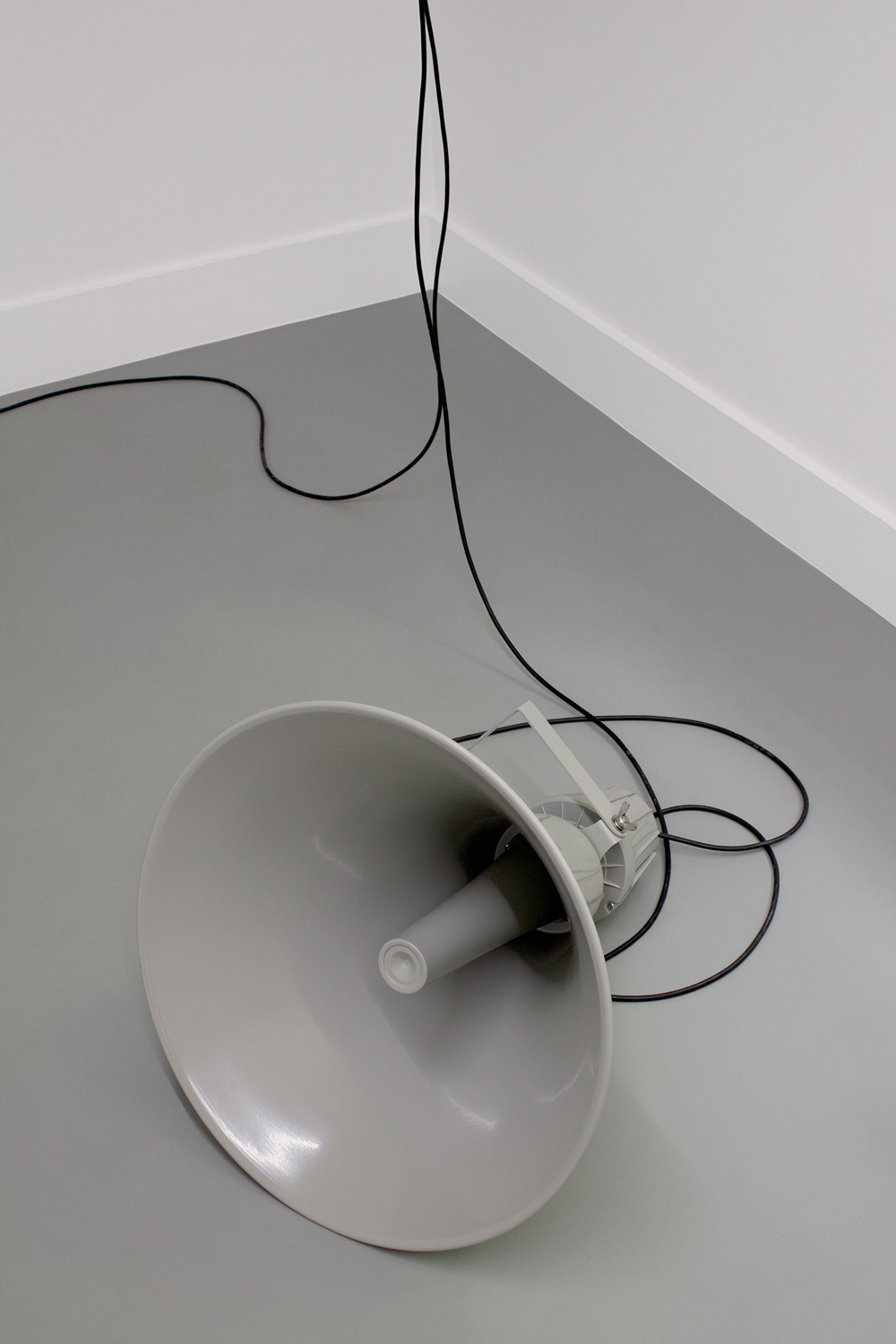
At the intersection of the mechanical and the organic lies a hidden acoustic layer, often overlooked. This is the territory of Bea Targosz, where vibration connects built environments with the natural world. Her methodology is an extension of years spent in the field, translating research into "Situations" — living structures designed to breathe and change in real-time. By tracing the nearly imperceptible shifts caused by the massive machines of our age, the invisible takes a form you can feel. A massive infrastructure that is no longer an abstract concept; it is something experienced with the body.
AFAIK (As Far As I Know) translates two decades of atmospheric data into a fragmented, audible landscape. The system processes global levels of carbon monoxide, nitrogen oxides, and particulate matter tracked between 1995 and 2015. An industrial loudspeaker then routes these readings into sonified bursts of a global thermal instability. The work skips the easy logic of a chart to embrace the friction found in the listening process. It reflects a reality of information as not a path to clarity, but as persistent, unstable noise. The metrics then act less as a clean record of the past, more as a sonic trace that resonates with the uncertainty of a reality that stopped making sense.
Bas van Wieringen
It's About Time, 2025 / NL
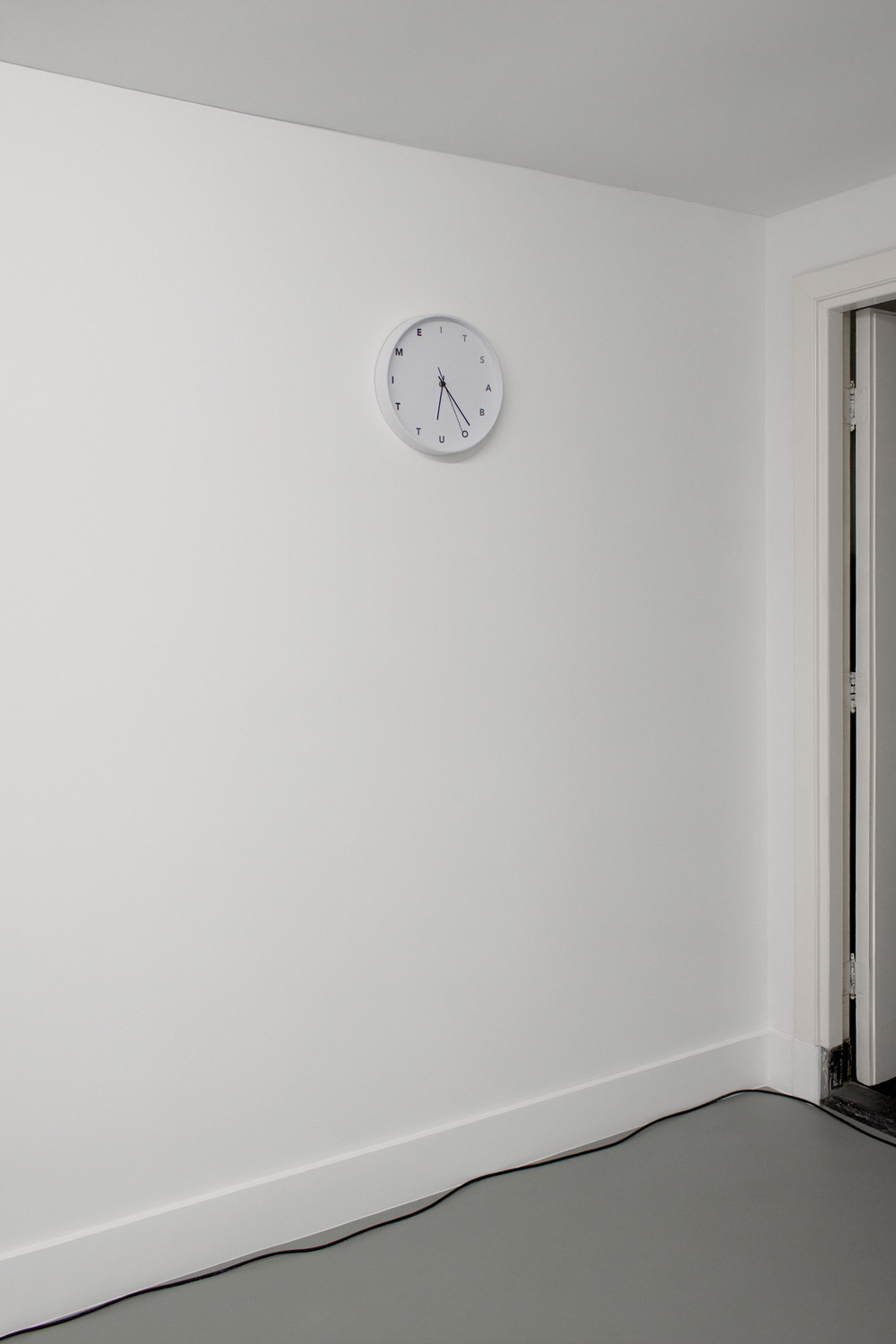
The everyday is staged as a system that can be stressed, misread, and dismantled. By redirecting the utility of common tools, Bas van Wieringen reveals the absurdity of the structures we build to organize reality. His interventions sit at the intersection of rigid technology and unpredictable forces — gravity, tension, heat, and balance. Through small, calculated failures, he transforms a "bureaucratic calm" into a state of jamais vu (the eerie feeling of the familiar becoming suddenly foreign). A process, defined by the artist as active boredom, that demands sustained attention, manifests the instability of the order we impose on our environment.
It’s About Time reduces the construction of linear time to a repetitive linguistic loop. The clock face is stripped of its numerical markers, replaced instead by twelve letters. While the mechanical speed remains standard, the hardware is repurposed; it no longer measures progress, but repeats a sentence that leads nowhere. Rotation mirrors entropy: energy expended without direction, left only with its own persistence.
Joan Horrach
Somehow, Elsewhere No.1, 2024 / ES
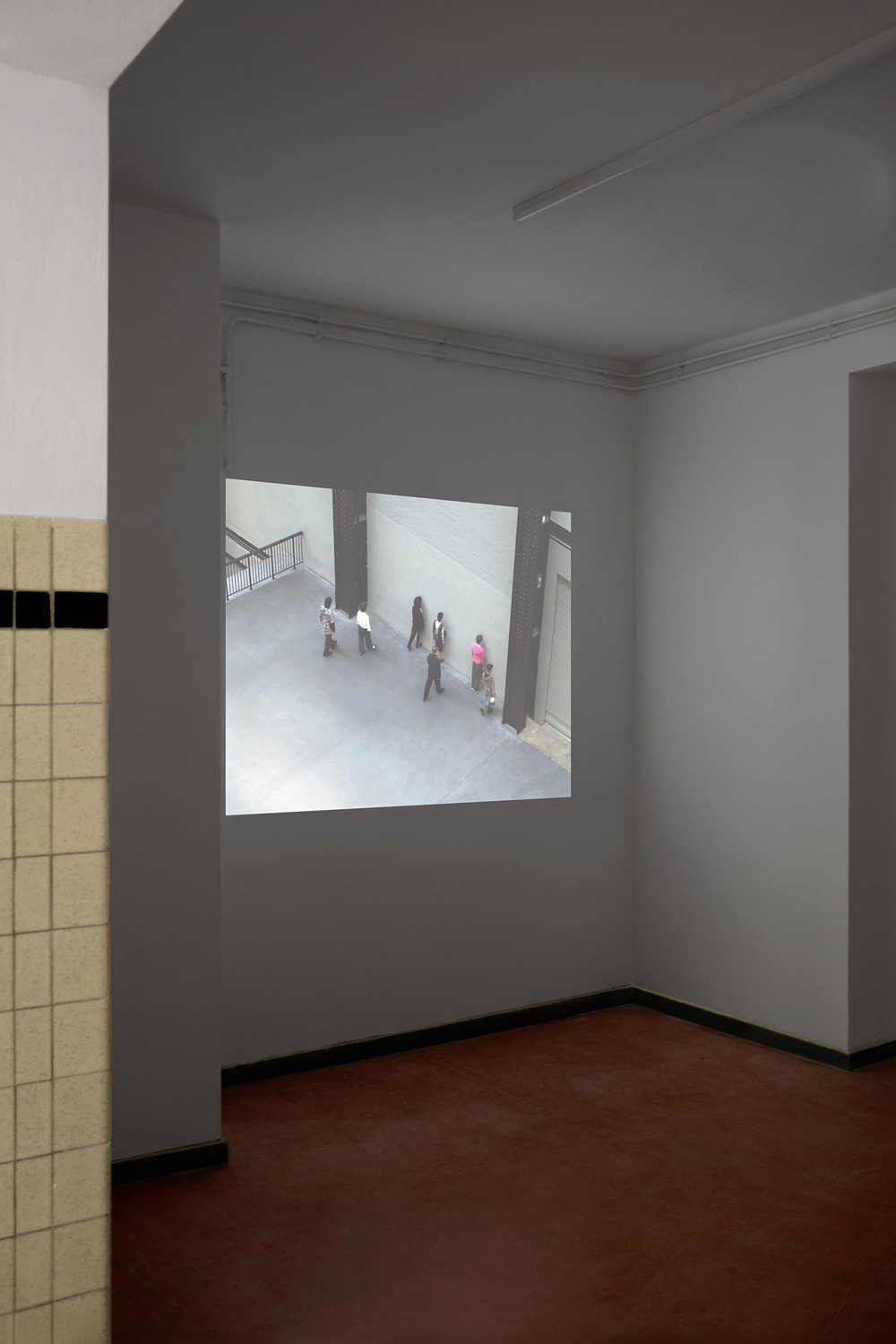
With a background in choreography, Joan Horrach approaches the body as a sculptural form. Continuous cycles and careful placement reveal absence, mechanical habit, and a fractured sense of being here. He explores the psychological distance that occurs when the physical self is separated from its environment. Performance is used to create images that function as metaphors for isolation and disconnection. Heavy, repetitive labor reduces the body to raw material, letting a narrative surface from the silence of the struggle. When these invented scenarios enter daily life, habits like walking or breathing lose their natural rhythm, transitioning from biology to mechanism.
Somehow, Elsewhere No.1 captures a group moving back and forth against a wall for forty-five minutes. This repetitive pacing clears walking of its destination, leaving the movement caught in a functional loop. The group constantly falls in and out of sync, creating a fluctuating architecture of bodies that mirrors the unpredictable pulse of modern existence. Mechanized detachment — a state of existence that mimics the dynamic of an automated system. The action acts as a physical mirror for how we navigate digital spaces: physically present but mentally drifting through a separate, invisible architecture.
Santiago Colombo Migliorero
Untitled (Brick), 2021 / ES
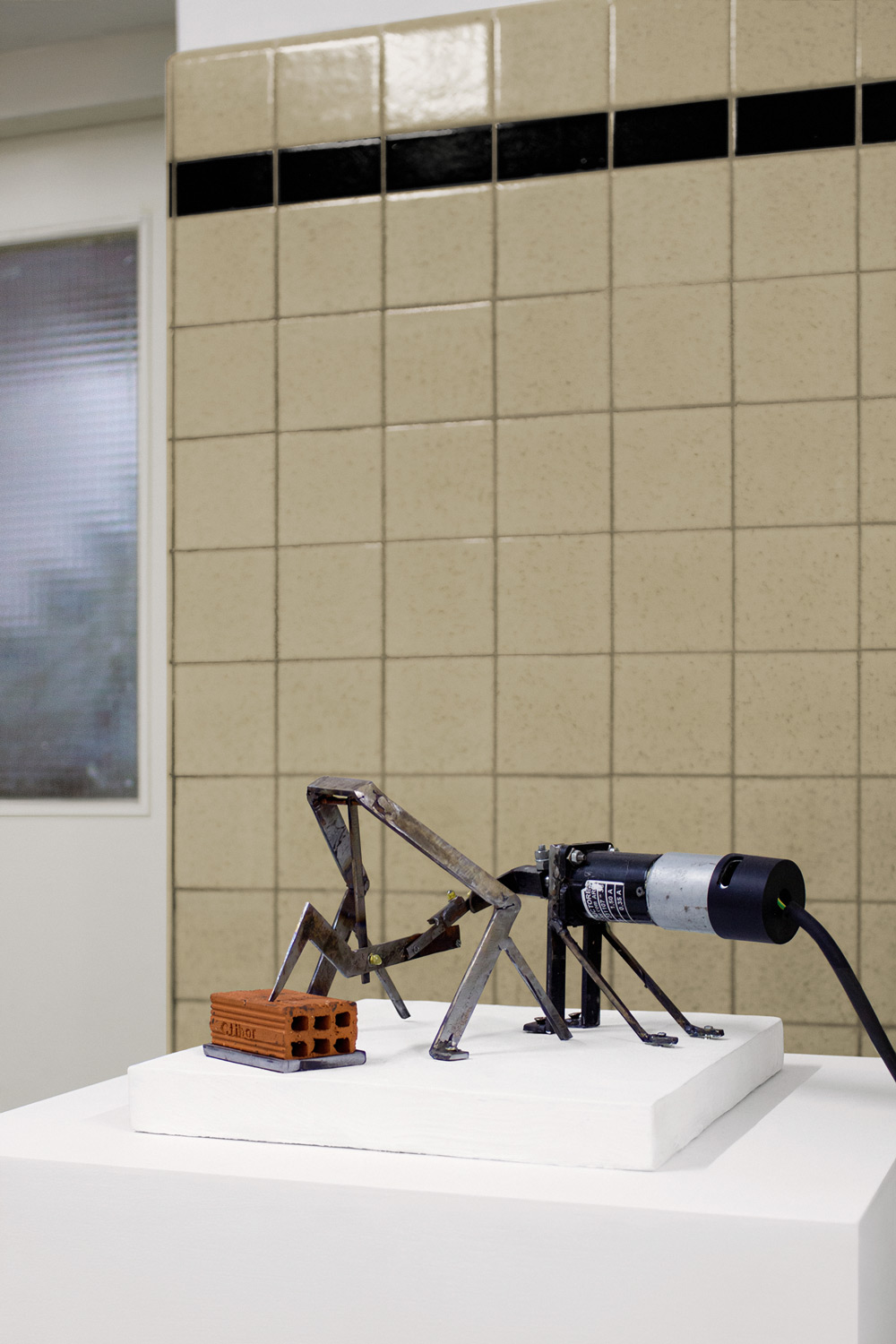
Time functions as a raw substance in Santiago Colombo Migliorero’s work, measured and looped through movements so slow they become almost invisible. In the friction between the digital and the analog, his practice meets the tactile weight of kinetic sculpture and the phantom architecture of CGI. An obsession with quantifying the world into units eventually hits a wall of absurdity; the data collapses into chaos, exposing the glitches that emerge when a physical object is transposed into a digital file. These errors act as a ghost of the material world — an ongoing fiction of memory that inhabits a territory without ever fully recording it.
Untitled (Brick) consists of the contact between ceramic and steel. The mechanical torture forces a metal tip to dig a path into the stone, wearing itself away under the pressure of the grind. Through a steady encounter, the repeated movement slowly presses the memory of the stone into a visible scar. With every grain of dust removed, the material’s past evaporates into the air of the space. Such kinetic mapping follows the transit of the material as it breaks down, capturing the moment a solid object begins to disappear into its own dust.
Matteo Vettorello
Bilancia per vortici, 2017 / IT
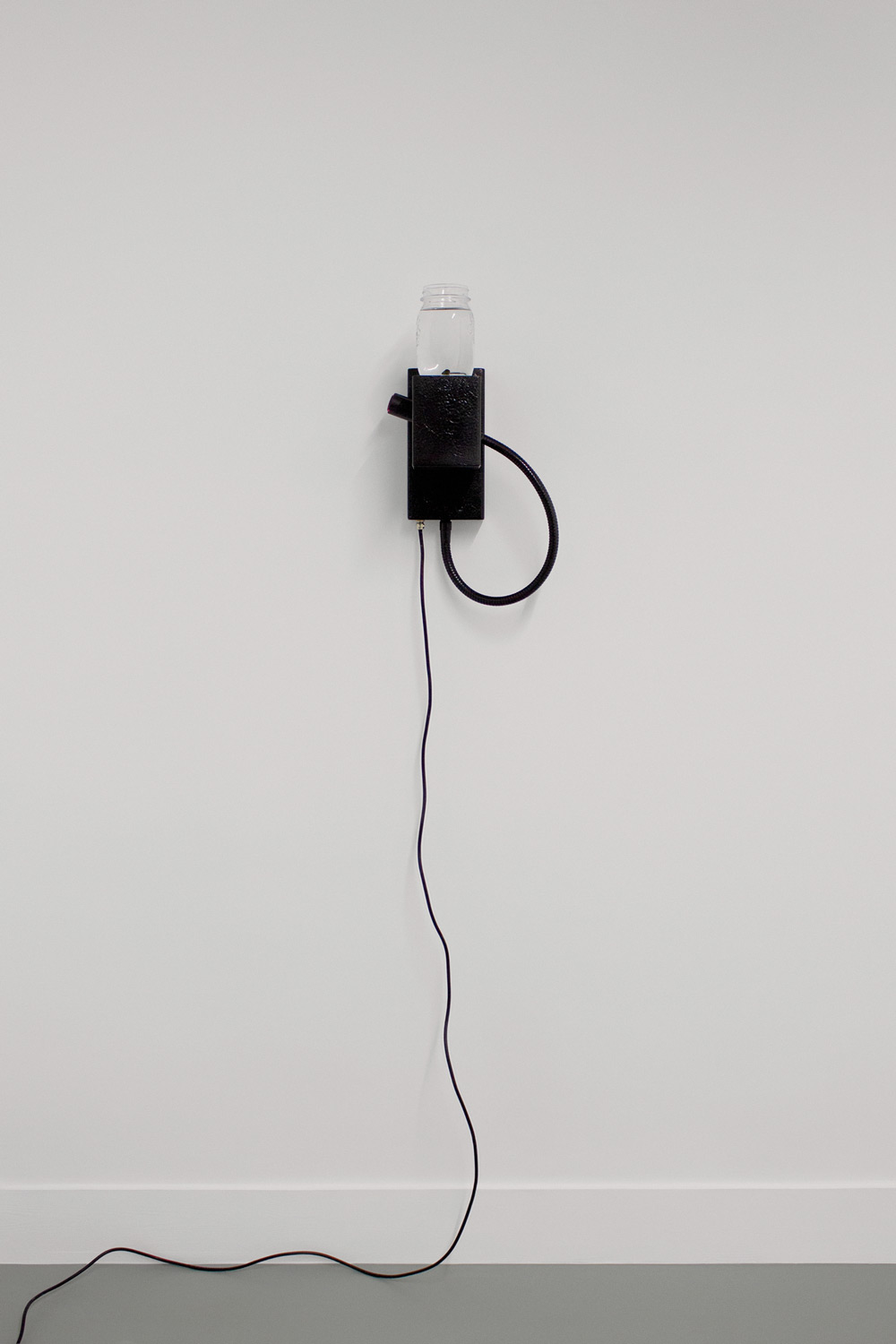
Relying on the erratic inputs of voice, breath, and heartbeat to function, Matteo Vettorello positions his instruments as devices that exploit human biology as a mechanical trigger. Defined as biometric tuners, these instruments reject the seamless automation of modern technology. Instead, the practice demands a deliberate, often straining physical effort to keep the machinery alive, reframing measurement as a shared exercise. The result is a series of forced encounters that translate invisible internal states into tangible, spatial events, testing the efficiency of human connection through the optics of electromechanics.
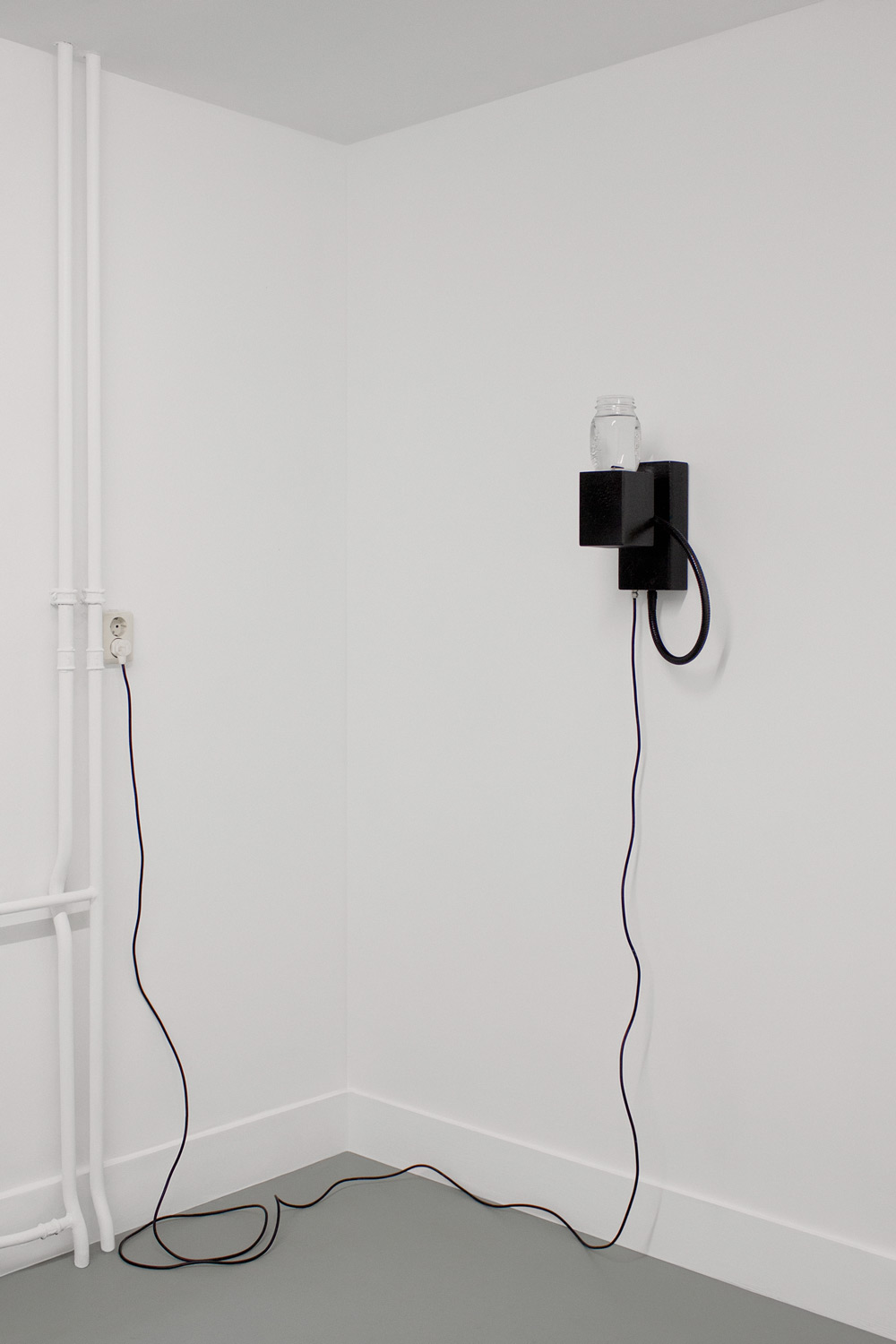
Bilancia per vortici operates as a search for the boundary where a machine loses its utility. Developed as a system of contamination between the hardware and the person, the device attempts to solve a computational algorithm by assigning a value to internal noise. It is assembled from a microphone, a 12-volt motor, and a glass preserving jar filled with water. A shout starts the whole sequence; without it, nothing moves. This human output fuels the mechanism: the more intense the scream, the longer a whirlwind spins inside the glass. A closed loop of energy then forces a visceral emotion into a precise, turbulent mechanical motion — a calculated result of a mood.
Lukas Zerbst
Follow Me Blindly, 2025 / DE
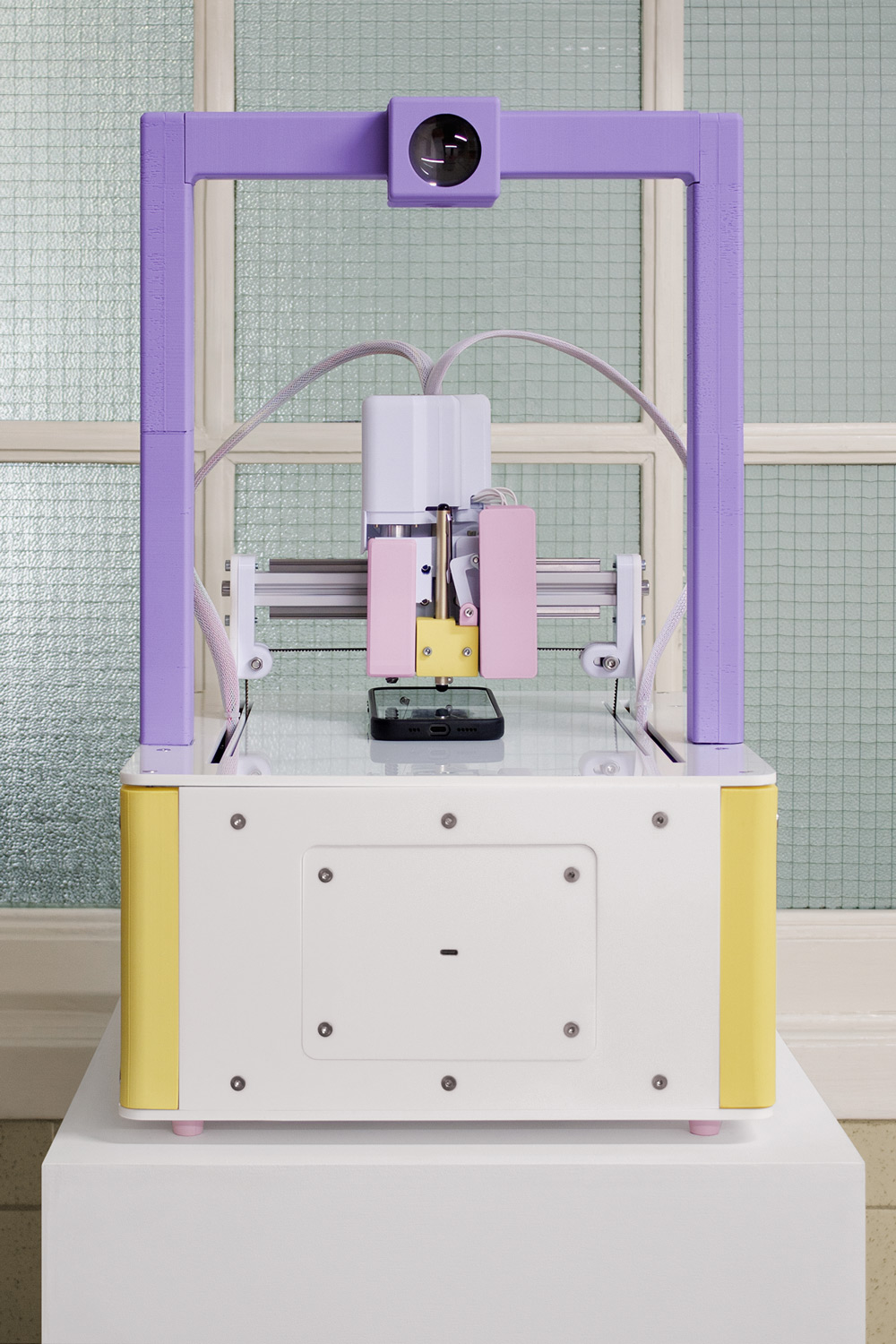
Architecture scripts our every move, but Lukas Zerbst’s installations force a glitch in the routine. Familiar structures appear as obsessive habits, converting a stable environment into a series of mechanical hiccups. High-tech logic is balanced with a manual, forceful precision that challenges the self-assurance of our daily movements. Every part follows a generational rule: if a human built it, a human must be able to repair it. This rejection of high-tech "black boxes" elevates maintenance into a permanent, physical dialogue with the hardware. Operating as an offbeat therapy session for the environment, the invisible weight of possession, value, remuneration, labour, and poverty starts to feel heavy.
Follow Me Blindly is a motorized tool designed to pass as a human operator of social media. Using a camera to analyze a smartphone interface, the apparatus employs a stylus to hammer out a continuous rhythm of swipes and likes, regardless of the content on screen. This mindless movement recasts scrolling as a brute-force labor process, using physical touch to bypass the bot-detection algorithms of commercial platforms. By performing the work of a clickworker, the system generates "interactions" — hollow currency traded for digital visibility. In this landscape, where community is just a numbers game, the "heartbeat" is reduced to a planned, automated event.